Ghana rocked by AKSA Bribery Scandal: Deputy AG warns of judgment debt, MPs decry procurement failures
The Aksa bribery scandal in Ghana has triggered a sharp debate over whether the Office of the Special Prosecutor or the Economic and Organised Crime Office should lead investigations, with an MP advocating for the former due to its mandate on public officials. Calls are also mounting for a public inquiry into systemic corruption, while the Deputy Attorney General cautions against hasty contract cancellation and assures full accountability for all implicated.
The conviction of Kwaku Asante Berko, a former Goldman Sachs banker and former Managing Director of the Tema Oil Refinery (TOR), in the United States for bribing foreign officials in connection with a power project has ignited significant debate and calls for robust local investigations in Ghana. This development has brought the Aksa bribery scandal into sharp focus, prompting discussions on the appropriate institutions to handle such a case, the need for broader systemic inquiries, and the government's approach to potential contract termination and accountability.
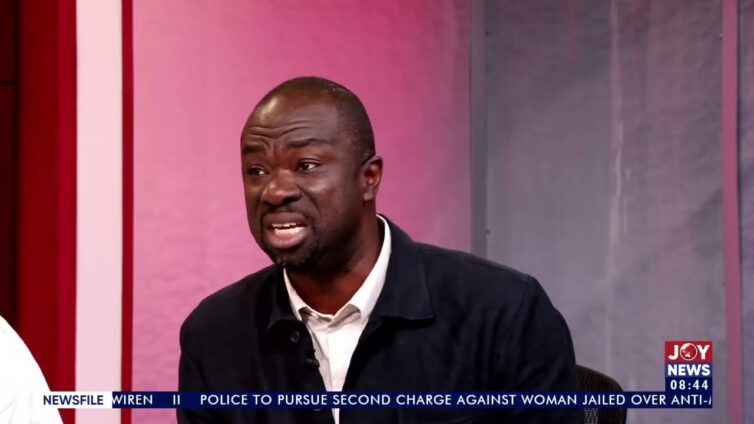
A central point of contention revolves around which anti-corruption agency should lead the local investigation. Nana Agyei Baffour Awuah, the Member of Parliament for Manhyia South, strongly asserted that the case should ordinarily fall under the mandate of the Office of the Special Prosecutor (OSP) rather than the Economic and Organised Crime Office (EOCO). Speaking on Joy FM's Top Story, the MP questioned the government's suggestion to allow EOCO to lead, arguing that the OSP was specifically established to prosecute public officers or politically exposed persons involved in corruption. He pointed out that the allegations include individuals who occupied public office, such as a former Minister for Power, and claims regarding the possible involvement of a relative of President John Dramani Mahama, all of which, he argued, solidify the OSP's suitability.
Conversely, Deputy Attorney General Dr. Justice Srem-Sai has defended the decision to allow EOCO to lead the Aksa investigation. He explained that the case extends beyond mere bribery and corruption to potentially include money laundering offenses, which squarely fall within EOCO's mandate. Dr. Srem-Sai cautioned against turning the investigation into a "turf war" between anti-corruption agencies, stressing that EOCO and OSP have complementary responsibilities and could even collaborate. He noted that the ultimate objective of all institutions is to ensure wrongdoing is properly investigated and that criminal conduct does not go unpunished.
Beyond individual prosecutions, MP Nana Awuah has also called for an independent public inquiry into the Aksa bribery scandal. He argued that concentrating solely on prosecuting individuals risks repeating past mistakes if systemic failures that expose Ghana to corruption are not addressed. Citing a troubling pattern of foreign companies bribing public officials in Ghana, including previous incidents like the Mabey and Johnson scandal and the Airbus bribery case, Nana Awuah contended that the recurring nature of these scandals suggests Ghana's safeguards against corruption are ineffective. He emphasized that such an inquiry would aim to identify weaknesses in procurement laws, oversight mechanisms, and anti-corruption institutions, focusing on value for money and institutional improvements rather than criminal punishment.
Regarding the future of the AKSA power deal, Deputy Attorney General Dr. Srem-Sai cautioned against immediate cancellation, even after the bribery conviction. He warned that terminating the agreement without first establishing a legal basis could expose the state to a judgment debt. Dr. Srem-Sai clarified that legally, bribery and fraud are distinct concepts, and a comprehensive review of the agreement would be necessary to determine if it was procured through fraud, which could then provide grounds for invalidation. He stressed that any decision on the contract's future must be based on evidence gathered through proper investigations and further due diligence.
Dr. Srem-Sai also addressed concerns about accountability and potential political interference, assuring the public that President John Dramani Mahama would not shield anyone implicated in the scandal, including ministers who served under his administration. He dismissed suggestions of a cover-up, stating his confidence in the President's commitment to allow the law to proceed regardless of who is involved. He questioned the basis for assumptions by some, including the Minority in Parliament, that individuals might be protected from prosecution, insisting that the outcome must be determined by evidence from ongoing investigations.
In a related comment, MP Nana Awuah defended the New Patriotic Party's (NPP) stance of lacking confidence in Attorney General Dr. Dominic Ayine. He stated that the party's concerns stemmed from what it perceived as a pattern of conduct raising questions about transparency and accountability. As an example, he cited the Unibank case, where the Attorney General allegedly failed to provide Parliament with details concerning the decision to discontinue the prosecution of the former Governor of the Bank of Ghana, arguing that greater transparency should have accompanied such a significant legal decision.