Ghana Rallies: Nation Joins Massive Clean-Up After Devastating Floods
Following devastating floods, President Mahama launched a national clean-up exercise involving Zoomlion, GHS, and other agencies to address sanitation and prevent disease outbreaks. Strategic measures, such as reopening waste transfer stations and deploying extensive resources, aim to improve long-term waste management. Leaders emphasized the critical role of continuous public engagement and a fundamental shift in attitude for sustainable sanitation in Ghana.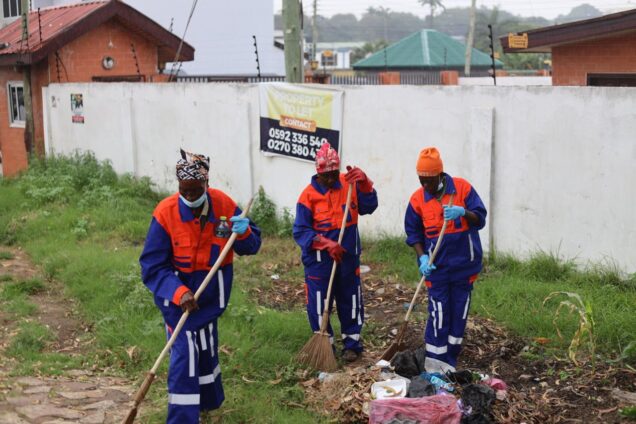
Following recent devastating floods, particularly in the Greater Accra Region, President John Dramani Mahama initiated a two-day National General Clean-up Exercise on July 10-11 to address the resulting sanitation crisis, prevent disease outbreaks, and mitigate future flooding risks. This nationwide campaign saw a concerted effort from government agencies, private sector partners, and residents, aiming to desilt drains, evacuate accumulated waste, and disinfect affected communities.
Zoomlion Ghana Limited played a pivotal role in this national response, swiftly deploying 2,000 personnel and a substantial fleet of heavy equipment across the country. Mrs. Doris Kwekwor Adjei, Managing Director of Zoomlion Ghana Limited, confirmed the company's commitment to restoring sanitation in flood-affected areas. Their equipment, including tractors, backhoes, compaction trucks, tricycles, brooms, and shovels, was instrumental in clearing debris. Beyond physical clean-up, Zoomlion activated its transfer stations and dispatched fumigation teams to areas like Alajo, proactively combating potential disease outbreaks, a critical measure given the health risks associated with such disasters.
A key strategic move by President Mahama was the directive to immediately reopen six waste transfer stations in Accra, which had been inactive for approximately nine years. This decision aims to significantly improve waste collection efficiency by providing designated disposal points for waste service providers, thereby reducing travel distances to the Amasaman landfill site and easing pressure on existing facilities. These transfer stations are designed to accommodate smaller waste trucks, including those operated by tricycle collectors, from where larger trucks can then transport the refuse to final disposal sites. This initiative directly addresses long-standing complaints from waste operators regarding the scarcity of designated dumping locations.
The Ghana Health Service (GHS) spearheaded extensive fumigation efforts across flood-affected communities in Accra, targeting markets, transport terminals, and other public spaces. Dr. Samuel Kaba Akoriyea, Director-General of the GHS, emphasized the critical importance of preventive action, even in the absence of a confirmed cholera outbreak. He highlighted that treating such diseases is not only "extremely expensive" but also overwhelms hospitals, stretches nurses, and necessitates costly medication procurement, exacerbating issues like the "no-bed syndrome." The Korle Klottey Municipal Assembly, led by Municipal Chief Executive Alfred Gaisie, also faced overwhelming volumes of flood debris but assured residents that measures were in place, with multiple trucks working to clear the waste. Residents were urged to cooperate with sanitation efforts and avoid practices that could elevate disease risks.
President Mahama underscored the importance of sustained effort, recalling how past clean-up exercises often failed because collected waste was left by roadsides only to be washed back into drains during subsequent rainfall. Therefore, a major focus for the second day of the exercise was the proper collection and transport of waste to approved dump sites. The President acknowledged that the immense volume of waste could not be cleared in a single day, assuring that the Ghana Armed Forces and other state agencies would continue the clean-up operations beyond the weekend. Mr. Ahmed Ibrahim, Minister for Local Government, Chieftaincy and Religious Affairs, reiterated this commitment, confirming the deployment of additional trucks and increasing tricycles from 400 to 600, emphasizing that evacuation would continue until all refuse is cleared, especially as residents continued to clean their homes.
Throughout the exercise, a recurring theme was the critical role of public attitude towards sanitation. Mrs. Adjei of Zoomlion stressed that "sanitation is a continuous thing" and not an "occasional exercise," highlighting the problem of indiscriminate littering observed in many areas. She urged Ghanaians to view sanitation as a personal and collective responsibility, emphasizing the need for ongoing public education on proper waste disposal. Similarly, the Local Government Minister noted that waste left in communities could easily re-clog drains, reinforcing the preventive aspect of the clean-up.
Beyond the core sanitation and health agencies, the National General Clean-Up Exercise also saw broad participation from other state institutions. The Narcotics Control Commission (NACOC), for instance, mobilized its management and staff, led by Director-General Major General Maxwell Obuba Mantey, to clean around its headquarters and annex buildings. NACOC's regional commands and border posts also conducted similar activities, clearing weeds, collecting plastic waste, and desilting drains. This participation underscored a broader commitment to environmental sanitation and civic responsibility, demonstrating that public safety extends beyond traditional law enforcement mandates to include maintaining a healthy environment.
In conclusion, the post-flood clean-up effort, led by President Mahama, represented a multi-faceted approach to a complex crisis. It combined immediate relief measures like waste evacuation and fumigation with strategic, long-term interventions such as reopening waste transfer stations. While immediate progress was evident, leaders consistently emphasized that overcoming Ghana's sanitation challenges requires continuous public engagement, improved waste management infrastructure, and a fundamental shift in public attitude, echoing President Mahama's sentiment that "Ghana is a resilient country, Accra is a resilient city, and we will bounce back better than before."