Ghana Insurance Industry Plunges Into Crisis Amidst Damning State Capture Allegations
Ghana's insurance industry faces deepening political interference, with verbal directives from the Finance Ministry instructing state entities to favour state-owned insurers like SIC Life. This move has sparked debate, with industry leaders like IBAG President Stephen Kwarteng Yeboah decrying politicisation and suspected kickbacks, while others defend the actions as a 'Strategic Reset' to fortify national institutions. IMANI Africa and IBAG have petitioned President Mahama for a return to transparent, competitive procurement.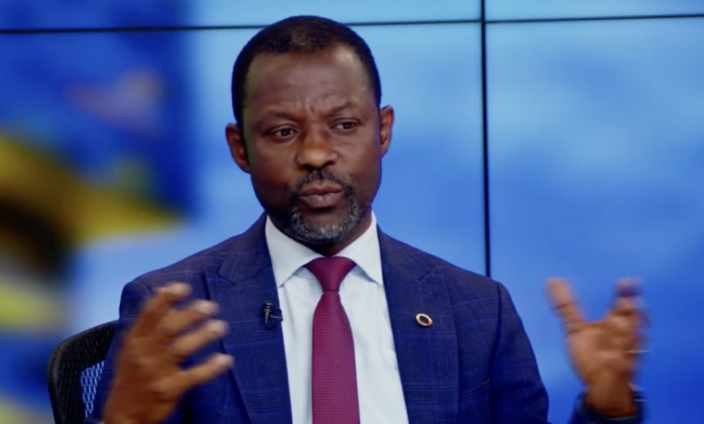
Ghana's insurance industry is grappling with escalating concerns over political interference and politicisation, threatening its integrity and long-term stability. Prominent figures, including Stephen Kwarteng Yeboah, President of the Insurance Brokers Association of Ghana (IBAG), and veteran business leader Sam Jonah, have issued stern warnings that survival and business opportunities within the sector are increasingly dictated by political affiliation, rather than merit or professionalism.
Mr. Yeboah, speaking on Joy News’ PM Express and at IBAG’s annual conference, highlighted that this deepening political division is now affecting how business is conducted in the insurance space. He expressed dismay that one might need to wear a “blue or green hat to be able to do insurance business in Ghana,” a situation he deems unhealthy. Sam Jonah, during IBAG’s annual conference in Accra, described the crisis as “deeply corrosive” due to political interference and unethical practices, echoing Mr. Yeboah’s concerns and underscoring the serious threat to the industry's integrity.
A significant revelation came from Solomon Twum Barima, Managing Director of SIC Life Insurance, who disclosed that a Deputy Minister of Finance verbally directed state entities to conduct business with SIC Life during its board inauguration. Mr. Twum Barima confirmed this on PM Express, noting the absence of any written directive from the Ministry of Finance to support this public pronouncement. He contextualised this by mentioning similar verbal directives issued at the inaugurations of boards for state-owned banks like Consolidated Bank Ghana (CBG), GCB Bank, NIB, and ADB, suggesting a broader government effort to bolster state-linked financial institutions.
However, the lack of a written directive for SIC Life raises serious governance concerns. This unwritten instruction, which influences procurement behaviour across state institutions without documentation, evaluation, or a competitive process, appears to circumvent the Public Procurement Act, 2003 (Act 663), which mandates transparency, documented justification, and competitive tendering. This contrasts with a December 11, 2025, letter from the State Interests and Governance Authority (SIGA), which explicitly used the term “directive” in its subject heading concerning state-owned insurance companies.
Adding to the controversy, Mr. Yeboah questioned why state institutions would bypass brokers to deal directly with selected insurance companies. He attributed this practice to the pursuit of “kickbacks,” stating, “If there’s no motivation probably to have a kickback, which we know is happening, then I see no reason why you want to cancel the contract of a broker.” He stressed the critical role of brokers in securing the best terms for clients and negotiating complex reinsurance transactions, arguing that their indispensable services are being undercut by politically motivated decisions.
Conversely, a different perspective frames the current SIGA directive not as political interference, but as a “Strategic Reset” designed to correct a structural imbalance. This view contends that politically exposed private actors have historically captured state accounts through patronage, systematically weakening the State Insurance Company (SIC) and other state-owned institutions. The directive is seen as a necessary market correction to reverse this trend.
Proponents of the “Strategic Reset” argue that for too long, the Ghanaian insurance industry has been dominated by a select few benefiting from political patronage. They cite historical instances, such as the systematic dismantling of the Ghanaian Oil and Gas Pool established for Ghana Gas, and fierce struggles between former Energy and Finance Ministers over state accounts, benefiting private entities like Enterprise Insurance and GLICO. This perspective also questions the absence of competitive bidding concerns when substantial premiums, such as GHC 18,250,533.39 from the Bank of Ghana, were reportedly handed to GLICO under a previous administration, and criticises the reporting of public institution board members to Archbishops to secure portfolios.
From this viewpoint, SIC is not an ordinary market participant but a “sovereign pillar.” Allowing its capacity to erode fosters dependence on foreign reinsurance markets, leading to capital export and increased national vulnerability. The SIGA intervention is seen as aligning with developmental state economics by ensuring taxpayer-funded premiums are recycled within the state ecosystem, restoring SIC’s exposure to large-scale risks, and strengthening the national balance sheet, thus preventing a national institution from becoming marginalised in its own territory. This argument also notes the