Ghana Hit by Massive Cybercrime Bust: FBI Nabs Over 130 Scammers in Major Operation
The FBI announced the dismantling of a major scam operation in Ghana, part of its global Operation Blackout, recovering millions and apprehending over 130 individuals. However, Ghana's Communication Minister Samuel Nartey George criticized FBI Director Kash Patel for allegedly downplaying Ghana's lead role in the joint "Cyberhunt operations," cautioning that such omissions could hinder future international cooperation against cybercrime.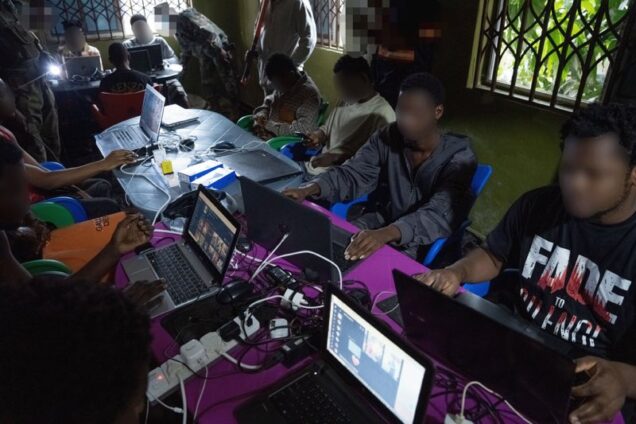
The Federal Bureau of Investigation (FBI) has announced the successful dismantling of a significant scam operation in Ghana, a key component of its global initiative, Operation Blackout, aimed at combating transnational fraud networks. FBI Director Kash Patel, in a post on X on Thursday, October 8, 2026, revealed that the Ghana-based operation had identified nearly US$10 million in financial losses and 89 victims. The effort also led to the arrest or detention of over 130 individuals, including victims slated for repatriation, and the seizure of more than 300 devices. Patel underscored the FBI's commitment to "crushing" scam compounds that target American citizens and "destroy lives" across the globe, indicating that the investigation remains ongoing and further actions are anticipated.
Operation Blackout, described by Patel as a worldwide endeavor against scam compounds involved in defrauding Americans, has yielded substantial results to date. Globally, the initiative has led to the seizure of approximately US$17 billion in fraud-related assets, the arrest of hundreds of alleged scammers, and the liberation of thousands of trafficked workers. Furthermore, proactive prevention efforts, including the separate Operation Level Up, have reportedly warned over 10,000 potential victims before they incurred losses, preventing an estimated US$670 million in financial damage. Patel has characterized these scam compounds as large, fortified facilities where individuals, often trafficked, are compelled to engage in fraudulent activities against victims abroad, noting a trend of criminal networks relocating their operations to Africa as law enforcement pressure intensifies in Southeast Asia and other regions. This announcement highlights growing cooperation between Ghanaian and US authorities in addressing transnational financial and cybercrime, exemplified by the July 2026 extradition of Ghanaian national Frederick Kumi, also known as Abu Trica, to the United States to face charges related to a romance-fraud network that defrauded over 80 elderly American victims of more than US$8 million. Ghanaian institutions, including the Attorney-General's Office, Economic and Organised Crime Office, Ghana Police Service, Cyber Security Authority, National Intelligence Bureau, and the FBI Legal Attaché Office in Accra, had cooperated in securing Kumi's arrest and extradition.
However, the FBI Director's announcement prompted a swift response from Ghana's Minister for Communication, Digital Technology and Innovations, Samuel Nartey George. Minister George cautioned Patel against downplaying Ghana’s pivotal role in the recent cybercrime operation, warning that such an approach could jeopardize future international cooperation. He specifically objected to the framing of Patel's post, asserting that it failed to adequately acknowledge the leading contributions of Ghanaian law enforcement and intelligence agencies, as well as the substantial support provided by the United Kingdom’s National Crime Agency (NCA) and the FBI itself.
In his own statement, Minister George clarified that Ghana’s Cyber Security Authority (CSA), operating under his Ministry, collaborated with the Criminal Investigations Department (CID) of the Ghana Police Service and operatives from the National Security Secretariat. These Ghanaian entities led a series of "Cyberhunt operations" conducted between September 25 and 28, 2026, which he stated delivered a decisive blow to cybercriminals. He emphasized that the fight against cybercrime is inherently transnational and necessitates genuine collaboration, highlighting that Ghanaian agencies led these particular operations with primary support from the UK NCA and the FBI. Minister George expressed his expectation that Director Patel would reflect on the benefits of continued cooperation and adjust his communications accordingly, reaffirming the John Dramani Mahama administration’s commitment to eradicating cybercrime and its gratitude to international partners, including the UK NCA and the FBI. The CSA, he assured, would persist in its efforts alongside both local and international law enforcement agencies to maintain these operations.
This divergence underscores the complexities of international law enforcement collaborations, where credit and recognition play a crucial role in sustaining partnerships. While both sides agree on the success of the operation in tackling cybercrime and acknowledge ongoing investigations, the Ghanaian minister's intervention highlights the importance of precise and inclusive representation of collaborative efforts to ensure continued effectiveness in the global fight against organized fraud.