Germany's Golden Age Gone? Industrial Giant Warns of Deindustrialisation Spiral
Reinhold Würth reflects on Germany's "Golden 80 Years" of peace and prosperity, contrasting this with a modern shift towards comfort and a critique of the nation's economic competitiveness. He warns of deindustrialization and calls for unity, innovation in IT and AI, and a renewed national spirit to safeguard Germany's future in freedom and democracy.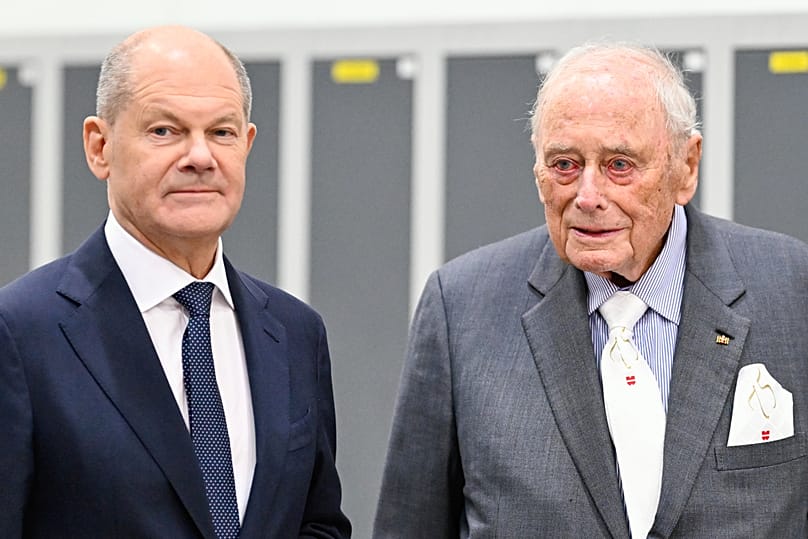
In April 2026, Reinhold Würth celebrated his 91st birthday, reflecting on a significant period he termed Germany’s "Golden 80 Years" from 1945 to at least 2026. This era, which he experienced from the age of ten at the end of World War II, was marked by Germany being at peace, experiencing annual growth in prosperity, and maintaining a functioning democracy. Würth expressed profound gratitude for being born in 1935, never serving as a soldier, and belonging to what was known as the Silent Generation in his youth.
His personal and professional journey closely mirrored the development of the Federal Republic. In 1949, he joined the Würth company in Künzelsau as an apprentice, a two-man business his father, Adolf, had established days after World War II with the American military government's approval. Following his father's sudden passing in 1954, Reinhold, at just nineteen, took over the management, a venture that proved remarkably successful. He dedicated himself to winning customers and recruiting new staff, transforming what he considered a "happy hobby" into a global enterprise. By 2025, the Würth Group boasted 86,000 employees and generated annual sales of approximately €20.7 billion, having grown by an average of 19.3% every year since its foundation.
The post-war period saw a destroyed Germany rebuilt through the hard work of its citizens, economy, authorities, and politicians. Prosperity grew steadily, allowing many Germans to purchase bicycles, new cars, and eventually their own homes, while their newfound wealth enabled them to travel extensively. A majority of the population achieved a secure existence and a certain degree of prosperity, which, according to Würth, marked a significant societal shift around the turn of the millennium.
This shift led to a diminished interest among employees in pursuing further professional career steps. Instead, attention turned to family and ensuring a stress-free future for children, often resulting in a degree of pampering for the younger generation. The advent and constant improvement of the iPhone around the millennium further fueled this reorientation. Children quickly taught parents and teachers how to use these devices, fostering a generation that assumed well-being would be guaranteed, leaving behind the stressful establishment of a personal survival strategy. Worries about war or stress at work became almost nonexistent, with parents often funding post-education world trips.
Würth observes that the children and grandchildren of the Baby Boomer generation now prioritize comfort, even to the extent of viewing Friday afternoons as part of the weekend, a stark contrast to the previous expectation of Saturday afternoon marking the start of leisure time. This evolving mentality, he suggests, partly answers the question of Germany's current societal state.
However, by 2026, Germany has been roused from its quiet life by warnings of economic decline, the threat of war, and fears of inflation. Würth asserts that Germany’s "immune system" is no longer trained and requires immense effort to revitalize. He critiques the current political landscape under leaders like Scholz and Merz, and points to a critical economic issue: most production companies in Germany are no longer competitive due to "unreasonable wage demands" from trade unions. Unit production costs in other EU countries are up to 50% lower, rendering German products uncompetitive on the global market and leading to deindustrialization and job losses, a "spiral towards the basement."
To avert this disaster, Würth identifies a singular opportunity: competing with US giants like Google and Apple in electronics, IT, and artificial intelligence. This involves building domestic clouds and innovating relentlessly, acknowledging the substantial progress made in AI development in China. Beyond purely economic factors, Würth emphasizes the crucial role of national mood and emotions, estimating that 50% of macroeconomic success is driven by public sentiment and citizens' opinions. He laments that the "prosperity-driven multitude of voices" and "hate speech against everyone and everything" are poisoning the country’s immune system.
Recalling a highlight of his 91 years, Würth points to November 9, 1989, when the Berlin Wall fell and German reunification began. This event sparked widespread elation and enthusiasm, moving millions to tears, and representing a high point in the history of the Federal Republic. Today, he asks if the prevailing "morally narrow-minded and petty carnage," where "everyone against everyone, everyone against everything" must continue. He advocates for Germany to rearm – democratically, ideologically, and militarily – to deter enemies and preserve peace. This, he stresses, necessitates consensus, unity, and a strong feeling of belonging, rather than internal disputes like strikes for higher company pensions.
Now, in his 92nd year, Prof. Dr h. c. mult. Reinhold Würth, Honorary Chairman of the Supervisory Board of the Würth Group's Family Trusts, knows his time on Earth is brief. He concludes by echoing Claus Schenk Graf von Stauffenberg's last words, adding his own: "Long live Germany in freedom and democracy." The Würth Group, based in Künzelsau, remains the global market leader in the trade of assembly and fastening materials for trade and industry, with Forbes estimating his wealth at $41.9 billion in January 2026.