Gaming Icon Elizabeth Hargrave Unveils New Sanibel Venture
Elizabeth Hargrave, known for Wingspan, introduces Sanibel, a lighter set collection board game with a thematic shift. Players collect distinct shells with unique scoring rules while navigating a dynamic 'time track' for turn order. This game offers strategic depth through its intricate shell placement and varied scoring conditions.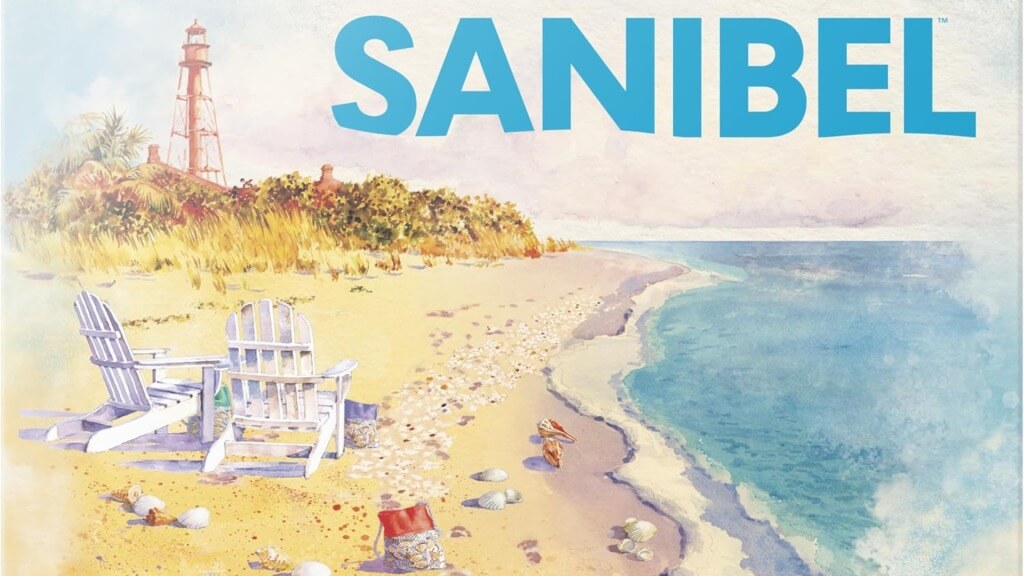
Elizabeth Hargrave, renowned for her creation of Wingspan, one of the most celebrated and popular board games to date, is set to release a third major expansion for Wingspan titled "Americas" this year. Alongside this, Hargrave has introduced her latest game, Sanibel, which marks a thematic departure from her previous science-oriented titles. Sanibel is notably one of her lightest games, designed to be accessible for families and children, emphasizing ease of play while still offering strategic depth.
Sanibel is primarily a light set collection game where the core complexity emerges within its scoring system. To excel in the game, players must develop a strategic plan for collecting shells. The game features six distinct types of shells available for collection as players move their meeple along a beach. Three shell types are found on diamond-shaped tiles, and the other three are on hexagonal tiles. Each of these six types has unique scoring conditions, identified by different colored backgrounds and symbols for easy recognition.
The scoring mechanics are varied and intricate: some shell types yield points when placed adjacent to specific other types, while others require being in pairs. Conversely, some shell types must not touch each other at all to score points. Further diversifying the gameplay, certain shells score simply based on their sheer quantity, whereas others demand a large cluster, but only if that cluster contains unique shells. This diversity in scoring mechanisms ensures that players must constantly adapt their collection strategies.
A player's turn involves moving their 'beachcomber' forward along a track. Players must move at least one section forward, though moving more is possible, it is often more strategic to advance just one section. Upon landing on a space marked one, two, or three, the player selects that corresponding number of diamond and/or hexagonal shells from that section of the beach. These collected shells are then placed onto the player's personal board. The placement follows a 'gravity' rule, meaning shells drop down until they hit the bottom of the board or make contact with at least one edge of an already placed shell. Players can place shells across the pre-marked lines on their board but cannot split a single space into two.
Sanibel employs a dynamic turn order system, which is why players might sometimes opt to take fewer shells from a section. The player who is furthest back on the track always takes the next turn. Within each section of the beach, the space marked 'one' is the furthest back, while space 'three' is the farthest forward. This mechanism is known in board gaming as a "time track," a system popularized in games such as Glen More, Patchwork, Tokaido, and The Search for Planet X. This turn order mechanic adds a layer of strategic decision-making, as choosing a forward space might grant more shells in the current turn but could delay a player's subsequent turns, potentially allowing opponents to claim desirable sections sooner.