From Home to Harvard: How African Students Are Shaping the Future Abroad
Thousands of African students are flooding into U.S. universities—but behind the stats are personal stories of sacrifice, ambition, and impact back home.
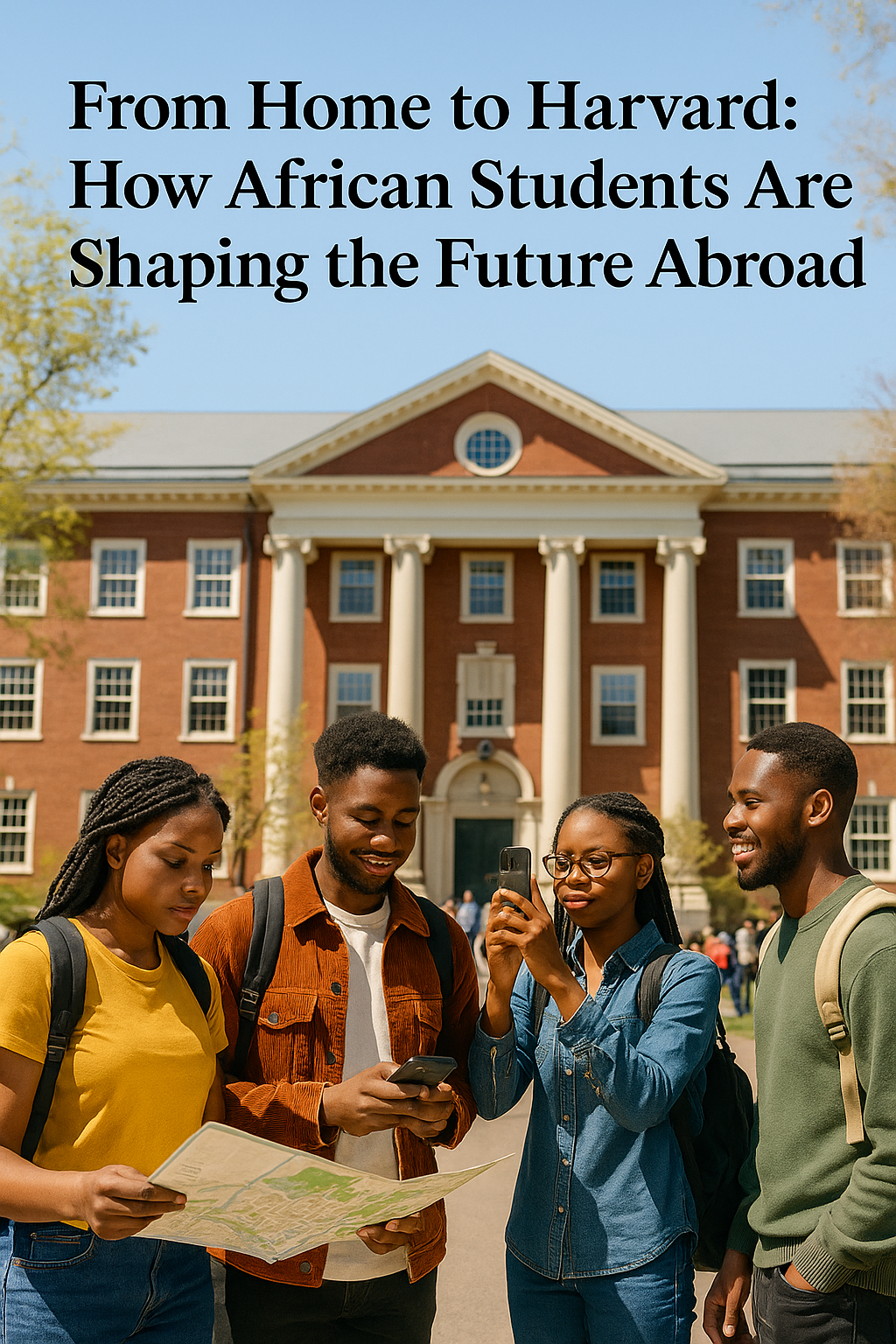
They come from Lagos traffic and Nairobi tech hubs. From Addis Ababa’s highlands to the buzzing classrooms of Accra. Armed with transcripts, TOEFL scores, and sometimes nothing but raw determination, thousands of African students are charting new educational journeys—landing in lecture halls across the United States.
While Western headlines often spotlight immigration, war, and crisis, a quieter revolution is unfolding—one of education migration, driven not by desperation but by ambition. These students are crossing continents not to flee, but to learn, grow, and someday lead. And their numbers are on the rise.
The Numbers Don’t Lie

According to the latest Open Doors Report by the Institute of International Education (IIE), over 70,000 African students were enrolled in U.S. colleges and universities in the 2023–2024 academic year. Nigeria led the continent with more than 22,000 students, followed by Ghana with 9,400. Kenya, Ethiopia, South Africa, and Cameroon also made significant contributions.
To understand how significant that is, consider this: Nigeria ranks among the top ten countries globally sending students to the U.S. Africa now accounts for over 6% of all international students in the country—a number that has more than doubled in the last 20 years.
Yet what makes this surge unique isn’t just scale, but story. Unlike India or China, whose international students often benefit from structured governmental programs, many African students navigate the journey largely alone—relying on private scholarships, crowdfunding, religious missions, or sheer willpower.
Why Leave Home?
The reasons African students pursue education in the U.S. are layered and complex.
Push factors include:
Frequent strikes at public universities in countries like Nigeria, such as those by the Academic Staff Union of Universities (ASUU)
Overcrowded institutions and limited capacity in countries like Ghana and Ethiopia
Underfunded labs, outdated curricula, and political instability
Pull factors include:
The global reputation of American institutions, with 17 of the world’s top 20 universities located in the U.S.
Better access to cutting-edge research, especially in STEM, public health, and AI
Scholarships like the Fulbright Foreign Student Program and the Mastercard Foundation Scholars Program, which actively recruit African talent

American universities such as Harvard, MIT, Howard, and UIUC now maintain Africa-focused recruitment strategies, recognizing the continent as a growing hub of intellectual capital.
A Weight Beyond Books

Studying abroad may seem like a dream realized, but for many African students, it comes with a unique emotional cost.
They are expected to excel academically, send money home, and ultimately transform lives back home. A low GPA or failed course is more than a personal loss—it’s a ripple effect of disappointment across families and communities.
Students also face racism,culture shock, and visa-related stress. A 2021 study published in the Journal of International Students revealed that African international students report some of the highest stress levels among global learners in the U.S., due to financial strain, visa limitations, and cultural isolation.
From Classrooms to Boardrooms
Yet against the odds, many African students not only succeed—they become global innovators and continental changemakers.
Iyinoluwa Aboyeji of Nigeria, trained at the University of Waterloo and Singularity University, co-founded Andela and Flutterwave—the latter now valued at over $3 billion and hailed as one of Africa’s most successful tech startups.
Dr. Ola Brown, also Nigerian, studied emergency medical systems in the U.S. and went on to found Flying Doctors Nigeria, West Africa’s first air ambulance service.
Dr. Sangu Delle from Ghana, a Harvard graduate in law, business, and African studies, established Golden Palm Investments and published Making Futures: Young Entrepreneurs in a Dynamic Africa.
Kennedy Odede of Kenya, after attending Wesleyan University on a scholarship, returned home to launch SHOFCO (Shining Hope for Communities) —now helping over 2 million people in Kenya’s urban slums.
These are not isolated cases. They represent a rising class of African alumni who convert their American education into impactful ventures back home.
Diaspora Connect
Stay Connected to Home
From Lagos to London, Accra to Atlanta - We Cover It All.
What About the Institutions They Leave Behind?
Africa’s higher education systems are straining under pressure. With over 60% of the population under 25, the continent has the youngest population in the world, yet less than 10% of eligible students are enrolled in tertiary institutions—compared to over 70% in Europe and North America.
This gap means that a university degree is increasingly treated as a scarce commodity. And because of underfunding, poor infrastructure, and lack of global recognition, success is often synonymous with leaving.
Local universities are experiencing:
Massive enrollment pressure
Brain drain of top students and lecturers
Inability to retain or attract global talent
Unless African countries invest significantly in higher education, the cycle will continue, and the continent will keep exporting its best minds.

America’s Gain, Africa’s Gamble
For the U.S., international students are a major asset. In 2023 alone, they added $38 billion to the economy through tuition, housing, and local spending. Many transition into high-demand STEM roles, especially under the Optional Practical Training (OPT) and H-1B visa programs.
But for Africa, the calculation is more delicate. If students remain abroad, it’s a brain drain. If they return equipped with global expertise, it becomes brain gain.
The outcome depends on:
Whether home governments create reintegration pathways
Whether students see opportunity in returning
Whether there are institutional bridges between diaspora talent and domestic development
Some nations are beginning to act. Ghana has launched initiatives to lure back skilled professionals. Nigeria’s booming tech sector benefits from returnees building startups and investing in digital infrastructure.
But much more needs to be done.
Beyond the Degree
This movement isn’t just about education—it’s about identity, mobility, and legacy. These students are rewriting the African story—not as victims of underdevelopment, but as global thinkers, cultural translators, and builders of a new Africa.
They straddle two worlds. They switch from English to Igbo, from Harvard Zoom calls to family WhatsApp groups, from academic citations to remittances for school fees. And in doing so, they become part of something larger: a diaspora renaissance that links African brains to global power.
Conclusion: The Hope Carriers
From Lagos to Los Angeles, Nairobi to New York, a new generation of African students is claiming their space in the world. They are scientists, engineers, entrepreneurs, and activists, using education as both a ladder and a lens.
They may have left the continent—but they never left behind the people, places, or possibilities they come from.
In their backpacks are more than books. They carry villages, family expectations, and continental dreams. And when they rise, so too does Africa’s hope.