Ethereum's Vitalik Buterin Sounds Alarm on Prediction Market Flaws!
Ethereum co-founder Vitalik Buterin has expressed significant concerns about prediction markets, warning they risk narrowing into short-term speculation rather than evolving into robust financial utilities. While acknowledging their recent growth and increasing trading volumes, Buterin proposes a shift towards using these markets as generalized hedging tools and personalized economic stabilizers. A recent CertiK report also highlights rapid market expansion alongside structural vulnerabilities, underscoring the urgent need for durable financial infrastructure.
Vitalik Buterin, Co-Founder of Ethereum, has warned that prediction markets risk becoming dominated by short-term speculation instead of evolving into meaningful long-term financial infrastructure.
In a recent post on X, Buterin acknowledged that prediction markets have achieved significant growth, with trading volumes now large enough to sustain professional traders. He noted that such platforms can provide valuable forward-looking information, often complementing traditional media.
However, he cautioned that most activity currently centers on short-term crypto price bets and sports-style wagering, which he said offer limited lasting value.

Buterin explained that prediction markets rely on a structural imbalance, where informed participants profit from less-informed traders.
He identified three main groups: inexperienced speculators, institutional information buyers, and hedgers.
According to him, the current ecosystem depends heavily on uninformed traders, which may incentivize platforms to prioritize engagement volume over real informational usefulness.
To address this, Buterin proposed expanding prediction markets into broader hedging tools. Rather than focusing solely on speculation, investors could use prediction markets to reduce exposure to real-world risks.
For example, biotech investors could hedge against election outcomes that might negatively affect their sector.
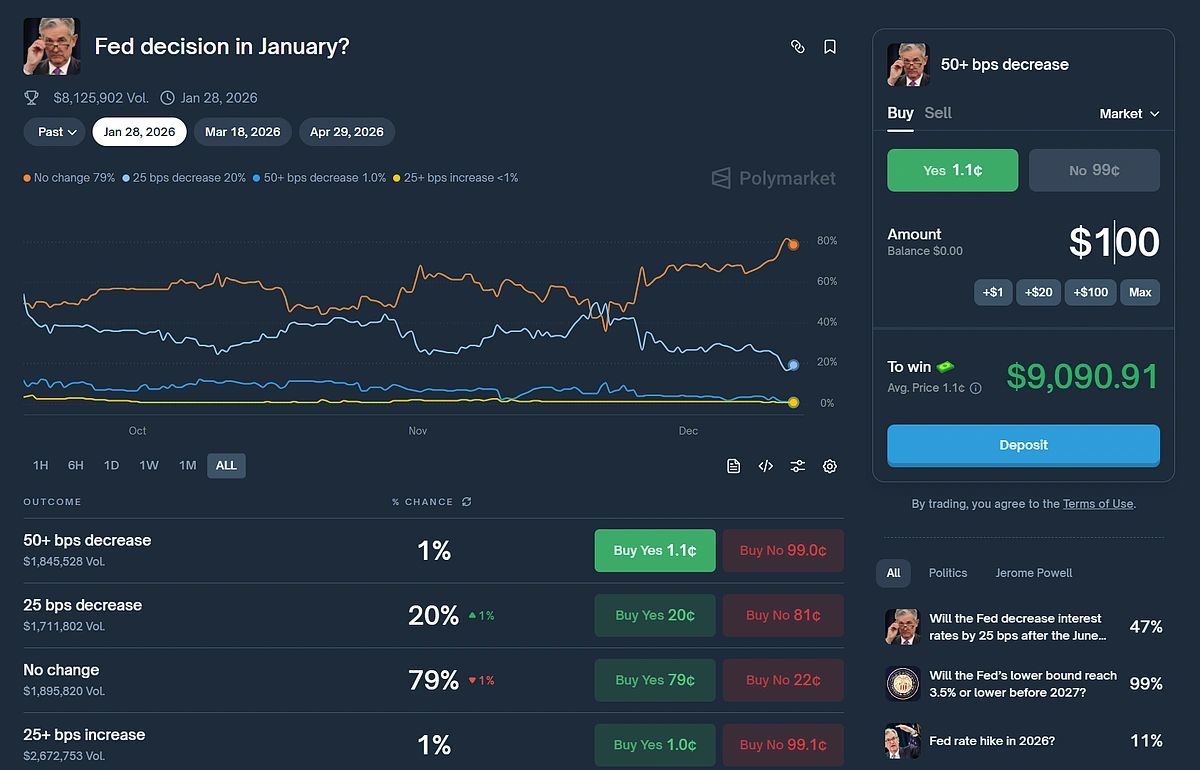
This approach would improve financial stability rather than simply pursuing speculative gains.
He also suggested prediction markets could eventually serve as personalized financial stabilizers.
Instead of relying entirely on traditional currencies or stablecoins, users could hold customized combinations of crypto assets and prediction-based financial positions designed to protect their future purchasing power.
Buterin’s comments come as prediction markets experience rapid global expansion.
A report by CertiK found that the sector grew four-fold over the past year, with trading volumes increasing sharply in 2025.
Major platforms such as Polymarket and Kalshi have emerged as key players driving adoption.
However, the rapid growth has also exposed risks.
CertiK highlighted a late-2025 breach involving a third-party authentication provider connected to Polymarket.
While the platform’s blockchain contracts remained secure, the incident revealed vulnerabilities created by hybrid Web2-Web3 infrastructure.
Despite these concerns, prediction markets are increasingly viewed as important tools for pricing uncertainty in finance, politics, and economics.
Buterin emphasized that their long-term success will depend on shifting focus from speculative betting toward building sustainable financial systems that help individuals and institutions manage risk more effectively.