Does the "1 in 4 Children" Statistic Explain Nigeria's Education Crisis or Conveniently Flatten It?
UNICEF says only 1 in 4 Nigerian children can read by 14. The statistic is technically accurate and profoundly misleading. Here's what the national average erases.
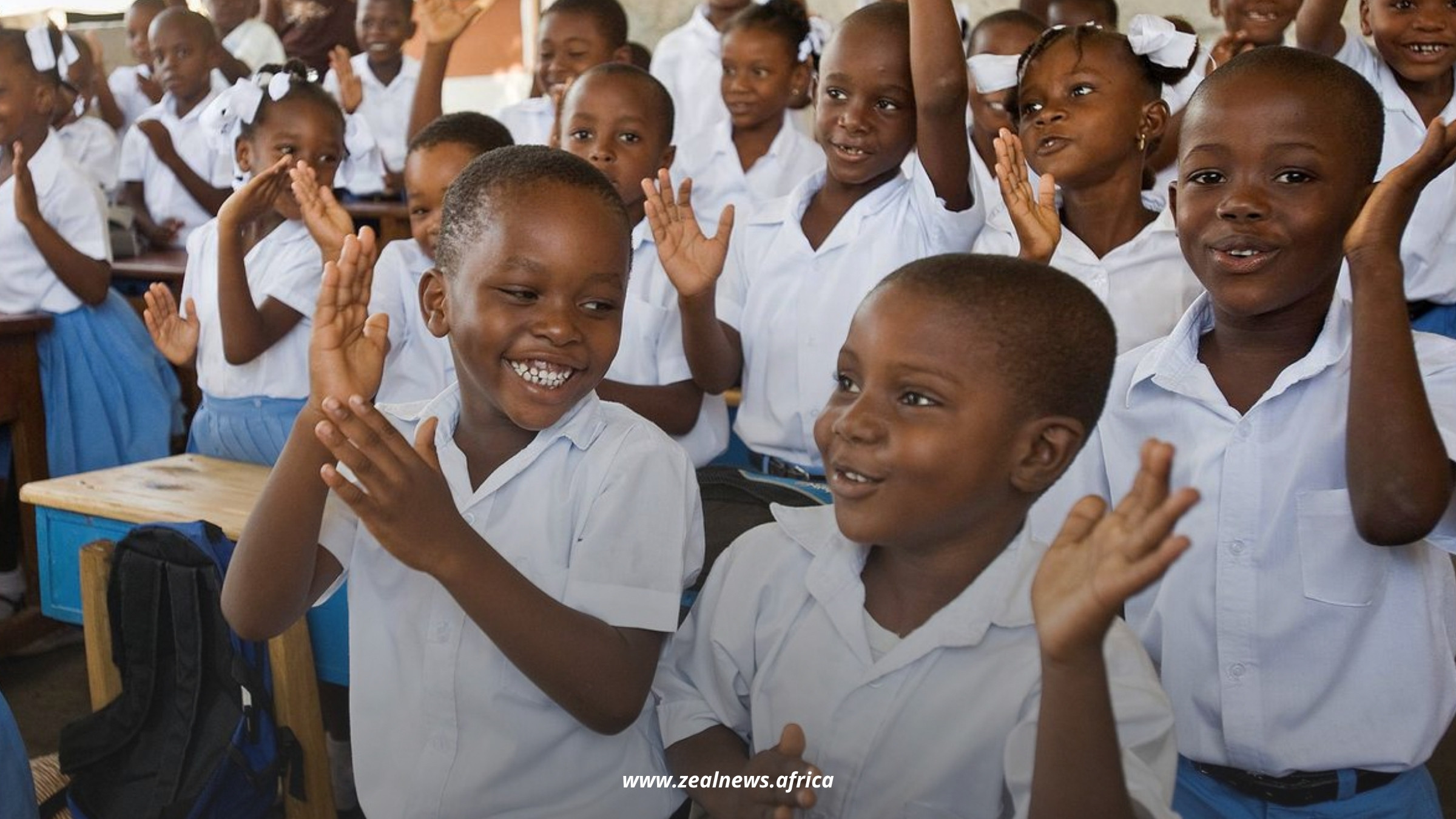
At a media dialogue in Ede, Osun State, on June 3, 2026, Celine Lafoucriere, Chief of UNICEF's Lagos Field Office, dropped a statistic that had the whole country talking within hours.
"Of all the children in Nigeria who actually go to school, only one in four can read properly and do basic math at age 14."
The claim spread rapidly, framing itself as a damning verdict on the country’s entire education system. Yet in a nation whose North-South education divide rivals the development gap between some neighboring countries, this national average risks simplifying far more than it elaborates.
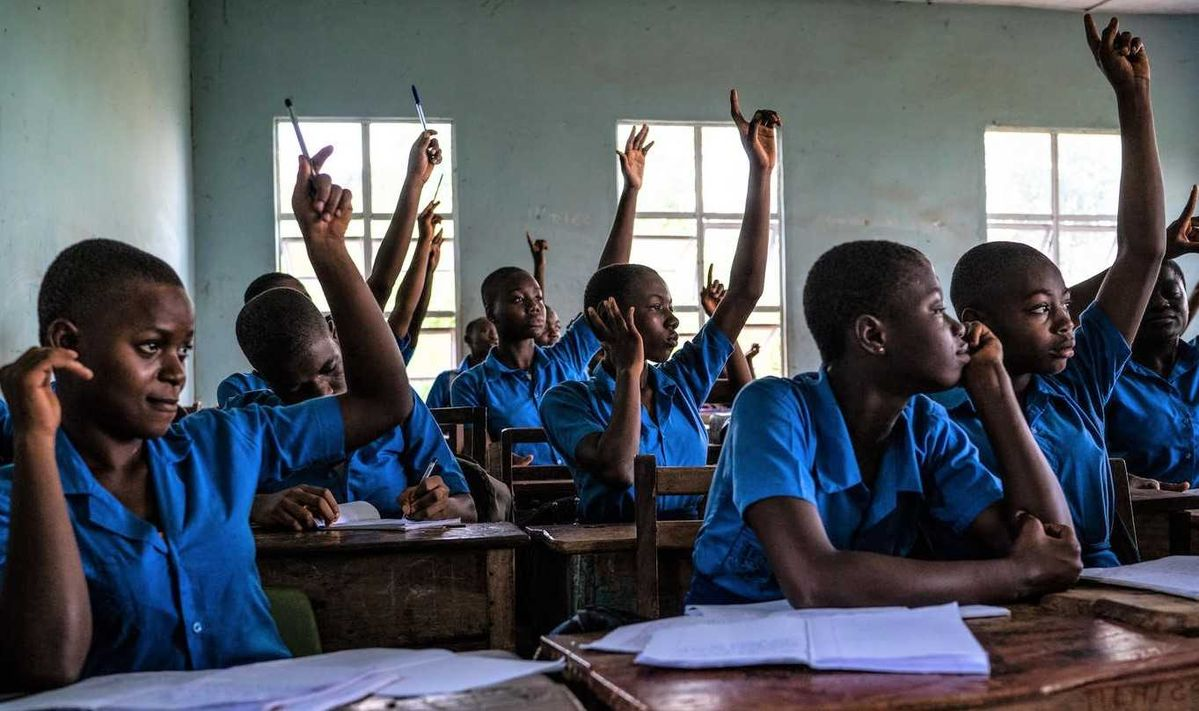
The "1 in 4" Literacy Statistic: What It Actually Measures
Despite the shock that hit the Nigerian populace with such statistics, the figure is not largely new. A 2024 UNICEF report documented that only 26% of Nigerian children aged 7–14 possess foundational reading and mathematics skills.
The same finding was stated in 2023 as "75% cannot read a simple sentence." This is the same data with different framing, annually.
The metric typically used in these data collection islearning poverty. Learning poverty is defined as the inability to read an age-appropriate text by age 10, merging children who are out of school with those in school but failing to meet minimum proficiency benchmarks.
In Sub-Saharan Africa, the World Bank estimates learning poverty at 89%. Nigeria sits at one of the worst ends of that spectrum.
The benchmark itself deserves scrutiny. Proficiency is measured against international standardised frameworks. These are instruments that are not designed in Nigeria, and ones that do not account for instruction in mother tongues during early primary years.
A child who acquires Yoruba as their first language before getting instructed in English may not score well on an English-language proficiency test at 14, and yet not be functionally illiterate in any meaningful sense of daily life.
This is not propaganda. But it is a measurement that demands context.
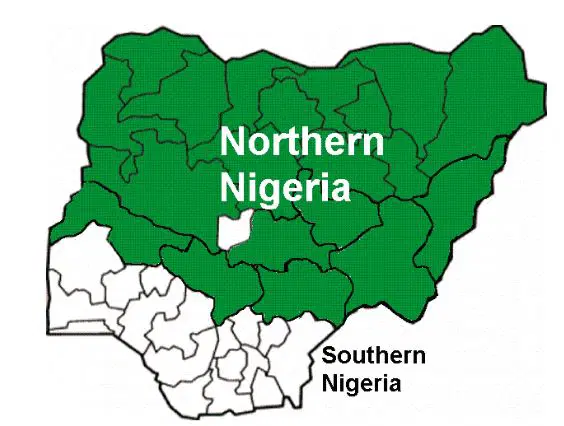
Nigeria's North-South Literacy Divide: One Country, Two Realities
The fundamental problem with a national average is that it collapses a structural fault line that has persisted since before independence.
Adult literacy in Nigeria's southern states sits at approximately 89%; the north hovers around 34%. The gap between Imo State's 96.43% literacy rate and Yobe's 7.23% is one of the most extreme intra-country educational disparities anywhere in the world.
The North-West alone accounts for roughly 8 million out-of-school children; the North-East, another 5 million. The South-East records approximately 664,000. Around 69% of Nigeria's out-of-school children live in northern states.
When UNICEF's statistic is computed across the full national population, it averages a 96% literacy region with a 7% one.
Social Insight
Navigate the Rhythms of African Communities
Bold Conversations. Real Impact. True Narratives.
The resulting figure, a 25% proficiency, is arithmetically accurate. Applied without disaggregation, it tells an Anambra parent something profoundly untrue about their state's schools, and tells a Zamfara policymaker nothing they didn't already know.
What Is Driving the Northern Crisis: Insecurity, Demographics, and a Parallel Education System
Three structural factors explain most of the northern deficit and none of it is reducible to governance failure alone.
Insecurity as an Education Policy Variable
Since Boko Haram emerged in 2009, northern Nigeria has experienced sustained, deliberate attacks on educational infrastructure. By 2017, over 2,295 teachers had been killed and 19,000 displaced.
Almost 1,400 schools were destroyed. The mass abductions like the Chibok girls 2014, Dapchi 2018, Kaduna 2021 and the kidnapping of over 300 students from two northern schools in November 2025, have functioned exactly as intended. It has made families afraid to send children to school.
Nigeria recorded 89 verified school attacks in 2023, the highest of any country globally. These are operational disruptions that UNICEF's headline statistic does not communicate.
Demographics and Household Education Investment

Nigeria's total fertility rate stands at approximately 4.94 births per woman nationally, but reaches 7.5 in Yobe State against 2.9 in Rivers State. Research on ethnic fertility differentials shows a TFR of 8.02 among Hausa-Fulani women, nearly double the Yoruba figure of 4.43.
The education implications are direct. More children per household means less parental time, income, and resources per child. High fertility combined with poverty, teacher shortages and insecurity creates structural strain that no amount of enrolment policy can easily absorb.
The Almajiri System and the Limits of Western Literacy Metrics
In the North-East and North-West, an estimated 29–35% of Muslim children receive primary education through Qur'anic schools rather than the formal state curriculum.
These children are learning, memorising texts, acquiring linguistic competencies in Arabic and developing within an institutional system with centuries of continuity that predates British colonialism in Nigeria.
They do not appear literate on UNICEF's metrics, because those metrics measure English-language reading proficiency within a westernised pedagogical frame.
When UNICEF says 75% of Nigerian children cannot read, it is partly counting children who can read, just not in English, and not in ways its measurement apparatus recognises.
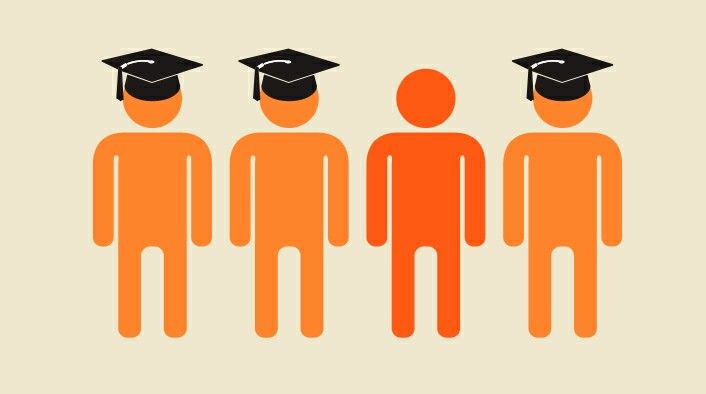
Is This Propaganda? The Honest Answer
The word propaganda is too strong. However, the concern that a metric like "1 in 4" functions to paint Nigeria as a monolithically illiterate nation in ways that serve the institutional interests of development organisations seeking funding and relevance, deserves engagement.
Nigeria's overall adult literacy rate moved from 62% in 2018 to approximately 70.4% by 2024. Youth literacy stands at 69.2% for males aged 15–24 and 64.6% for females.
A national average applied without regional disaggregation produces a headline that is technically true and contextually misleading, an incomplete picture weaponised by its own simplicity.
The conversations that actually matter are quite specific and should be paid more attention to than a general average.
Social Insight
Navigate the Rhythms of African Communities
Bold Conversations. Real Impact. True Narratives.
Why does Yobe record 7.23% literacy when Imo sits at 96.43%? What does it mean that the North-West alone contains more out-of-school children than all six southern geopolitical zones combined? At what point does insecurity stop being a footnote in education policy and become the primary variable?
Nigeria's education crisis is real. The north is in a state of educational emergency compounding for fifteen years. However, southern states, which are home to some of the best-performing schools in West Africa, should not be tarred with the same brush as the national crisis described by UNICEF’s aggregate figures
The country does not need a more flattering statistic. It needs a more honest one.