Decoding Hispanic Heritage Month's Unique September Start!
Hispanic Heritage Month, celebrated from September 15 to October 15, honors the significant contributions of Hispanic people to the United States. Originating as a week-long observance in 1968 and expanded to a month in 1988, its start date acknowledges the independence days of several Latin American nations and Mexico's 'Cry of Dolores'. The month encourages learning about diverse Hispanic cultures and supporting their communities across the nation.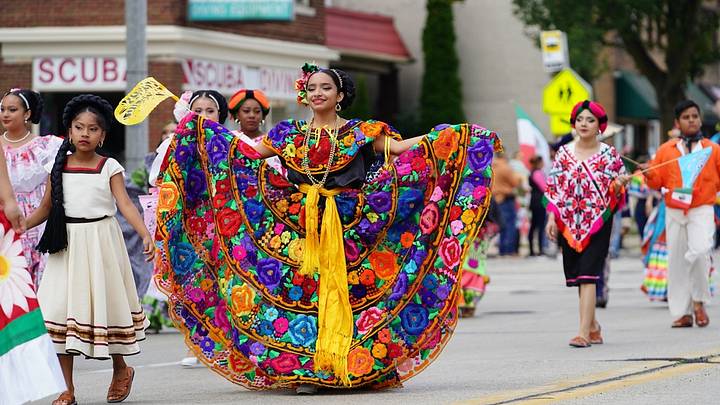
Hispanic Heritage Month is an annual observance in the United States, celebrated from September 15 to October 15, dedicated to honoring the profound contributions of Hispanic people to the nation's fabric. This significant occasion originated as Hispanic Heritage Week, officially established when President Lyndon B. Johnson signed it into law in 1968. It was later expanded into a full month-long celebration under President Ronald Reagan in 1988, marking a continuous effort to recognize the integral role of Hispanic communities in American society.
The choice of September 15 as the commencement date for this month-long celebration holds deep historical significance for numerous Spanish-speaking nations. This particular day marks the independence day for Costa Rica, Guatemala, Honduras, El Salvador, and Nicaragua, all of which gained their independence from Spain in 1821. Furthermore, September 15, 1810, is remembered as the day of “El Grito de Dolores,” or the “Cry of Dolores,” a pivotal call to arms that ignited the Mexican War of Independence. While Mexico celebrates its independence on September 16 and Chile on September 18, the original 1968 declaration for Hispanic Heritage Week specifically mandated the inclusion of September 15 and 16 to encompass these crucial historical events.
The establishment of Hispanic Heritage Week, and its subsequent expansion, was a direct response to a burgeoning push for inclusion and representation by Spanish-speaking Americans during the 1960s. Geraldo Cadava, a professor of history and Latina and Latino Studies at Northwestern University, highlighted this period: “That was a period for sure, when Chicanos in the Southwest, Mexican Americans, Latinos across the country were demanding greater inclusion and representation politically, culturally, socially, economically—everything.” This advocacy underscored a demand for acknowledgement of the vital role Latinos play in the United States. When President Reagan expanded the week into a month-long event, championed by Senator Paul Simon of Illinois after a similar bill by Rep. Esteban Torres of California, September 15 was intentionally retained as the starting point for the festivities.
Ultimately, Hispanic Heritage Month serves as a crucial period to commemorate the invaluable and countless contributions of Hispanic Americans across various sectors in the United States. It recognizes the vast diversity within the Hispanic label, encompassing many unique and specific cultures. There is no singular 'right' way to honor this occasion; rather, it encourages a multifaceted approach to learning and engagement. It is an opportune time to delve deeper into Hispanic communities’ contributions through reading, research, attending special events, or interacting with local community members. Additionally, supporting Hispanic charities and small businesses, as well as engaging with local community initiatives, are excellent ways to participate. From national events like the annual Hispanic Heritage Awards to local gatherings at libraries and museums, there are numerous avenues for participation, making it accessible for everyone to celebrate this rich cultural legacy.