Creators Break Down 'Copenhagen Test' Finale Twist: Season 2 Will Never Be The Same
'The Copenhagen Test' on Peacock merges spy thriller with dark sci-fi, starring Simu Liu as an intelligence analyst whose senses are hacked, leading to a complex web of identity and surveillance. Creators Thomas Brandon and Jennifer Yale reveal the series' 'Inception'-like narrative control and the finale's shocking twist, designed from the outset, while executive producer James Wan praises its unsettling 'science eventuality' feel.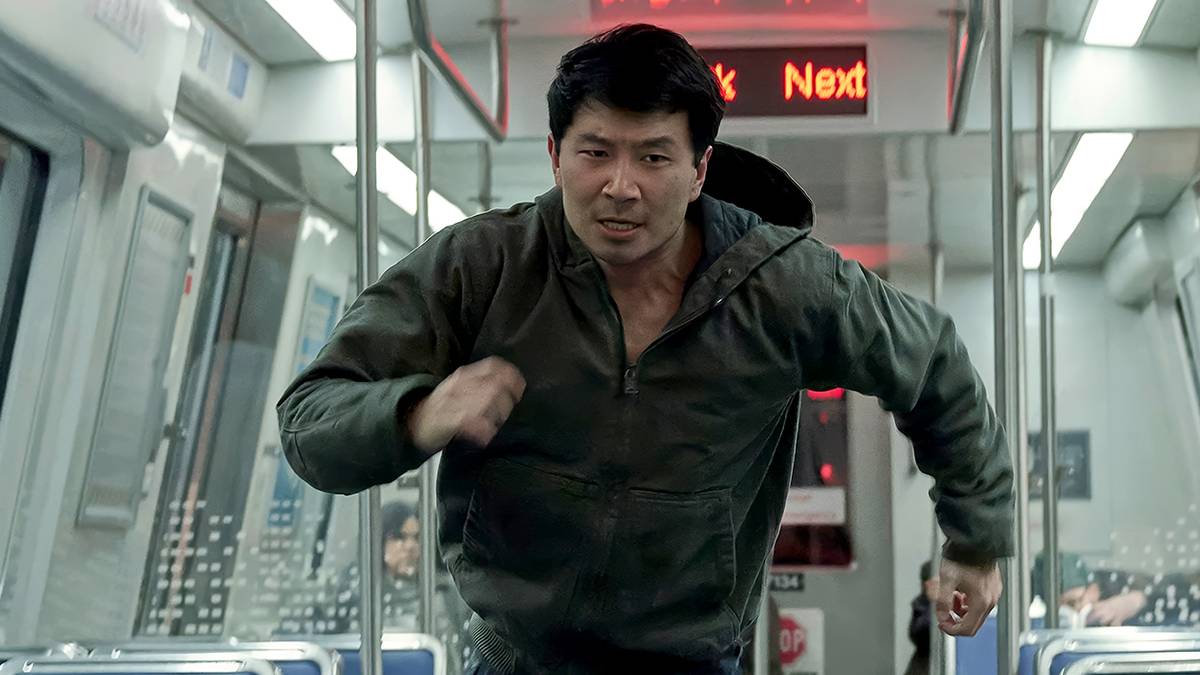
Peacock's 'The Copenhagen Test' is a compelling series that evolves from a slick spy thriller into a dark, brutal exploration of sci-fi concepts like identity, trust, and surveillance. The show centers on Alexander Hale, portrayed by Simu Liu, an intelligence analyst for the U.S. government who finds himself trapped in a nightmare when his eyes and ears are hacked, transmitting state secrets. This premise creates a situation where Alexander cannot even trust his own senses, setting the stage for a layered narrative where the true manipulators of his life slowly come to light.
Co-creator and showrunner Thomas Brandon explains that the series draws inspiration from puzzle-box thrillers like 'Inception', not to create confusion, but to build tension around the concept of narrative control. "Whereas Inception was about dreams, this is about who’s telling the narrative," Brandon states, highlighting the central theme of agency as each character, particularly Alexander, strives to understand their own identity and loyalty amidst the unfolding conspiracy. The intentional design of the season finale is to dramatically shift the audience's perception, revealing that Victor (Saul Rubinek), initially seen as a paternal figure, is deeply connected to the Copenhagen Test itself.
Showrunner Jennifer Yale confirms that this significant twist was planned "from the beginning," underscoring the show's central message that often, those closest to you are the least trustworthy. Executive producer James Wan finds the series particularly unsettling due to its proximity to reality. "It doesn’t feel fully [like] science fiction," Wan notes, adding, "It feels like science eventuality… just literally around the corner." This grounding in realism allows the show to expand its conspiracy without losing its relatability, making the finale's revelations even more impactful.
Brandon further elaborates on the show's debt to 'Inception', describing 'The Copenhagen Test' as having "stories within stories." He explains that Alexander is constantly trying to control his own narrative while Parker attempts to create a 'Truman Show' world around him, all within a larger geopolitical narrative beyond their control. The ultimate reveal of Victor as the architect of Alexander's suffering was a meticulously planned element, designed to be satisfying while also prompting new questions for viewers. The creators aimed to avoid a simple puzzle-box scenario, ensuring that the "bad guy" of Season 1, exploiting the hack, was distinct from the deeper reasons behind the hack's inception.
Regarding the conclusion of Season 1, the creators deliberately chose to expand the world rather than make it smaller and more specific to Alexander. Yale explains that this choice makes Alexander's personal mission feel smaller but more focused on survival and success beyond simply protecting his family. For a potential Season 2, Brandon suggests that Alexander's return to the fray would be driven by a moral responsibility to others experiencing similar hacks, especially those who are unaware. This would allow him to protect something "a little bit bigger" and Michelle's character.
James Wan, known for his work in horror, was drawn to the project for its blend of sci-fi and spy thriller genres. He highlights how the show's depiction of technology feels incredibly relevant and not far-fetched, making it relatable to a contemporary audience. Wan emphasizes that despite the potentially "over-the-top" story, the show remains a very human narrative at its core, allowing viewers to connect with Alexander's personal ordeal.
In a lighter moment during the interview, the creators shared their favorite Steven Spielberg films. Thomas Brandon chose 'Saving Private Ryan' with 'Close Encounters of the Third Kind' as a close second, later adding 'Raiders of the Lost Ark'. Jennifer Yale mentioned 'E.T.', and James Wan picked 'Jaws', noting how it scarred him for life and made him terrified of the ocean.