Companies Are Blaming AI for 874 Daily Layoffs. A 2021 Hiring Mistake Says Otherwise
Amazon, Meta, and Microsoft say it's an AI transformation. One insider says it's just 2021's hiring mess showing up three years late. Guess who's right.
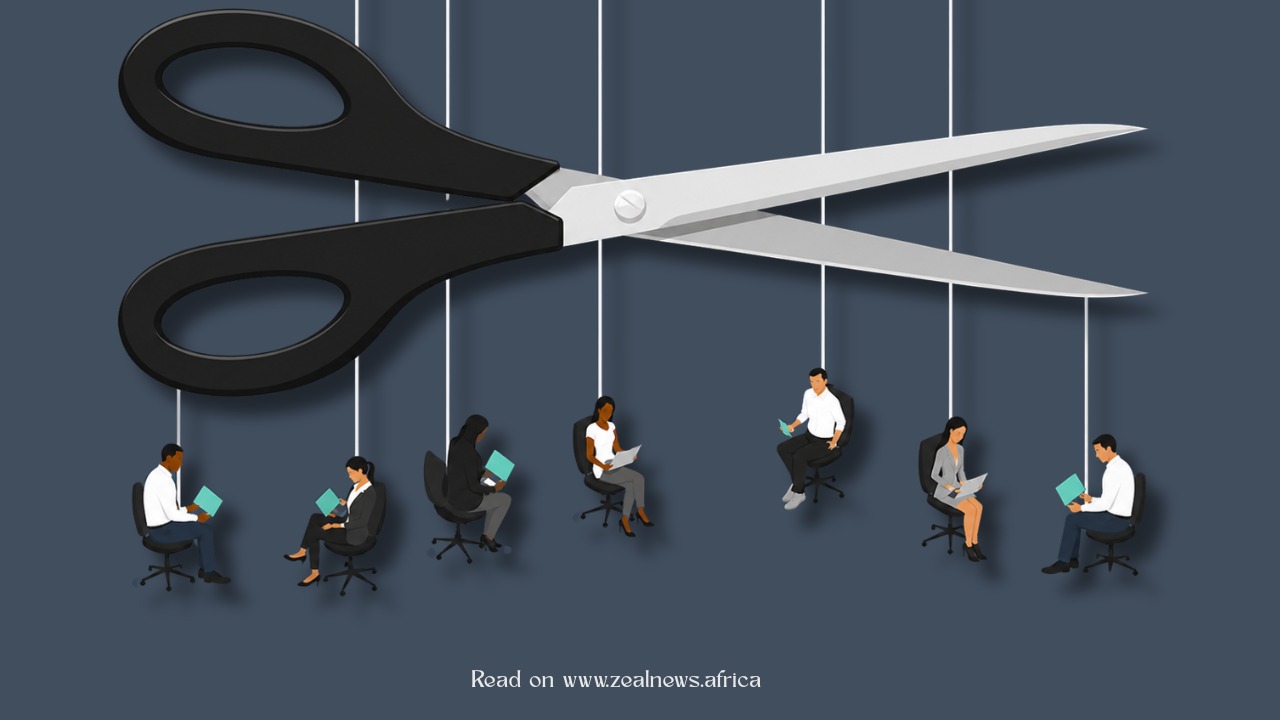
Picture this: somewhere in the world right now, 874 people are getting an email that starts with "We regret to inform you."
That's not a one-off bad day for one company. That's the daily average for 2026 so far, and it's up from 674 a day last year. Add it up and you get 164,271 jobs gone across 435 different layoff rounds, just since January.
If the year keeps going at this pace, we're looking at roughly 319,000 people losing tech jobs by December.
Who's doing the cutting? The names you'd expect. Amazon let go of 16,000 people. Meta cut 8,000. Cisco cut just under 4,000. Intuit cut 3,000. And closer to home, Branch, the lending app that operates in both Kenya and Nigeria, laid off staff in May.
The part that might annoy you is that Branch made $30 million in profit that same period. They weren't drowning. They just decided fewer people could do the job.
Then Microsoft joined in with 4,800 cuts, about 2 in every 100 people at the company gone. Their Chief People Officer, Amy Coleman, didn't hide behind vague corporate language either. She said plainly that the business is changing because the world around it is changing, and that AI isn't directly replacing the roles they cut, but it's changing how the remaining work gets done.
If you're African, based abroad, or dreaming of a job at one of these companies one day, here's why this should matter to you. For years, landing a role at Meta or GOOGLE felt like winning the lottery. Permanent. Safe. That idea just took a hit, and it's worth understanding exactly why before you decide what to do about it.
So Is AI Really the Villain Here?
Everyone wants a simple answer, and "AI took the jobs" is the simple answer everyone's reaching for. It's not wrong, exactly. It's just not the whole story.
Lanre Olaniyan, who runs Siatech Africa, agrees AI is doing real work now. Companies are using it to handle the routine, repetitive stuff that used to need a whole team. But he draws a clear line.
AI still can't do strategy. It can't lead people. It can't build relationships the way a human can. So if your job is mostly that kind of work, you're probably safer than the headlines make you feel.
But here's the twist. Adedeji Olowe, who runs Lendsqr, thinks AI is getting blamed for something else entirely. Remember 2020 and 2021, when every tech company hired like crazy because remote work made everyone think the boom would never end? Olowe says that's the real story.
Companies over-hired back then, and now, years later, they're correcting a mistake they made themselves. "As AI started coming in, people started seeing opportunity and just started dropping people," he said.
In plain English: AI gave companies a convenient excuse to do what they were going to do anyway.
Both things are probably true at the same time. A company that over-hired in 2021 has every reason to call its 2026 layoffs an "AI transformation" instead of just admitting it got the hiring math wrong three years ago. Blaming the robot sounds a lot better in a press release than blaming yourself.
Wait, Didn't Ford Just Hire People Back?
Yes. And this is the part that should make you question the whole "AI is unstoppable" narrative.
Ford, the car company, laid off a group of engineers, then quietly brought some of them back. Not out of guilt. The AI systems they'd brought in to replace those engineers weren't good enough. They couldn't meet Ford's quality standards. So the human engineers came back to do two things: fix what the AI was getting wrong, and train it properly. The people who got replaced ended up training their own replacement, and mentoring the junior staff too.
Read that again. That's not a story about AI winning. That's a story about AI still needing humans to babysit it, happening inside the same industry that's currently telling the public AI is why they had to cut jobs.
Even Pope Leo XIV weighed in on this back in May, warning that AI should serve people, not exploit them. It's a fair point, even if nobody expects a profit-driven industry to slow down because of it.
HR expert, Emmanuel Faith, puts it well. He doesn't think tech is oversaturated. He thinks it stopped being a separate industry and became the operating system underneath every industry.

"The question is no longer whether you work in tech," he said, "but whether you can use technology to solve meaningful problems." In other words, the job title "works in tech" might matter less than what problem you're actually solving.
What Does This Actually Mean For You, If You're African?
Losing a job at a big tech company isn't the end of your career. Faith is direct about this. A layoff is something that happened to you, not a verdict on whether you're good at what you do. What you do next is what actually matters.
Obinna Osuji, who runs a health tech company called Medismarts, makes a point worth sitting with. Coming home to Nigeria or Kenya after working abroad doesn't mean starting from scratch. You keep your network. You keep the way you learned to operate at scale.
You keep the exposure you gained. None of that disappears just because your visa status changed. He also points out that AI has made it cheaper than ever to start something yourself, so laid-off employees can build a product and start earning before they ever ask an investor for money.

Olaniyan takes it a step further. He thinks these layoffs are actually a chance for African governments to stop treating "our people work at foreign companies" as the win. Sending money home through remittances is fine, but it doesn't build an industry.
Building companies does. He wants governments to actually invest in training, offer real tax incentives, fund research, and make it easier for local companies to grow, the same playbook the US and China used to build their own tech giants from scratch.
And it's not theoretical. Moniepoint, Flutterwave, and Paystack already prove this works. Every job those companies created stayed on the continent instead of leaving as a plane ticket abroad.
But Osuji has a warning that's easy to miss. If Nigeria and the rest of Africa don't fix the basics, roads, power, ease of doing business, returning professionals won't see home as a place to build.
They'll see it as a waiting room until the next hiring wave picks up abroad. And a waiting room doesn't build anything. It just delays the next person leaving.