Cancelled Sci-Fi Masterpiece on Netflix Breaks Streaming Records with 3 Billion Minutes Watched
Netflix's cancellation of "The Boroughs," a critically acclaimed sci-fi series produced by the Duffer Brothers, has sparked widespread debate despite its strong viewership and "new classic" status. The decision has raised questions, prompting a deeper look into both the show's success and the broader appeal of sci-fi survival narratives, as explored in a related quiz.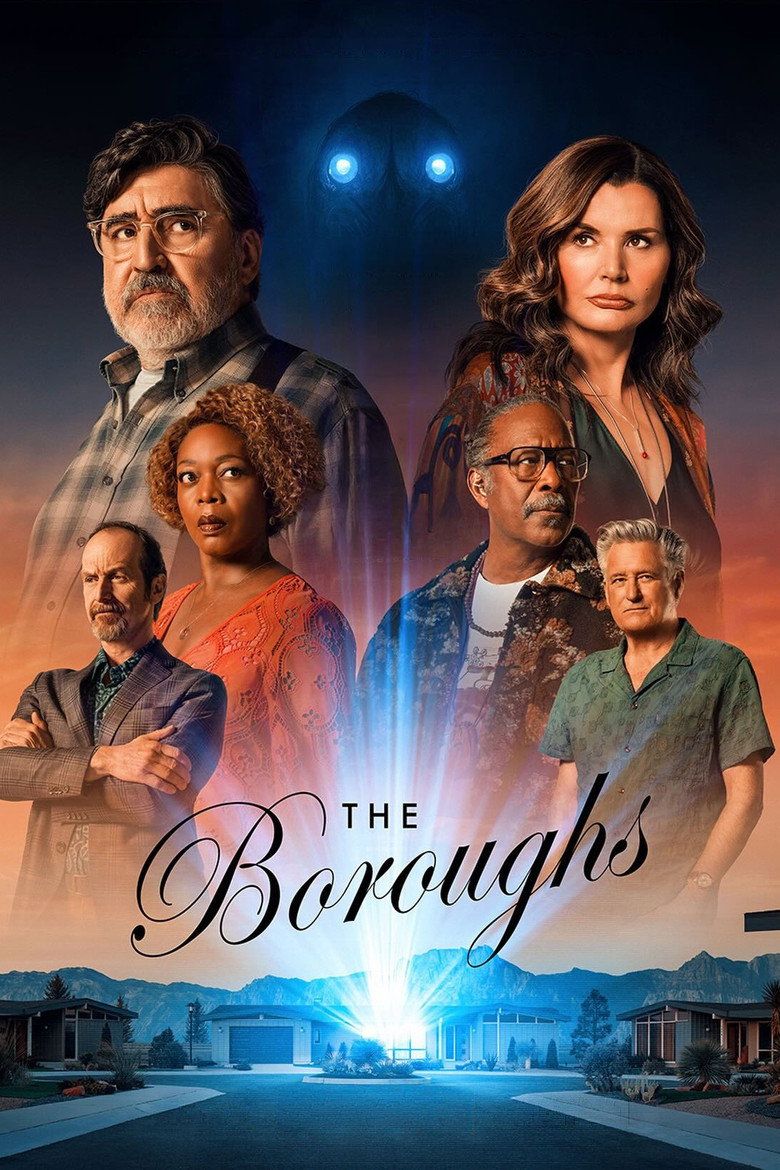
Netflix recently sparked significant debate and confusion following its decision to cancel the highly anticipated sci-fi series, "The Boroughs." Despite receiving glowing reviews from critics and demonstrating impressive early viewership success, the show, executive-produced by the acclaimed Duffer Brothers—creators of the streaming giant's monumental hit, "Stranger Things"—was abruptly axed. This move immediately raised questions, prompting speculation as to whether the cancellation was purely a business-driven choice or if it was influenced by the Duffer Brothers' recent signing with Paramount.
"The Boroughs" launched with considerable momentum, captivating audiences from its debut. According to a Nielsen report, the series registered an astonishing increase in viewership during its second week, even surpassing the viewership of the final season of Prime Video's "The Boys" towards the end of its run. Ironically, this positive report, which detailed "The Boroughs" achieving 1.2 billion minutes watched and ranking first on Nielsen charts in its inaugural week, was published just a day after Netflix announced its cancellation. The Nielsen data, typically released a few weeks post-event, tracked the period of May 25 to May 31, revealing that "The Boroughs" not only maintained its top spot but also saw a substantial 45% surge in its sophomore week, accumulating 1.7 billion minutes watched. This brought its total viewership for the first two weeks to approximately 3 billion minutes. A significant portion of this growth was attributed to older viewers, a demographic fitting for a show centered on retirees uniting to combat a mysterious adversary.
Further underscoring its critical acclaim, "The Boroughs" garnered a "Certified Fresh" score of 96% on Rotten Tomatoes. The consensus lauded the series for its "wonderfully plotted sci-fi trappings, star-studded cast, heartfelt narrative, and genuine ingenuity," proclaiming it "a new classic through-and-through." The cancellation of a show deemed a "new classic" with compelling viewership figures appears counterintuitive to many average viewers, intensifying the mystery surrounding Netflix's decision. The eight-episode run of the series remains available for streaming on Netflix.
The allure of sci-fi, with its intricate worlds and tests of human resilience, is further explored in a "Sci-Fi Survival Quiz" by Collider, inviting enthusiasts to discover "Which Sci-Fi World Would You Survive?" This interactive quiz delves into five iconic universes—"The Matrix," "Mad Max," "Blade Runner," "Dune," and "Star Wars"—each presenting distinct challenges and requiring unique survival instincts. Through eight carefully crafted questions, participants evaluate their responses to fundamental aspects of survival, including how they react to perceived systemic flaws, what resources they prioritize, what threats they fear most, their approach to untrusted authority, which environments they could endure, the alliances they would seek, their moral boundaries, and what ultimately gives their survival purpose.
The quiz outlines specific archetypes for thriving in each dystopian or fantastical setting. For "The Matrix," the survivor is portrayed as a systems thinker, someone who instinctively questions reality, pulls on threads to understand the underlying system, and ultimately seeks to dismantle the illusion. Such individuals are drawn to the Resistance, leveraging their access to information and freedom to act as the machines' worst nightmare. Conversely, survival in "Mad Max"'s desolate wasteland rewards the relentlessly resilient. This archetype is characterized by being hard to kill and hard to break, prioritizing practical needs like a vehicle, fuel, and a clear understanding of threats, all while maintaining an unsentimental yet fundamentally decent nature that distinguishes them from mere raiders.
Navigating the neo-noir streets of "Blade Runner"'s Los Angeles in 2049 requires a different kind of fortitude. Here, survivors excel in moral grey areas without losing their essence, accurately reading people, maintaining a small, trusted circle, and asking uncomfortable questions. They cling to a sense of humanity in a world where it's a legal designation, making them neither heroic nor entirely lost. On the unforgiving desert planet of Arrakis in "Dune," the quiz identifies those whose core strengths are patience, discipline, and political awareness. These individuals understand the significance of the long game, learning the planet's intricate logic and earning its respect, eventually not just surviving but also reshaping its destiny.
Finally, in "A Galaxy Far, Far Away" of "Star Wars," survival is about finding meaning in a grander cause. This archetype is drawn to rebellion, a crew, or any faction actively resisting the Empire's pervasive grip. They fight not out of obligation but from an inherent inability to stand idly by, embodying a willingness that makes all the difference in a galaxy caught in constant violent upheaval. These diverse scenarios highlight that survival isn't merely about brute force; it's a complex interplay of intellect, adaptability, morality, and purpose, tailored to the unique fabric of each imagined future.