Can A Nation Be Rich Without Its Citizens Being Wealthy?
Nigeria and several African nations report rising GDP figures while poverty deepens.What are the hidden architecture of national wealth divorced from citizen wellbeing, and asks who really benefits?
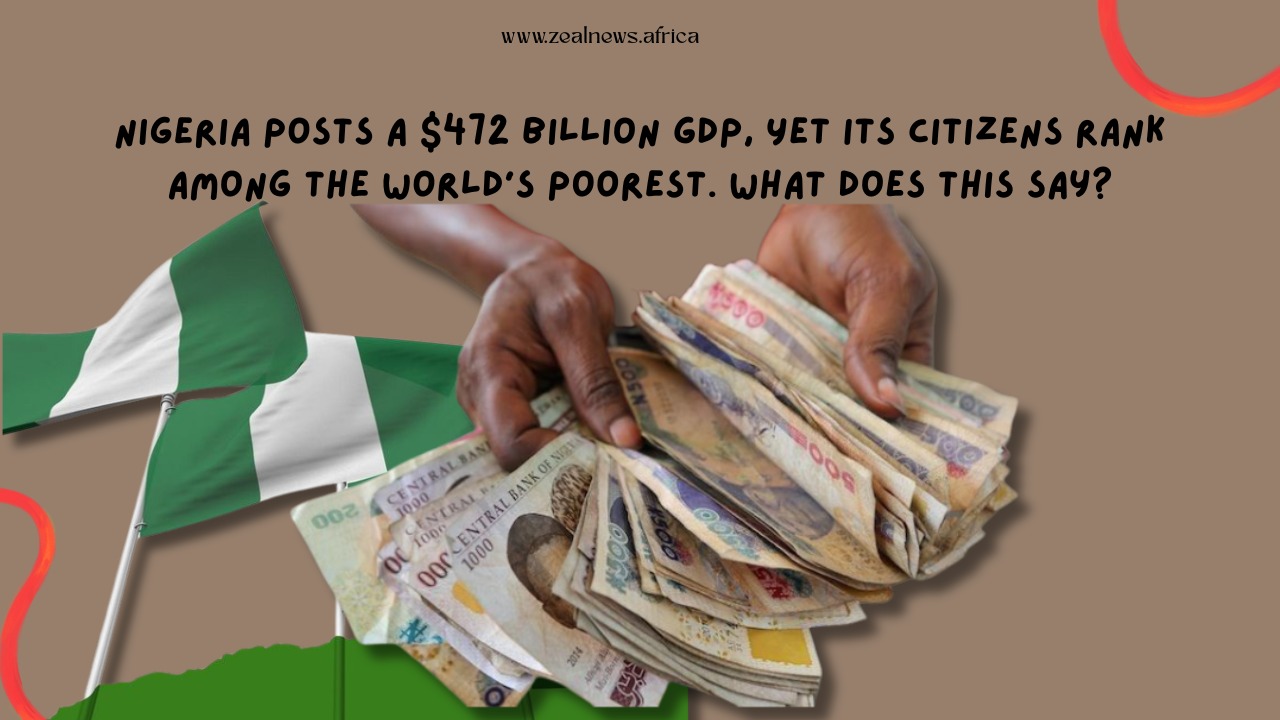
In 1990, economists at the United Nations Development Programme (UNDP) did something quietly radical.
They looked at a list of the world's richest nations by gross domestic product (GDP) and noticed a disturbing pattern: some of the wealthiest countries by that measure were home to some of the most miserable populations on earth.
Their response was the Human Development Index (HDI) — a tool that separated the wealth of a nation from the well-being of its people. Thirty-five years later, most governments still don't know which one they are actually governing.
Nigeria is worth examining here. In 2023, it became one of only a handful of countries to post a GDP above $400 billion on the African continent. Its economy produces oil, telecoms revenue, fintech unicorns, and Afrobeats exports that travel farther than its ambassadors.
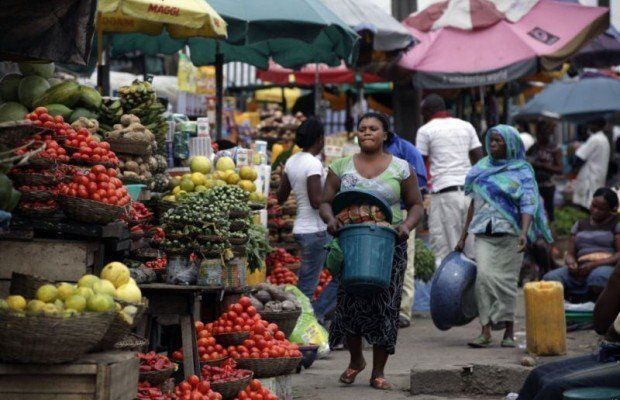
Yet in the same year, the National Bureau of Statistics (NBS) reported that over 133 million Nigerians — roughly 63 percent of the population- lived in multidimensional poverty. The contradiction sits in plain view, and yet somehow no one in power treats it as a crisis of logic.
This is not simply an African problem. But Africa is where its consequences are most lethal, most visible, and most consistently misunderstood. Because the question: can a nation be rich without its citizens being wealthy? – is not really an economic question at all. It is a political one.
The GDP Illusion: When the Scoreboard Measures the Wrong Game
GDP was never designed to measure what most people think it measures. Simon Kuznets, the economist who developed national income accounting in the 1930s, explicitly warned against using it as a welfare metric.
He said so in his first report to the U.S. Congress. His warning was ignored with such thoroughness that it became a historical footnote, cited only by the economists who came later to explain why everything went wrong.
What GDP actually counts is the total monetary value of goods and services produced within a nation's borders in a given period. It counts everything: the armored cars purchased by politicians, the hospital bills paid by families who cannot afford them, the rebuilding costs after floods that should have been prevented.
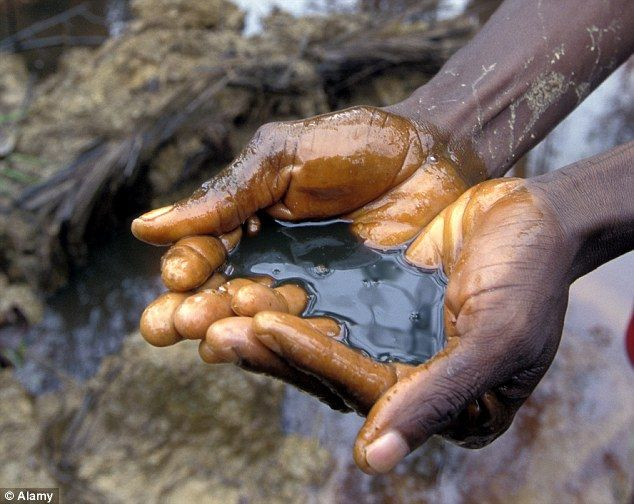
It counts extraction. When a barrel of crude oil leaves the Niger Delta, it improves Nigeria's GDP. The fishing communities whose livelihoods that extraction destroys are not subtracted from the figure.
This is the first hidden pattern: national wealth, as most governments measure it, is not a picture of how people live. It is a picture of how much economic activity occurs, regardless of who benefits from that activity or who bears its costs.
The popular belief being challenged here is that economic growth trickles down. It does not trickle. It pools. And where it pools is determined not by market forces but by political arrangements, by who controls the state, who writes the tax laws, and who enforces or chooses not to enforce them.
The Extraction State: A Colonial Architecture That Never Left
There is a concept in political science called the 'extractive state', a term popularized by Daron Acemoglu and James Robinson in their landmark 2012 work, Why Nations Fail.
An extractive state is one whose institutions are designed primarily to channel resources from the population toward a narrow elite, rather than to create conditions for broad-based prosperity.
The concept was developed partly through the study of African colonial economies. What Acemoglu and Robinson found, and what subsequent researchers have confirmed, is that those structures did not disappear when the colonizers left. They were inherited.
Colonial economies were not built to develop territories. They were built to drain them. The infrastructure: railways, ports, administrative systems, was designed to move resources out, not to move people up.
When independence arrived across Africa in the 1950s and 1960s, the new governing classes inherited these systems largely intact.
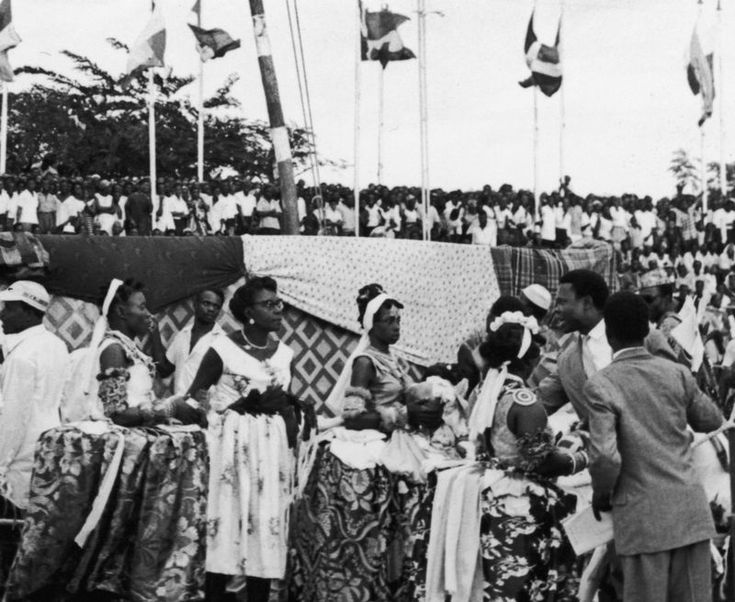
In many cases, they became the new operators of the extraction machinery, swapping European faces for African ones at the top while the logic of the system remained unchanged.

Nigeria's oil economy is the clearest contemporary example. Oil revenue has accounted for between 70 and 90 percent of Nigeria's foreign exchange earnings for most of the past four decades.
Yet a 2023 Oxfam report noted that the richest 10 percent of Nigerians earn roughly 17 times what the poorest 10 percent earn, a ratio that has widened, not narrowed, across the oil boom decades. The oil money moved.
It moved to Swiss bank accounts, London real estate, and Dubai holidays. It did not move through the Nigerian economy in ways that built hospitals, roads, or schools in the proportions that $400 billion in GDP would suggest.
This is not corruption as an accident. It is corruption as the steady-state output of a system whose rules were never rewritten to serve citizens rather than extractors. What is commonly diagnosed as a governance failure is actually a governance success, the system is succeeding at its actual purpose. The question is whose purpose that is.
The Middle Class Mirage: Why Consumer Spending Is Not the Same as Wealth
There is a moment in the growth story of every major African city when international observers point to the shopping malls, the restaurants full of young professionals, and the surge in smartphone ownership, and declare that a middle class has arrived. The African middle class narrative became especially powerful in the 2010s.
The African Development Bank (AfDB) estimated in 2011 that Africa's middle class had reached 350 million people. The AfDB's definition of 'middle class,' however, was anyone spending between $2 and $20 per day.
A family spending $4 a day in Lagos cannot absorb a single medical emergency without financial catastrophe. They have no savings buffer, no pension, no property stake. They are not middle-class. They are the working poor dressed in the language of development optimism.
Behavioral economists use the term 'vulnerability' to describe this segment; populations whose consumption looks stable in good times but whose exposure to shocks is devastating. When the naira lost 70 percent of its value between 2022 and 2024, millions of Nigerians who had been counted as middle class were reclassified as poor overnight.
True wealth, the kind that compounding, intergenerational wealth represents, requires assets, not just income. It requires property that holds value, investments that grow, and institutions that protect contracts.
Sub-Saharan Africa has some of the lowest rates of formal property ownership in the world. Much of the land occupied by families has no title.
Much of the savings held by ordinary people exists in informal arrangements with no legal protection. Without asset-based wealth, consumer spending is not prosperity. It is a photograph of water, the moment you reach for it, it is already somewhere else.
Who Benefits from the Gap? The Political Economy of Wealthy Nations and Poor Citizens
The gap between national wealth and citizen poverty is not a policy failure waiting to be fixed. It serves someone, and it serves them well. But institutions do not maintain themselves. People do.
The oil marketer padding his import figures, the governor funneling allocations to his own contractors, the multinational securing extraction rights at terms no informed citizenry would accept; each one is making the logical move inside the rules they inherited. That is the real problem.
You cannot shame a system into reforming itself, and you cannot vote out individuals while the structure that produces them stays intact.
The only thing that has ever actually moved governments like this one is pressure that raises the cost of staying still; the kind that shut down Lagos in January 2012 and forced a presidential reversal within days.
Not because Goodluck Jonathan suddenly developed a conscience, but because doing nothing became more expensive than responding. That is the mechanism. Organized, sustained, costly citizen pressure. Everything else is commentary.