Brussels Summit Shakes Europe: Zelenskyy, NATO & EU Leaders Tackle Ukraine, €2 Trillion Budget Crisis
EU leaders meet in Brussels for a high-stakes summit focused on Ukraine, China trade tensions, migration, and the bloc’s €2 trillion long-term budget, alongside debates on sanctions, EU enlargement, and transatlantic security.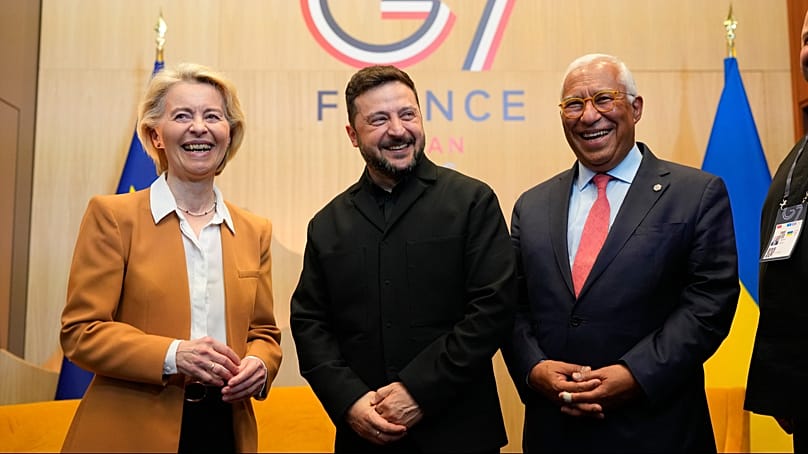
European Union leaders have convened in Brussels for a critical two-day summit, addressing an extensive agenda that includes Russia's ongoing invasion of Ukraine, the profound economic impacts stemming from the Chinese economy, and the contentious discussions surrounding the bloc's next long-term budget.
Other significant issues such as the situation in the Middle East, enhancing European competitiveness, combating drug trafficking, and managing migration challenges are also high on the agenda.
This summit follows closely on the heels of a closely watched G7 meeting in Évian, France, where a significant diplomatic win was achieved for Europe.
US President Donald Trump endorsed a joint statement committing to increased military support for Kyiv and heightened sanctions against Russia.
This agreement served to temporarily paper over existing fractures in the transatlantic alliance, particularly after the White House's earlier unilateral decision to grant waivers for Russian oilhad been a source of intense friction.
However, Trump indicated that the reopening of the Strait of Hormuz, following a framework deal between the US and Iran, would soon allow his administration to reinstate these restrictions.
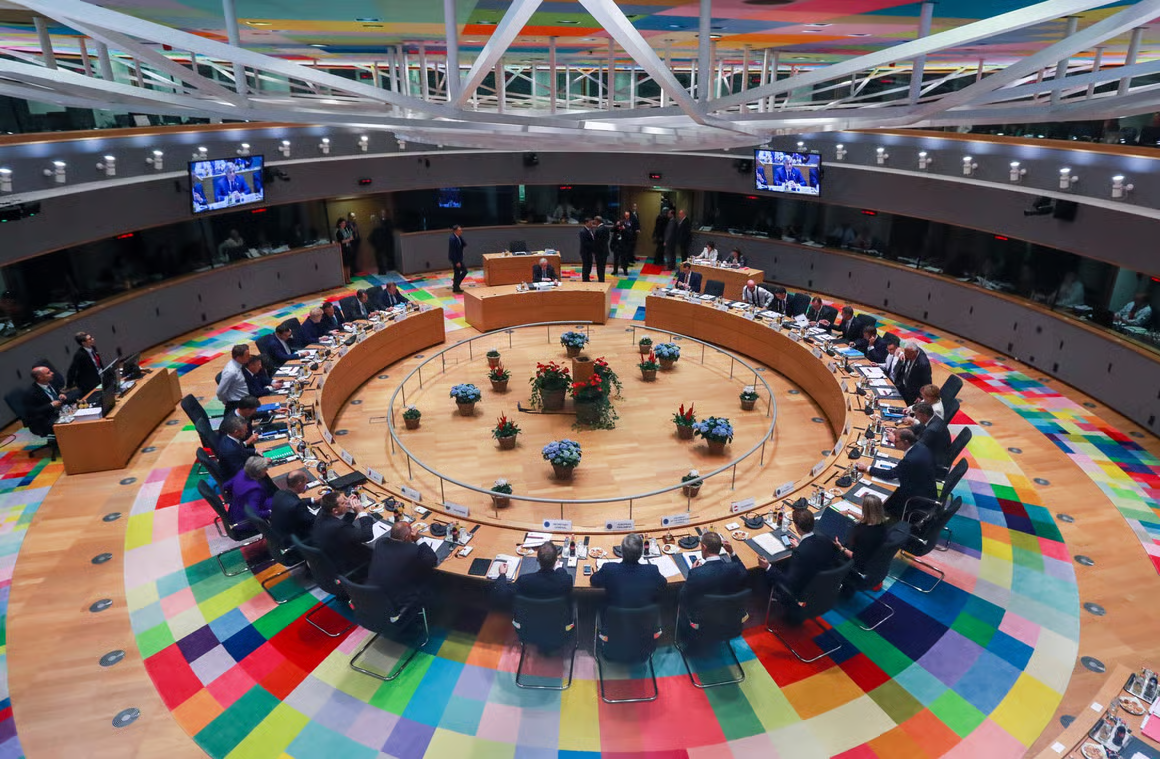
In the context of Ukraine, President Volodymyr Zelenskyy joined the 27 EU leaders on Thursday to address strategies for reviving peace negotiations and compelling Russian President Vladimir Putin to seriously engage in talks.
The EU is simultaneously preparing a new package of sanctions to further strain Moscow's resource-intensive war machine.
While there have been 'brief contacts' at a diplomatic level by European Council President, António Costa, to open communication channels with Russia, substantive discussions have not occurred and member states remain sharply divided on the prospect of direct talks.
Zelenskyy also utilized the platform to press for Ukraine's EU accession, following the recent opening of the first cluster of negotiations for both Ukraine and Moldova. He reiterated his request for a 'fast-tracked' membership, expressing concern that Russia would attempt to block Ukraine's path to success within the EU.
However, the notion of an accelerated process has been met with reluctance by EU leaders, who emphasize the importance of preserving the integrity and credibility of the complex accession methodology.
Diplomats note that public opinion is not yet fully supportive of enlargement, necessitating further efforts to secure voter buy-in for such a consequential decision, affirming a 'track of merit' for membership.
German Chancellor, Friedrich Merz, proposed an alternative 'associate membership' scenario, offering observer status to EU meetings and mutual assistance in case of armed attack, though this pitch has received mixed reviews and is unlikely to gain significant traction.
Following discussions on Ukraine, EU leaders turned their attention to a hotly anticipated debate on China. Brussels has concluded that the current EU-China trade relationship is unsustainable, requiring significant changes to avert an all-out confrontation.
Last year marked the first time that all 27 member states collectively registered a trade deficit with Beijing, escalating fears of de-industrialization from abstract concerns to tangible threats.
Senior diplomats have highlighted China's five-year plan as an 'attack on our market,' asserting that 'the cost of action will be less than the cost of inaction.'
Despite a shared grim diagnosis of the trade imbalance, the prescribed solutions remain under careful consideration, revealing divisions among member states.
Countries such as France, Poland, Belgium, the Netherlands, Sweden, Denmark, and Lithuania advocate for a more assertive stance to correct trade imbalances and counter Beijing's subsidies.
Conversely, nations like Germany, Spain, and Greece exhibit hesitation, fearing devastating retaliation and the loss of business opportunities.

European Commission President, Ursula von der Leyen, who has long warned about a 'new China shock,' aims to use the political feedback to guide future actions, potentially including new trade instruments, though the Commission has struggled to gain sufficient support for triggering the Anti-Coercion Instrument against China.
Von der Leyen stressed the need for dialogue that delivers, fair competition, and reciprocal market access.
On Friday, leaders are set to tackle another contentious issue which is the next seven-year EU budget, which the Commission initially proposed at a record-breaking €2 trillion.
Cyprus, holding the EU Council presidency, has put forward a 'moderate' 2% cut, totaling €32.8 billion, from the original draft. While this may satisfy countries prioritizing agriculture and cohesion funds, it is considered insufficient by the 'frugals,' now rebranded as 'modernisers.'
The debate is expected to feature leaders reinforcing their deeply entrenched red lines and demands, with hopes of finalizing a deal by December to prevent budget talks from extending into 2027, which could be complicated by upcoming elections in major member states.
In related developments, NATO defence ministers also met in Brussels to prepare for next month's summit in Ankara, with Ukraine, defence spending, and transatlantic security as key topics.
US Secretary of Defence, Pete Hegseth, joined his counterparts, discussing the role NATO allies could play in reopening the Strait of Hormuz.
A coalition led by France and the UK is preparing a mission to re-secure the strait using minesweepers and naval assets. NATO Secretary General, Mark Rutte, is scheduled to travel to Washington to meet President Trump to smooth over transatlantic tensions ahead of the Ankara summit, as allies previously expressed that the US-Israel conflict was not a matter for NATO.
Other items on the broader European agenda include a potential 'triple EU reset deal' between the UK and EU on agri-food, electricity, and youth mobility, as well as the ongoing challenge of combating highly potent synthetic opioids, with 50 new drugs detected across Europe in 2025 alone.
The summit also welcomed four new leaders: Péter Magyar (Hungary), Andris Kulbergs (Latvia), Rumen Radev (Bulgaria), and the return of Janez Janša (Slovenia).