BREAKING: US Officials Join High-Stakes Debate on Nigeria's Worsening Security Crisis
Nigeria's House of Representatives held a critical two-day plenary session to address the nation's escalating insecurity, marked by widespread violence, abductions, and a failed security architecture. Lawmakers called for urgent structural legislative reforms, including police decentralization, border patrol forces, and strict anti-ransom laws, as they conveyed profound national distress.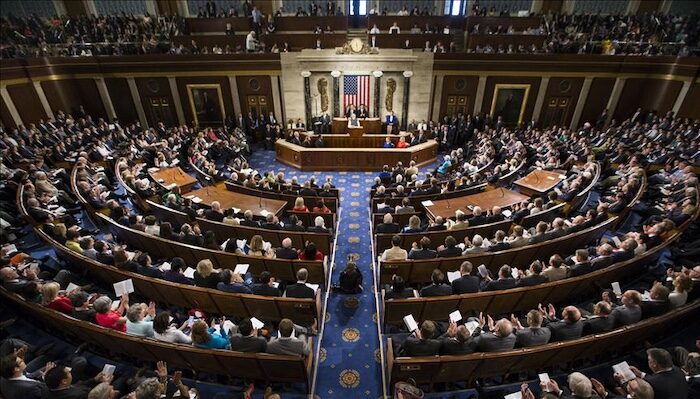
The Nigerian House of Representatives convened a special plenary session on Tuesday to address the alarming surge in insecurity across the nation, expressing profound sorrow and concern. The session, which extended into Wednesday, aimed to thoroughly deliberate on the causes, effects, and potential solutions to the pervasive security challenges, with resolutions to be formally communicated to the executive arm of government.
The critical two-day session was attended by a broad spectrum of dignitaries, including officials from the United States Embassy, the Speaker of the Parliament of Saint Kitts and Nevis, Hon. Lanien Blanchette, along with members of Parliament and cabinet ministers. It featured comprehensive presentations from various security-related committees and leaders of regional caucuses within the House, underscoring the gravity of the national crisis.
In his opening address, Speaker Abbas Tajudeen highlighted the deeply troubling escalation of violence witnessed in recent weeks across several states. He emphasized that the attacks were not random but appeared coordinated, designed to destabilize the country and foster an impression that violent groups could operate without restraint, frequently targeting soft and vulnerable populations. Speaker Tajudeen warned against succumbing to fear, stating, "Their purpose is to instill fear, weaken public confidence, and give the illusion of being everywhere at once. Nigeria must reject this tactic. We must resist fear and stand firm against those who rely on cruelty and spectacle to advance their evil ideologies."
He recounted recent tragic incidents, including an attack in Kebbi State, the abduction of students in Niger State, and the kidnapping of worshippers in Kwara State, which have caused widespread distress and anxiety among citizens. These incidents, occurring in rapid succession across different parts of the country, underscored the scale and coordination of the security threats. Speaker Tajudeen urged Nigerians to remain united and undaunted, stressing that the House's decision to suspend all other matters for this discussion was a reflection of the moment's seriousness and their duty to constituents.
Addressing Nigeria's designation as a "Country of Particular Concern" by the United States, Speaker Abbas clarified that the Nigerian government neither supports nor sponsors violence against its citizens. He affirmed Nigeria's non-negotiable sovereignty while acknowledging the value of good-faith partnerships to collectively tackle shared threats. He noted that both Christian and Muslim communities have been targeted by violent groups pursuing their own agendas, and such acts do not reflect the policy of the Nigerian state. He reiterated that the Constitution guarantees freedom of religion, and all government institutions are committed to protecting this right amidst the suffering caused by terrorism, banditry, communal clashes, and extremist violence.
Deputy Speaker Benjamin Kalu contributed to the discourse by arguing that the solution to the country's security challenges demands structural legislative reform rather than merely reactive military responses. He pointed out the constraints faced by the Nigerian police force, citing centralized command, inadequate funding, and a lack of accountability. Kalu advocated for moving the police force from the exclusive legislative list to the concurrent list, enabling states to have greater involvement. He further highlighted that despite stringent anti-kidnapping laws, the practice persists, allegedly due to government entities negotiating with bandits and paying ransoms. Consequently, he called for a legal prohibition on ransom negotiation and mandatory criminal justice processes over amnesty programs, proposing legislation to impose criminal penalties on government officials involved in such negotiations or unauthorized amnesty deals.
The House Leader, Hon. Julius Ihonvbere, presented a grim overview, confirming that Nigeria faces multifaceted security threats, leading to widespread displacement of families and communities. He reported high mortality rates, reaching up to 9,500 in 2024, and cited the Global Terrorism Index which ranks Nigeria as the sixth most impacted country globally by terrorism. According to his report, the country recorded over 24,000 violent incidents between December 2023 and November 2024. Ihonvbere noted that the legislature has been active, proposing numerous motions and bills aimed at restructuring the police force and amending the Nigeria Army Act, among others.
Adding to the chorus of concern, the House Minority Leader, Hon. Kingsley Chinda, acknowledged the pervasive insecurity but criticized the government for not doing enough to arrest the situation. He proposed immediate legislative action to establish a National Border Patrol Force to secure the nation's porous borders, thereby reducing the influx of criminal elements. Chinda also suggested utilizing the ongoing constitutional amendment process to establish community or state police forces, decentralizing security operations.
Regional leaders also voiced their distress. Hon. Alhassan Ado-Doguwa, leader of the northern regional caucus, expressed deep worry over insecurity, particularly in the North, describing the situation as horrific, tragic, devastating, and unspeakable. He stated unequivocally that while the government and security agencies might be doing their best, "their best is not good enough," leading to widespread tension, fear, and desperation among the populace due to perceived institutional and collective governmental failures. Similarly, Hon. Victor Nwokolo, leader of the South South caucus, concurred that the country's security architecture had entirely failed, asserting that no part of Southern Nigeria, outside Lagos, could be considered safe. Nwokolo put forward proposals to directly fund community vigilantes from local government allocations and involve the private sector in repairing key roads to mitigate highway abductions, thereby providing localized solutions to specific threats.