Beyond Bitcoin: How Blockchain Can Reshape Nigerian Elections
When you think of the word blockchain, the first thing that crosses your mind is crypto or bitcoin—but did you know that blockchain technology could one day help solve one of Nigeria’s most pressing democratic challenges: credible, free, and fair elections?
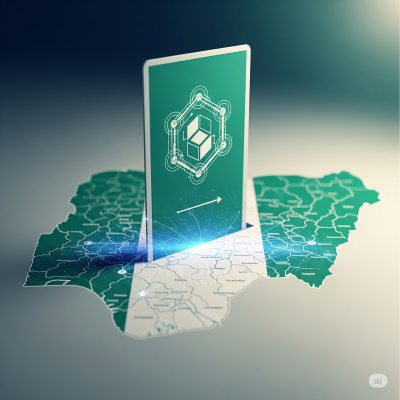
When you think of the word blockchain, the first thing that crosses your mind is crypto or bitcoin—but did you know that blockchain technology could one day help solve one of Nigeria’s most pressing democratic challenges: credible, free, and fair elections?
What Is Blockchain, Really?
At its core, blockchain is a digital ledger. Think of it as an online notebook that keeps a record of transactions or data. What makes it special is that this notebook isn’t kept in a single location or controlled by a single person. Instead, it is duplicated across thousands of computers, and every entry is secured, time-stamped, and almost impossible to alter without detection.
In other words, once something is recorded on a blockchain, it’s there for good—and everyone can verify it.
In a world shaken by misinformation, foreign interference, and declining trust in democratic institutions, the humble ballot box is under pressure to evolve.
How Can Blockchain Be Used in Nigerian Elections?
Imagine a voting system where every vote cast is recorded on a blockchain. Voters use their phones or designated machines to submit their votes digitally. Each vote becomes a unique, traceable record—secure, encrypted, and unchangeable. No one can tamper with the data, stuff ballot boxes, or swap vote counts at collation centers.
Voter identities can remain anonymous but verifiable using digital IDs or biometric authentication. Every action—registration, verification, vote casting, and counting—is transparent, decentralized, and audit-ready in real time.
This means you could track your vote the same way you track a package on Jumia.
Where Has This Worked or Failed Before?
From West Africa to the American heartland, and from Swiss villages to the halls of Russian power, blockchain is being tested as a potential safeguard for democratic processes. Its core promise — an immutable, transparent ledger — makes it appealing for election officials and technologists seeking to modernize how we vote. But real-world experiments reveal a more complex story: one where innovation meets resistance, and where transparency can either build trust — or expose deeper flaws.
In Sierra Leone, blockchain made its quiet debut during the 2018 presidential election. A Swiss startup called Agora ran a parallel blockchain-based tally in one district, aiming to prove that votes could be recorded immutably and observed in real time by international monitors. Though the effort was praised as historic, the government later distanced itself from the project, cautioning that the official count remained analog. Still, the experiment signaled a turning point — that even in fragile democracies, digital transparency might have a future.
The United States followed shortly after. In West Virginia, also in 2018, a bold pilot allowed a small group of overseas military voters to cast their ballots via a mobile app secured by blockchain. The move was hailed as a breakthrough for military enfranchisement. Yet the program — developed by the startup Voatz — drew heavy fire from cybersecurity experts, who warned that any internet-based system was inherently vulnerable. Despite the controversy, the ballots were counted without issue, and West Virginia became the first U.S. state to use blockchain in a federal election.
Meanwhile, in Switzerland, the tech-forward town of Zug — nicknamed “Crypto Valley” — held the world’s first blockchain-based municipal referendum in 2018. Citizens used digital IDs to vote on local issues. The system worked, but turnout was strikingly low. The lesson: trust and accessibility aren’t just technical problems — they’re cultural and political ones, too.
Perhaps the most dramatic case came from Russia, where Moscow introduced blockchain voting in 2019 and again in the contentious 2020 referendum that effectively extended President Vladimir Putin’s rule. While the government touted blockchain as a tool for transparency, critics viewed it as window dressing for a system already hollowed out. Hackers even cracked the voting protocol within 24 hours, further undermining claims of security. Here, blockchain didn’t inspire confidence — it amplified suspicion.
Across these diverse experiments, a pattern emerges: blockchain is not a silver bullet, but a powerful tool whose impact depends entirely on how — and by whom — it is used. In some cases, it has increased voter access and auditability. In others, it has become a high-tech veneer for questionable practices.
Advantages of Blockchain Elections in Nigeria
Transparency: Every vote is traceable and publicly verifiable—eliminating the secrecy that enables rigging.
Security: Blockchain’s cryptographic foundation makes it virtually immune to hacking and data tampering.
Accessibility: Citizens in remote areas or abroad can vote without traveling long distances or facing intimidation.
Real-time Results: Vote counting and result collation can happen instantly and without middlemen.
Cost Efficiency (in the long term): While expensive to set up, it can significantly cut costs related to paper ballots, personnel, and logistics.
The Flip Side: Challenges and Risks
Digital Divide: Millions of Nigerians, especially in rural areas, lack smartphones, internet access, or digital literacy.
Cybersecurity Concerns: Though blockchain is secure, the devices and apps people use to access the system can be hacked.
Voter Trust: Convincing the public to trust a new digital system may take time in a country where institutional mistrust runs deep.
Regulatory and Legal Hurdles: Nigeria’s electoral laws would need significant revision to accommodate blockchain voting.
Risk of Exclusion: People without biometric registration or digital ID may be unfairly left out.
The Cost and Infrastructure Needed
Implementing blockchain voting in Nigeria won’t come cheap—but it’s not unthinkable.
Digital ID System: Nigeria must ensure every eligible citizen has a unique digital identity (linking to NIN or voters' card).
Internet Infrastructure: Reliable broadband must be expanded, especially to rural and underserved regions.
Smart Devices & Apps: Secure and user-friendly applications must be developed and tested.
Cybersecurity Training: INEC, security agencies, and electoral officers will need technical training.
Public Education Campaigns: Mass sensitization efforts must accompany the rollout to foster trust and understanding.
Estimates vary, but a nationwide rollout could cost several billions of naira over 3–5 years. However, when compared to the recurring cost of logistics-heavy elections every four years—not to mention the cost of reruns, lawsuits, and violence—it may be a worthwhile investment.
So, Should Nigeria Do It?

Not overnight. Blockchain elections in Nigeria will require time, political will, digital inclusiveness, and phased experimentation. It might start with local elections, student unions, or diaspora voting. But the potential is undeniable: a system that’s not only secure and transparent, but also strengthens trust in democracy.
In a time when citizens are losing faith in the power of their votes, blockchain may offer not just a technological upgrade, but a democratic one.
Because in the end, what’s more revolutionary than a vote that truly counts—and can never be stolen?