Behind the Scenes: Indie Rom-Com Crew Faced Perilous On-Set Danger!
Indie feature 'Do Us Part' transforms a 25-page play into a cinematic tale of lost love and wedding day chaos, brought to life by a dedicated cast and crew over a challenging 13-day shoot. Directed by Reed Arnold, the film follows groom Ryan as his college best friend Rose crashes his wedding to profess her love, amidst the secrets navigated by his best man, Mark. Discover the behind-the-scenes struggles and triumphs of this intimate production, now available on digital platforms.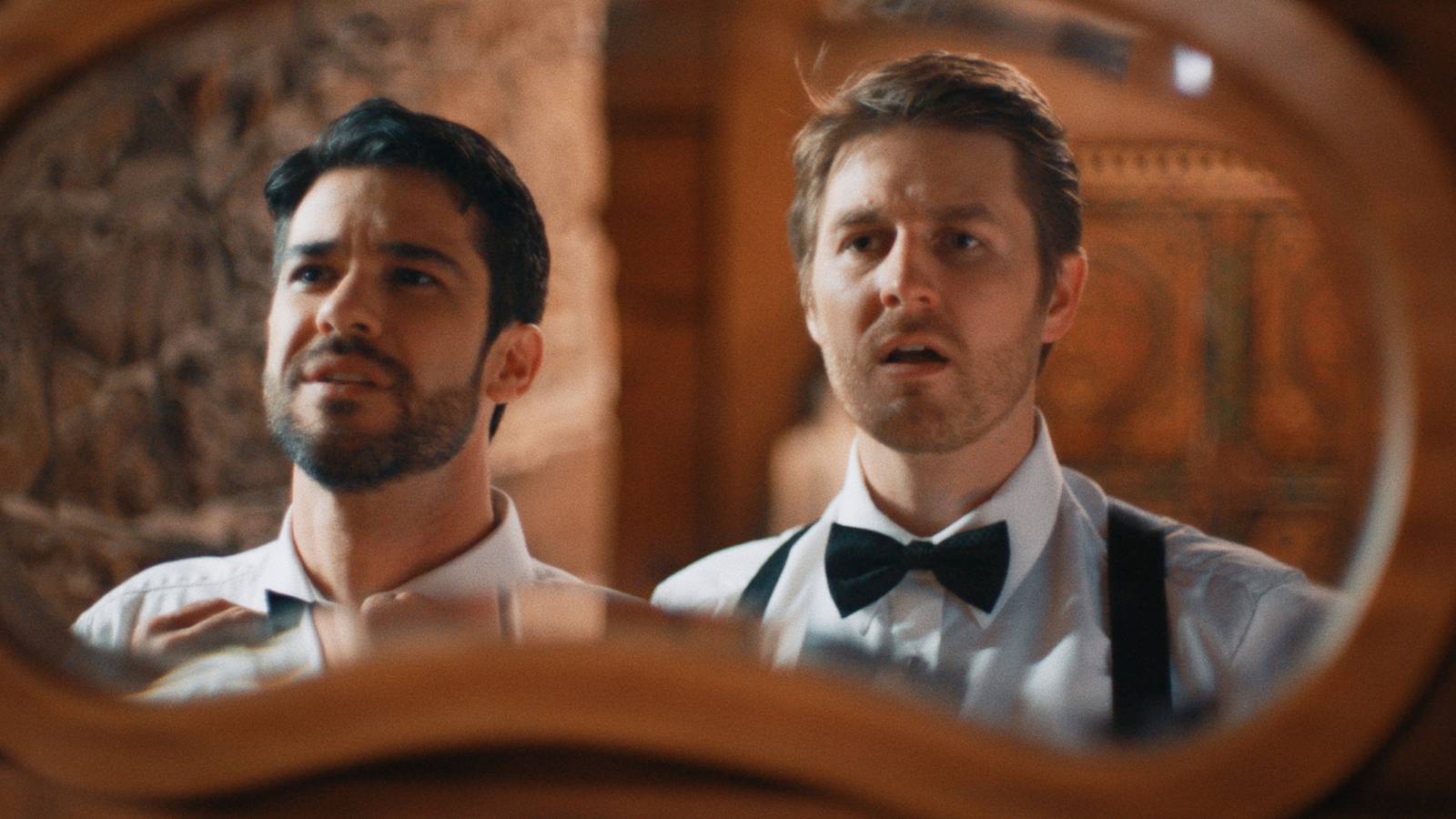
The independent feature film "Do Us Part" marks a significant achievement in low-budget filmmaking, born from a concise 25-page stage play and brought to the screen through the dedication of its multi-talented creator, Reed Arnold. Arnold, who wrote, directed, produced, and starred in the film as Mark, reunited with his original stage cast, Kelly Russo (Rose) and Travis Laughlin (Ryan), to transform a deeply personal story into an intimate cinematic experience. The production faced considerable hurdles, including a condensed 13-day shooting schedule, which was part of a 16-day total production, and relied on a remarkably small crew of approximately seven people for the majority of the filming.
The narrative of "Do Us Part" unfolds on Ryan’s wedding day, where, true to romantic comedy fashion, plans quickly unravel. Rose, Ryan's college best friend and unrequited love, crashes the ceremony to confess her feelings. Amidst Ryan's struggle with this unexpected intrusion, his morally ambiguous best man, Mark, navigates a complex web of secrets, including his own, to ensure Ryan makes it down the aisle. The film originated in 2015 when Arnold adapted his initial 25-page script, which focused solely on the wedding events, into a one-act stage play for an acting class. The positive reception encouraged him to expand it, incorporating college flashbacks to flesh out the characters and their history. This expanded play, structured with alternating wedding and flashback scenes, garnered such strong interest that the idea of a film adaptation emerged in 2019.
Despite plans being stalled by the COVID-19 pandemic, Arnold's determination to see the story realized led him to self-finance and direct the film. He purposefully re-engaged his original cast members, recognizing their ability to deliver strong performances quickly, a crucial factor for a fast and economical shoot. Significant changes were made in the adaptation from stage to screen; the play’s long, single-location scenes were converted into shorter, more dynamic sequences spread across diverse and scenic locales. Additional characters, such as the bride Julia, were introduced to enrich the narrative, and more college flashbacks were integrated. For filming efficiency, all wedding-related scenes were shot first while actors retained beards (for Laughlin and Arnold), followed by shaving and adding extensions (for Russo) to film the college flashbacks.
The title "Do Us Part" is a clever play on the traditional wedding vow "till death do us part," and was an alternative to the play’s original title, "For Better, For Worse." Both titles reflect the central themes of the story: the finality and new beginnings of a wedding, alongside the complex, evolving nature of the friendships portrayed. Behind the scenes, the production was fraught with challenges and unexpected dangers, including a tense encounter where the crew was threatened by a neighbor brandishing the Second Amendment during a shoot near their fence line. Kelly Russo also recounted a scary incident where Reed Arnold was almost run over. These anecdotes underscore the high-stakes and often perilous nature of independent filmmaking.
The cast’s real-life friendship, cultivated since their acting school days in 2013 or 2014, significantly contributed to the on-screen chemistry, allowing them to portray years of shared history convincingly. The film also features a memorable, spur-of-the-moment "glory hole in the wall" joke, a testament to the spontaneous creativity that often arises on independent sets. The characters are depicted with nuanced complexity: Mark, inspired by Shakespeare’s Mercutio, embodies low impulse control and crass humor but is ultimately a loyal, albeit broken, friend. Rose, initially perceived as a controversial wedding crasher, evolves to become the emotional heart of the story, with Kelly Russo acknowledging her shift in perspective on Rose's romantic, yet arguably insane, decision as she matured and understood real love. Ryan, the groom, grapples with a decade of unspoken emotions as his world spirals before the wedding.
The actors reflected on the difficulty of maintaining consistent emotional states and and chemistry across numerous takes and out-of-order scenes, highlighting the strenuous demands of acting. Particular scenes proved especially challenging to film, including Rose’s intense "reveal" scene with its complex blocking and heightened emotions, the physically demanding chase scene shot over three afternoons with actresses running in heels, and the inherent awkwardness of romantic scenes. Laura Delhauer’s portrayal of Julia, the intelligent, confident bride, was a deliberate choice by Arnold, inspired by his own wife, to provide a foil for Rose's insecurities and represent a state of calm security. The conversation between Rose and Julia towards the film’s climax is particularly poignant, serving as a powerful turning point.
Post-production involved critical feedback and adjustments, such as relocating an opening dorm room scene and cutting an entire sequence to improve pacing. The use of flashbacks was carefully structured to feel like the characters' present thoughts, adding layers to their memories and motivations. Upon screening, audiences reacted with appropriate gasps, laughs, and "oh no"s, engaging in debates about Rose's actions and Mark's character, indicating the film’s success in eliciting diverse interpretations. As an indie endeavor with no marketing budget, "Do Us Part" relies entirely on word of mouth, social media support, and digital rentals/purchases to reach a wider audience. The creators express gratitude for any support that helps this "little engine that could" make a splash in the film world.