Atiku Unveils Bold 2027 Vision: Reopening Borders and Boosting Southern Ports
Presidential candidate Atiku Abubakar has pledged to reopen Nigeria's land borders and develop southern ports if elected, aiming to revitalize transborder trade and improve logistics. These promises address economic challenges caused by past border closures and highlight the need for balanced infrastructure development. He criticizes existing policies that have led to business failures and unemployment, particularly among young Nigerians.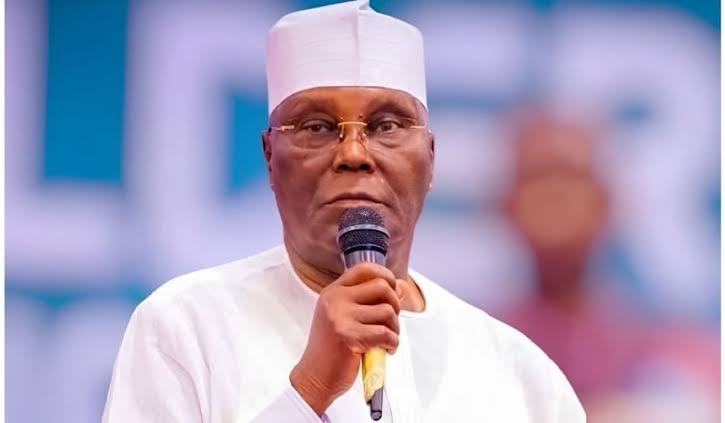
Former Vice President and presidential candidate of the African Democratic Congress (ADC), Atiku Abubakar, has made significant policy pledges ahead of the 2027 elections, focusing on reversing some of Nigeria's recent economic measures. Among his key commitments, Atiku has promised to reopen the country’s land borders and to develop port infrastructure in the southern and South-Eastern regions.
Addressing supporters in a video shared by ADC chieftain Dele Momodu, Atiku elaborated on his rationale for reopening the land borders. He asserted that the current closures and restrictions have severely hampered legitimate transborder trade, leading to the destruction of businesses and a rise in unemployment, particularly affecting young people in border communities. Highlighting Nigeria's shared borders with Cameroon, Chad, Niger, and Benin Republic, Atiku emphasized that cross-border trade is a legitimate and vital economic activity. He lamented that many young Nigerians who had built substantial businesses, some with capital of 10 to 20 million naira and employing several individuals, were driven into bankruptcy and unemployment due to these closures. Atiku believes that restoring these commercial activities by reopening the borders will create crucial opportunities for young people dependent on cross-border trade, thereby also contributing to improved security.
Beyond border policies, Atiku also outlined plans for enhancing the movement of imported goods by developing ports in the southern and South-Eastern parts of Nigeria. He revealed that during his last campaign, he engaged with shippers and ship development companies in Europe to explore possibilities for jointly developing these southern ports. The objective of such development, according to Atiku, is to create a more balanced system for the importation and distribution of goods across the country. He maintained that better port infrastructure in the South would significantly reduce the cost and time involved in transporting goods, particularly to northern regions like the North-East. Illustrating the current challenges, Atiku cited the difficulty of moving containers from Lagos to Yola, Adamawa State, where he has a factory. He noted that such a journey currently takes no less than two months due to poor road infrastructure and the extensive route from the South-West to the North-East. In contrast, he projected that if containers were dropped in Calabar, Uyo, or Port Harcourt, they could reach Yola in just 24 hours. This proposal, he explained, directly addresses concerns over the high cost and prolonged movement of goods, underscoring the critical need for a balanced development of Nigeria’s transport and port infrastructure.
The policy discussions around Nigeria’s land borders stem from a history of closures and gradual reopenings. Nigeria’s land borders were initially shut in August 2019 under the administration of former President Muhammadu Buhari. The federal government at the time justified this policy as a measure to curb large-scale smuggling of commodities such as rice, poultry products, petroleum, weapons, and drugs, and to encourage domestic agricultural production. In December 2020, President Buhari ordered the reopening of four strategic land borders: Seme in Lagos State, Illela in Sokoto State, Maigatari in Jigawa State, and Mfun in Cross River State. More recently, under President Bola Tinubu, the Tsamiya land border with the Benin Republic in Kebbi State and the Kamba corridor linking Nigeria with Niger Republic were reopened in February 2026. The Nigeria Customs Service indicated that these reopenings would be accompanied by specific measures to prevent smuggling and other illicit activities. Despite these gradual reopenings of some key border posts, restrictions and tighter controls reportedly remain in place at other land borders.