Atiku's Warning: State Police Plan Linked to 2027 Election Maneuvers
Atiku Abubakar's camp has criticized the hurried establishment of state police, alleging it's politically motivated for the 2027 elections. While supporting state policing in principle, Atiku's spokesman Paul Ibe questions the timing amidst worsening insecurity and calls for a focus on critical issues.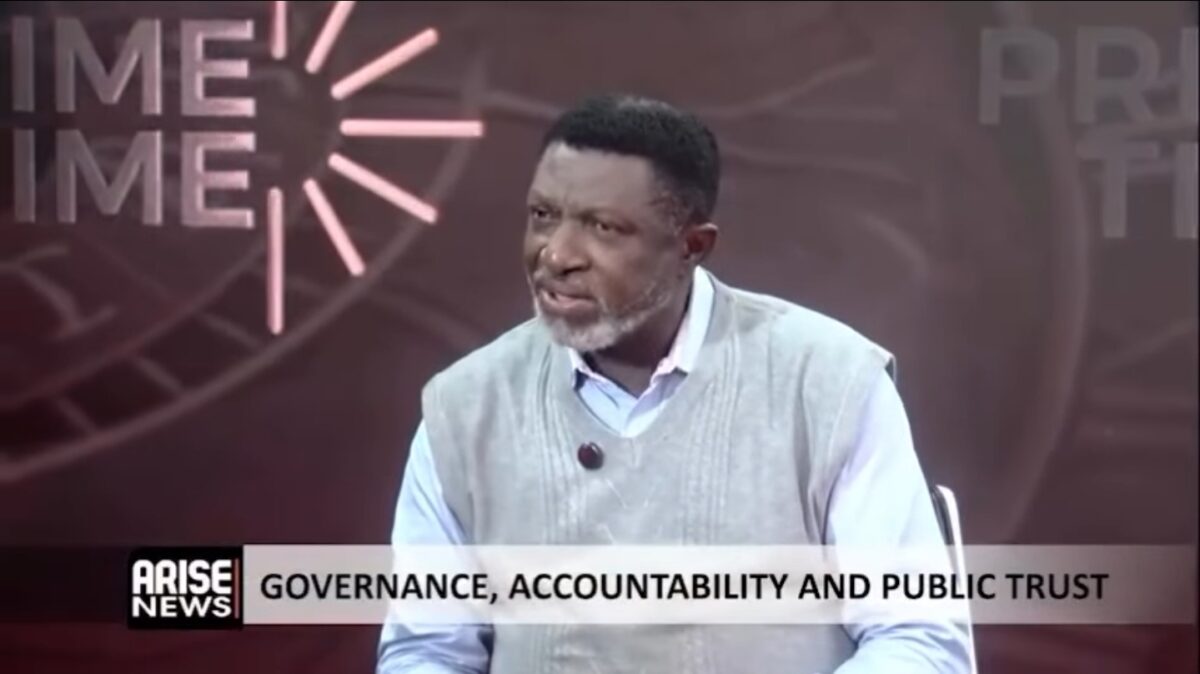
The camp of former Vice President Atiku Abubakar has voiced strong opposition to the expedited establishment of state police services in Nigeria, asserting that the initiative is primarily motivated by political considerations, particularly in anticipation of the 2027 general election. This criticism emerged on Wednesday night, shortly after the Senate successfully passed the State Police Bill during its plenary session, as part of ongoing efforts to amend the constitution.
During an interview on ARISE News Channel’s Prime Time show, Paul Ibe, Atiku’s media adviser and spokesman, articulated that while the former vice president and the African Democratic Congress (ADC) presidential candidate conceptually supports state policing, the timing of its proposed implementation is a source of significant concern. Ibe specifically stated, “What Atiku Abubakar will not do in an election year is to ramp up legislation for state police because what they are trying to do is to sign this into law and give state governors that they have coerced into their party, the APC, the opportunity to recruit all of the thugs associated with them for the purposes of the 2027 election.”
Ibe further emphasized that the opposition's stance is not against the principle of state police itself, but rather a questioning of the urgency and timing with which the proposal is being advanced. He queried, “We support state police, but not at this time. This is political. Why don’t they focus on critical issues? Why don’t they boost security in vulnerable communities?”
He proceeded to accuse the Federal Government of misplacing its priorities amidst a deteriorating security situation across various parts of the country, citing recent instances of killings and kidnappings in multiple states. As an example, he referenced the prosecution of activist Omoyele Sowore, criticizing what he described as the deployment of security personnel for overtly political objectives. Ibe remarked, “Look at what happened yesterday (Tuesday). See the deployment of troops to accompany Sowore to prison just because you are not comfortable with an individual who is speaking truth to power. Those are wastages that we have in the system. Those troops are needed where people are vulnerable and being kidnapped.”
Ibe also highlighted recent attacks in Plateau State, contending that the government has consistently failed to effectively address persistent security challenges despite repeated assurances. He recalled incidents such as the killings in Bokkos on Sunday at midnight, where approximately two dozen people were killed and many more abducted in Plateau State alone. He reminded listeners of President Bola Tinubu’s visit to Plateau State in March following earlier attacks, where the President had pledged decisive action to halt the violence. Ibe recounted, “That was the same state Tinubu visited in March. He stopped at the airport and couldn’t even get to the communities that were bereaved. He said, ‘this will be the last.’ 24 hours after that statement, there were more killings in the same Plateau. On Sunday night, another set of killings occurred.” He concluded by stating that similar incidents had been recorded in Benue, Oyo, and Kogi States, insisting that such failures were sufficient grounds for President Bola Tinubu to resign from office. “We’ve had that in Benue State, Oyo, Kogi, so what are we talking about? That is enough reason for the man, for patriotic reasons, to throw in the towel,” Paul Ibe concluded.