Are Nigerians The Real Architects Of Their Own Suffering?
Fuel prices in Nigeria have gone up again, but is the pain coming from the global oil market alone, or from ourselves? Take a sharp look at pre-emptive inflation, market behaviour, and the habit Nigerians refuse to examine.

There is a particular kind of chaos that seems to be uniquely Nigerian.
Not the chaos of collapse, but the chaos of anticipation—the way an announcement alone is enough to set the whole country on fire before the flames have even arrived.
Now if you're wondering what this is about, it is about the recent hike in fuel prices.
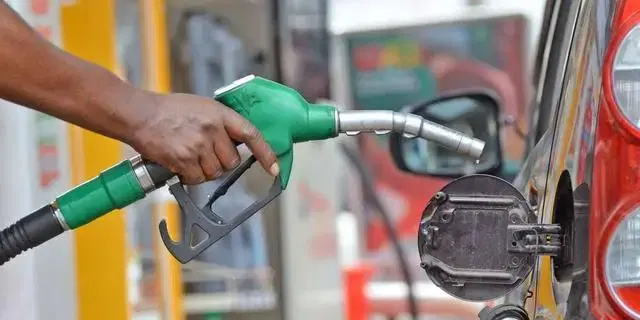
Fuel prices have been skyrocketing these past few days and have been on the high side. That part is real and everyone is feeling the heat of it.
The increment however was projected, steadily telegraphed by the authorities, including signals from the Dangote refinery, and tied to a global oil market rattled by the ongoing US-Israel-Iran tensions and the geopolitical tremors rippling through crude supply chains.
African oil-dependent markets, Nigeria included, are absorbing the consequences of a conflict they had no hand in starting. That is the reality of what the Global South faces.
But here is where the story gets complicated and very Nigerian.
The Price Changed Before the Fuel Did
A lady posted on X that she was standing in a queue at a petrol station and watched the pump price change in real time, right before her eyes, while she waited to buy fuel.
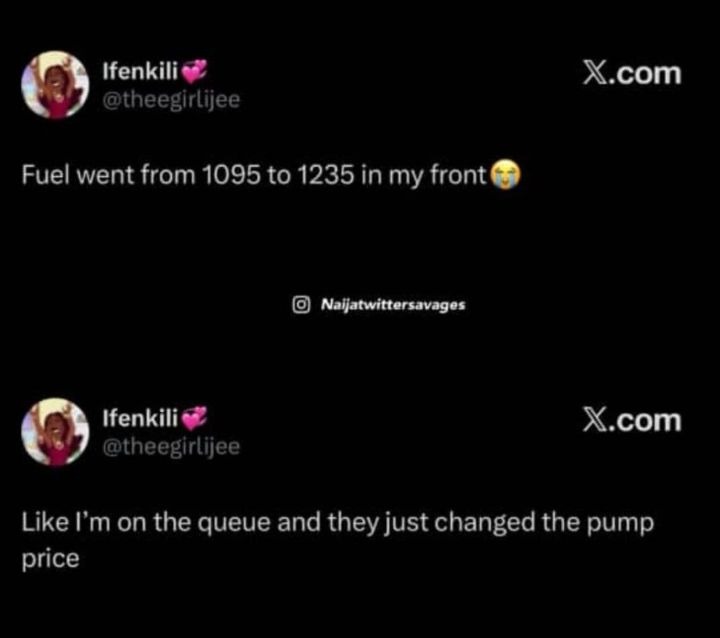
Not after a new supply truck had pulled in and definitely not after the station had restocked at a higher cost.
The same fuel, already in the tank underground, suddenly wore a new price tag.
And that is where we need to pause and ask the uncomfortable question: is that how this is supposed to work?
When a refinery or depot adjusts its pricing, the logic—at least in principle—is that the next batch of fuel purchased at the new rate will be sold to consumers at a corresponding new price.
The fuel already bought at the old price, already sitting in the station's storage, was acquired at the lower cost. Repricing it instantly is not economics. It is opportunism wearing the costume of economics.
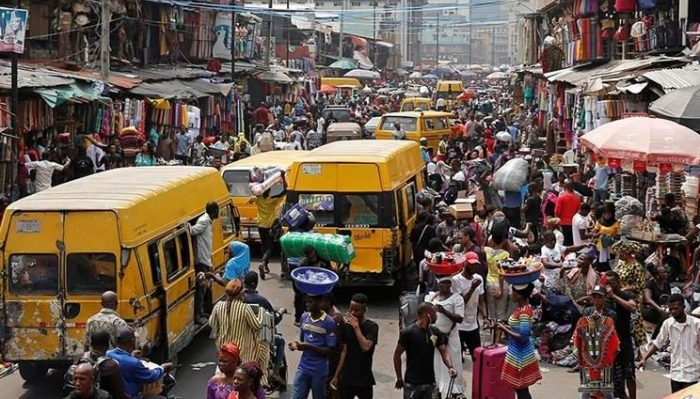
The same pattern spread immediately to buses. Fares doubled before drivers had even refuelled at the new price.
Social Insight
Navigate the Rhythms of African Communities
Bold Conversations. Real Impact. True Narratives.
Market women raised their prices on goods they had already purchased, transported, and displayed, goods that had not moved an inch but had somehow become more expensive overnight.
Transporters adjusted rates on trips they were already running.
This is not inflation or rather, it is not only inflation.
Inflation, in its technical sense, is a gradual rise in prices driven by money supply, demand pressure, or input costs.
What Nigeria experiences regularly is something faster and less principled—a collective, pre-emptive repricing triggered by the mere announcement of a change, long before that change has physically worked its way through the supply chain.
Inflation, or Something Worse?

The honest answer is: both, and we have to be willing to say so.
Yes, the global oil market is under pressure, yes, the geopolitical situation involving the US, Israel, and Iran has tightened crude supply expectations and pushed prices upward across oil-dependent African economies.
Nigeria, still heavily reliant on imported petroleum products despite the Dangote refinery's operations, cannot fully insulate itself from those shocks. The cost will come and that is unavoidable.
But there is a gap—a very deliberate gap—between when a price increase is announced and when it should logically be felt at the market level.
That gap exists for a reason. It is the window during which existing stock, bought at old prices, is sold at old prices, and the new pricing takes effect only when new stock arrives. In a functioning market, that gap is respected.
In Nigeria, that gap does not exist. The announcement is the trigger. The moment fuel is rumoured to have gone up, everything goes up—bread, pepper, transport, school runs, generator costs, data reselling.
This is not because the input costs have changed yet, but because everyone is hedging, everyone is covering for a future they expect to be worse, and everyone knows that no one will be held accountable for pricing goods they already own at rates that don't yet apply to them.
The Habit We Cannot Afford
The result is that Nigerians end up paying twice. Once for the actual price increase when it does arrive through the supply chain.
And once for the phantom increase that was invented the moment the news broke.
This is worth sitting with, not just as frustration, but as a structural problem that deserves serious conversation.
Social Insight
Navigate the Rhythms of African Communities
Bold Conversations. Real Impact. True Narratives.
How is a market supposed to function? Who is responsible for the gap between policy announcements and street-level price behaviour?
Are there mechanisms to enforce pricing ethics during transition periods, or do we simply accept that every adjustment becomes an opportunity for everyone to take a little more than the situation strictly demands?
The fuel price will settle. It always does and it has always been like that.
But the habit of collective, pre-emptive inflation—the one we all participate in and rarely interrogate—that one is not going anywhere on its own.
And until we confront it honestly, every price hike will cost us more than it should.
See you on the next one!