Almajiri Activism: When Advocating for the Poor Becomes a Business Model
Nigeria has produced a new kind of activist. They trend every week, raise millions in the name of the broken and the forgotten, and live very comfortably while doing it. The cause is not a lie, but the cause is also not the point.
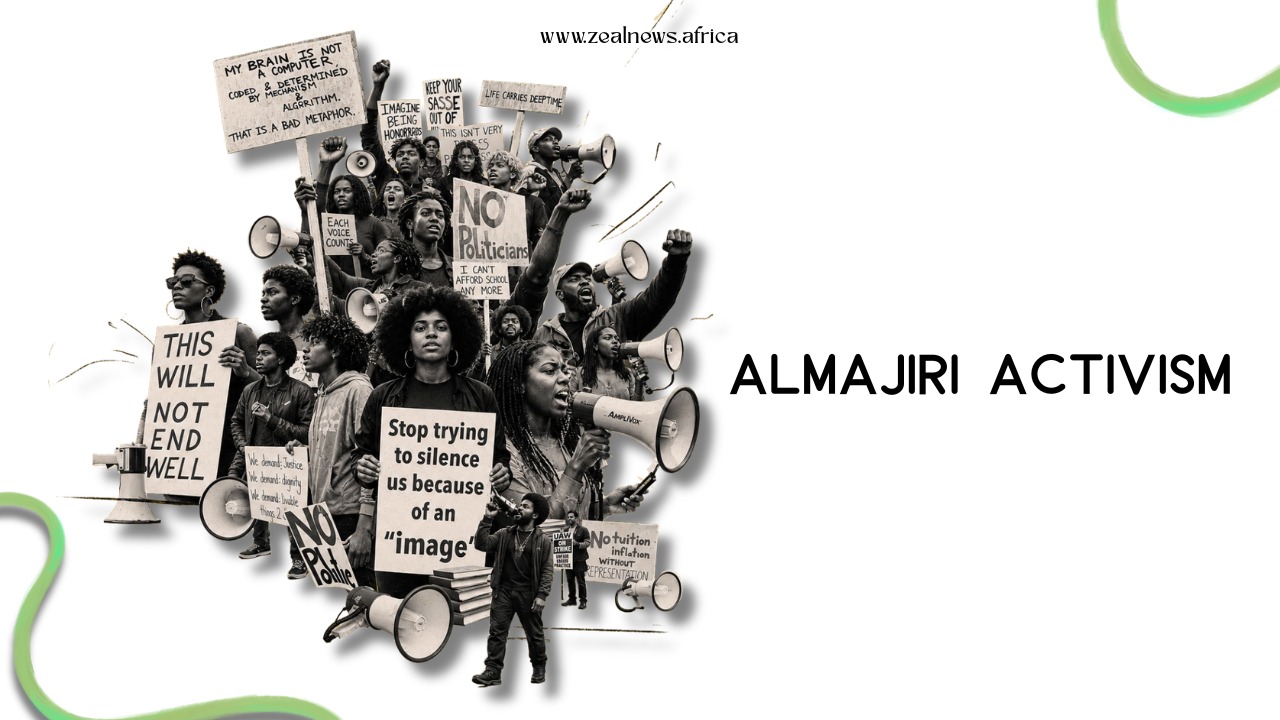
The most profitable thing you can be in Nigerian digital spaces right now is not an entrepreneur, not an influencer, and certainly not a politician. It is a saviour. Specifically, a saviour of people who remain perpetually unsaved. Because once the problem is solved, the platform dies. And nobody in this economy is building a platform to watch it die.
We call this Almajiri Activism. The term borrows from a figure Nigerians know intimately: the wandering child dispatched from home under the guise of religious education, who ends up surviving on streets while the adults who sent him invoke his image in speeches, policy documents, and campaign posters.
The almajiri never benefits from the outrage mobilised in his name. The people speaking on his behalf usually do. What was once the exclusive franchise of the political class has been democratised, turbocharged by social media, and rebuilt into a content economy where suffering is not a problem to be solved but an asset to be managed.
We believe this warrants a direct conversation. Not because all advocacy is dishonest, but because the ecosystem has quietly restructured itself around incentives that have nothing to do with justice. A class of advocates has emerged across Nigerian digital spaces who campaign loudly for the vulnerable, not because the cause demands it, but because the cause pays.
They have discovered what the political class has always known: suffering, properly packaged, is an extraordinarily reliable source of income, influence, and social authority.
What is new is that they are doing it from a phone, at scale, in real time, with algorithmic assistance, performative activism, vigilante content, or what it is: a business, dressed in the language of justice.

The Incentive Before the Ideology
To understand how we arrived here, you must first understand what this replaced. A decade ago, the pathway to social influence in Nigeria ran through conventional institutions: the church, the union hall, the bar association, the political party.
These structures were slow, hierarchical, and resistant to outsiders. Then social media dismantled the gatekeeping. Suddenly, a person with a smartphone and a grievance could amass fifty thousand followers in six months, command deference from institutions that would have ignored them entirely, and monetise that attention through brand partnerships, YouTube ad revenue, Facebook page earnings, and donations solicited in the name of causes.
The incentive, in other words, existed before the ideology solidified. For a generation of young Nigerians watching this unfold, the lesson was not lost. Comedy had been the dominant content niche, but its ceiling was visible. Vigilante content had no ceiling.
The algorithm rewarded outrage, platforms paid per view, victims needed amplifiers, and donors needed conduits. There was money at every node of the advocacy supply chain, and all you needed to enter was a cause, a camera, and the willingness to shout.
What followed was not a corruption of activism. It was the deliberate construction of a new industry that wore activism as its business attire. We should be clear-eyed about that distinction. Corruption implies something that started clean and degraded. What we are describing started as an opportunity and was engineered accordingly.
The VDM Blueprint and What It Built
Very Dark Man rose from content creation into a specific kind of Nigerian celebrity: the public accountability enforcer. His method was confrontational, his audience enormous, and his targets ranged from celebrities to corporate bodies. In his early iteration, he was doing something with genuine civic value.
Public shaming, however crude, sometimes produces results that litigation cannot. The question critics began to ask was not whether his targets deserved scrutiny, but whether the scrutiny itself had become the product.
In December 2024, VDM publicly claimed his NGO's accounts had been hacked, alleging that approximately 180 million naira had been diverted with only 20 million remaining, and that a suspect had been arrested. The police said they knew nothing about any formal case. Within days, he backtracked entirely, asserting the whole episode was a deliberate stunt to expose how quickly people rush to conclusions.
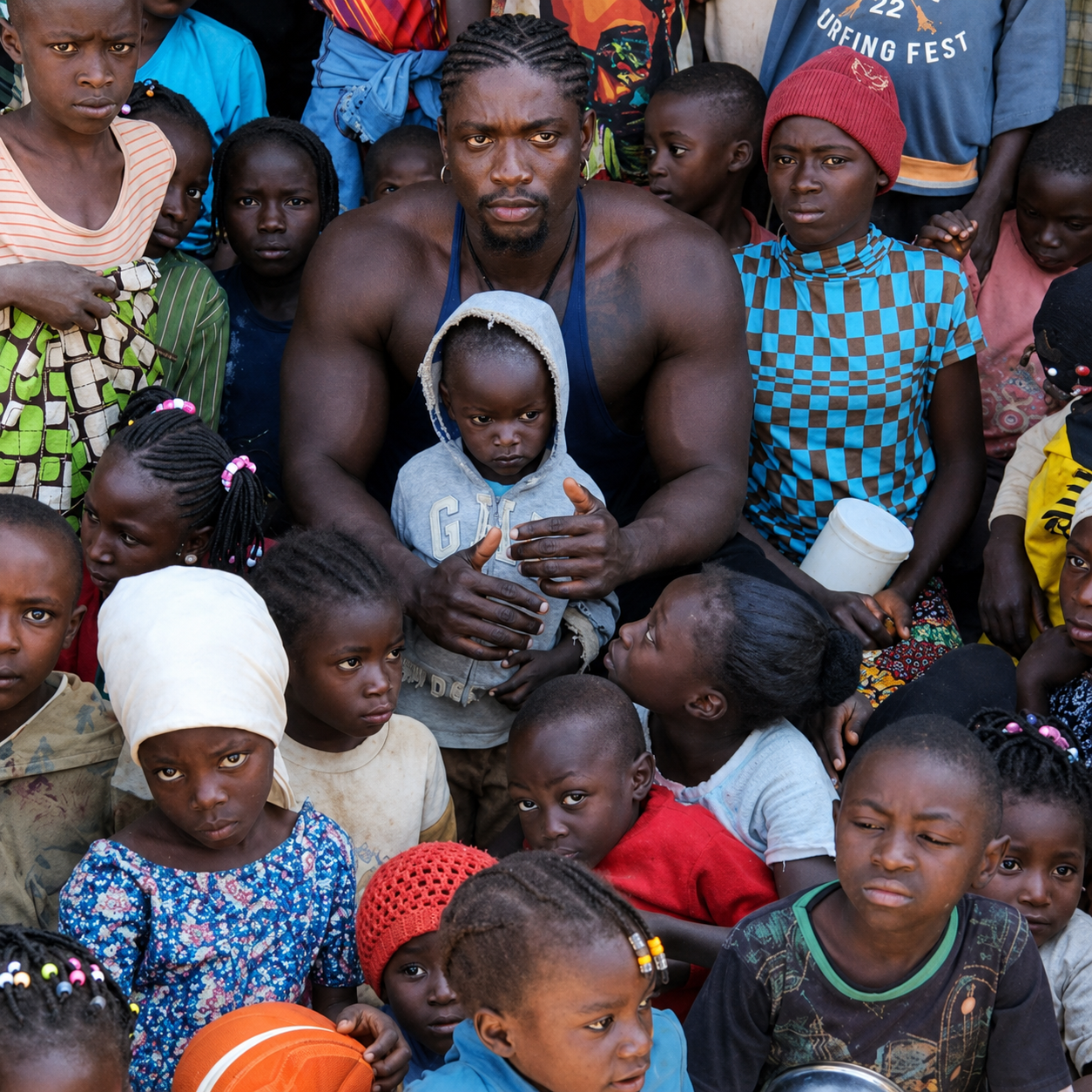
Whether that explanation satisfies depends heavily on how much goodwill you had already extended. What it cannot explain away is the observable trajectory: a man whose activism generated a lifestyle, travel, leisure, and material comforts that his pre-advocacy existence could not have sustained.
We note this not as accusation but as observation. People are permitted to prosper. The concern is what the prosperity signals about the structure.
VDM's success created a replicable model, and replication arrived swiftly. We have the likes of Very Fair Man, Very Bold Man, Very Dark Woman. A wave of content creators, many migrating directly from comedy, recognised that accountability content could capture the same algorithm while adding a moral legitimacy that comedy alone could not provide. The cause gave them armour. The armour made them untouchable. And the untouchability was monetisable.
Today, the incentive structure VDM demonstrated has become the operating manual for an entire content category. Public call-outs and online vigilantism are no longer spontaneous expressions of civic anger. They are a niche, and niches in the attention economy have business models.
Where the NGO Industrial Complex Meets the Trending Scandal
The individual content creator is only the most visible end of a much larger apparatus. Beneath the virality lies a quieter ecosystem of organisations that have professionalised the extraction of value from social problems. The machinery includes NGOs that attract international donor funding to address issues they have structurally no interest in resolving, because resolution would eliminate their purpose.

It includes Facebook human rights bloggers who, according to documented allegations, charge victims a fee to publish their appeals while simultaneously soliciting public donations from those same cases. It includes organisations whose infrastructure of impact has grown elaborate enough to obscure whether impact itself remains the objective.
The logic running through every tier is identical: suffering is not a problem to be solved; it is an asset to be managed. When you solve the problem, the funding cycle ends, the platform deflates, and the authority evaporates. The rational incentive for any actor embedded in this economy is not resolution.
It is sustained visibility around a problem that never quite goes away. This is not a conspiracy; It is an incentive structure, and incentive structures do not require coordination to produce consistent behaviour. They only require that people respond predictably to reward.
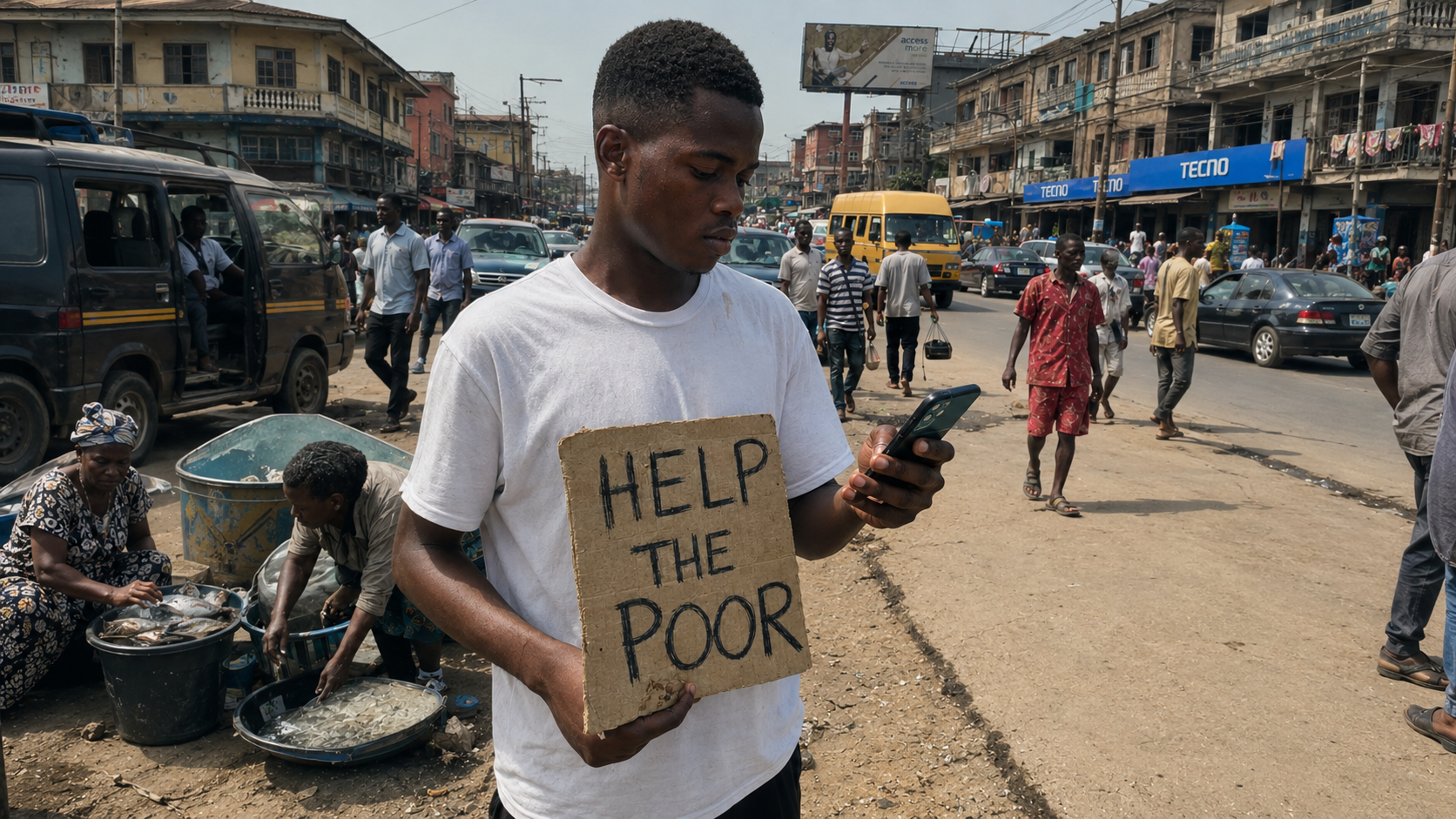
Harrison, known publicly for anti-kidnapping work, was accused in late 2025 of diverting a portion of funds meant for ransom payment. Whether formally proven or not, the allegation sits within a pattern that has become difficult to dismiss as coincidence. Across the advocacy economy, money moves through informal structures, accountability mechanisms are weak, and the emotional weight of the cause is routinely weaponised to deflect scrutiny.
Ask questions about the finances of a man rescuing kidnap victims, and you become the villain in the story. That moral arithmetic is not accidental. It is baked into the design, and it protects the design from examination.
The Cost of Mistaking Performance for Progress
We want to be precise about what we are not arguing. We are not arguing that all activists are frauds, that all NGOs are rackets, or that all advocacy is theatre. That conclusion is both wrong and convenient for those who benefit most from the public's surrender of expectation.
The more precise argument is this: an ecosystem without accountability infrastructure eventually selects for the most extractive actors, not the most effective ones. When there is no mechanism to distinguish genuine intervention from performance, the performers win. They are simply better at the performance.
What the Nigerian public loses in this arrangement is something harder to quantify than money. It loses the ability to accurately map its own social reality. When every viral campaign might be a fundraising vehicle, when every public call-out might be a personal feud dressed in civic language, when every NGO report might be an exercise in donor optics rather than community impact, the public begins to disengage.
Compassion fatigue sets in. Real victims become harder to identify because the landscape is crowded with manufactured ones. Genuine reformers find their credibility diluted by proximity to the performers. The cost, ultimately, is not just financial. It is epistemological. Nigerians lose the ability to trust what they see.
The original almajiri survives on the street because the system that claimed to serve him actually needed him to remain exactly where he was. Almajiri Activism operates on the same principle. The poor, the abused, the defrauded, and the forgotten are essential to the enterprise, not as its ultimate beneficiaries, but as its raw material. They generate the emotional charge that powers the platform, the moral authority that silences scrutiny, and the social proof that attracts the next round of funding.
Advocacy without accountability is not advocacy. It is business development, conducted at the expense of the people it claims to serve. Nigeria has always produced people willing to speak for the voiceless. What this country now urgently needs is a mechanism to hold those speakers accountable, before the voiceless are left with nothing but a content creator's ring light and a donation link that leads nowhere.