Alarming Crisis: Africa CDC Warns Ebola Response is Losing Ground

The Ebola outbreak in eastern DRC is at a critical juncture, demanding urgent global intervention to prevent a catastrophic escalation. Despite rising cases and deaths from the Bundibugyo variant, the response faces severe challenges including underfunding, insufficient contact tracing, and the absence of specific treatments or vaccines. Africa CDC Director-General, Dr. Jean Kaseya, calls for immediate funding disbursement, enhanced community engagement, and strengthened African health sovereignty to control the crisis.
Precious Eseaye
Precious EseayeMusic6 hours ago7 minute read
Alarming Crisis: Africa CDC Warns Ebola Response is Losing Ground

The Ebola outbreak in the eastern Democratic Republic of the Congo (DRC) is escalating, with health officials warning of an urgent need to contain the virus before it reaches its peak. Since its declaration in May, the outbreak has recorded over 1,700 confirmed cases and 580 deaths due to the Bundibugyo variant, for which there is currently no approved dedicated treatment or vaccine, though trials are underway. Neighbouring Uganda has also reported 20 confirmed cases and two deaths, underscoring the regional threat.

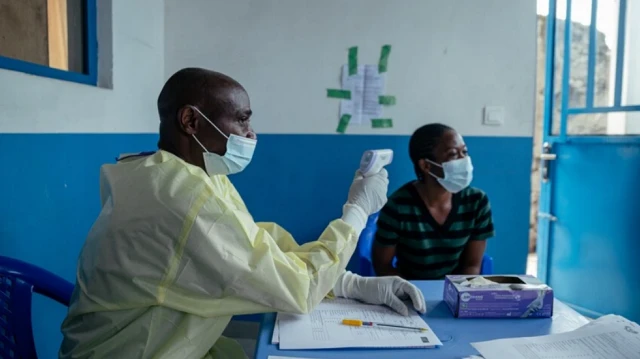
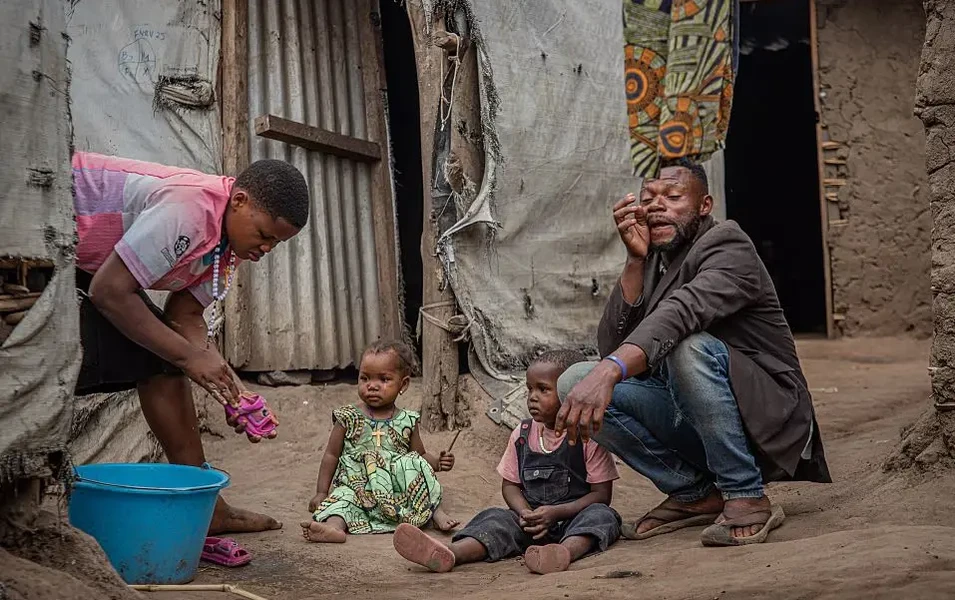
A major challenge in the DRC is the inadequate contact-tracing coverage, which stands at approximately 60%, leaving thousands of contacts untraced. This significantly hinders efforts to break the transmission chain and exacerbates fear and stigma within affected communities. The response is further complicated by active conflict zones, widespread displacement, and already overstretched health services, making humanitarian efforts extremely difficult.

Funding remains a critical issue. The Africa Centres for Disease Control and Prevention (Africa CDC) launched a six-month regional plan requiring $518 million, but less than half of this amount has been secured. Dr. Jean Kaseya, the director-general of Africa CDC, emphasizes that stopping the outbreak and protecting communities is possible, but only with a rapid and substantial scaling up of the response.

Concerns exist that the outbreak began much earlier than its official confirmation in May. Dr. Kaseya highlights that cuts to funding for surveillance, laboratories, community health workers, rapid response teams, and local health systems lead to late detection, costing lives and significantly increasing response costs. He warns that future pandemic threats will emerge from communities, health facilities, markets, border areas, or conflict zones, and protecting these areas is crucial for global health security.

A worst-case scenario projects 66,000 confirmed cases by September. While not an inevitable future, Dr. Kaseya stresses that this projection serves as a stark warning: "act now or pay a much higher price later." Ebola thrives on slow responses, missed cases, untraced contacts, overwhelmed treatment centres, lost community trust, and delayed funding. The potential impact of such an outbreak would be catastrophic for the DRC, leading to overwhelmed health systems, exhausted health workers, increased community deaths, disrupted routine health services, and profound economic and social upheaval. Children would miss school, families would avoid clinics, and vulnerable populations would suffer. Regionally, the risk would rise sharply, with neighboring countries facing repeated alerts, border pressure, and fear-driven disruptions to movement and trade. The lessons from the West Africa outbreak, which infected under 29,000 people over two years, demonstrate that once Ebola reaches a certain scale, every delay becomes deadly.

Contact tracing is identified as a key gap, with reports suggesting up to 300 cases are unaccounted for. The difficulties stem from insecurity, displacement, fear, stigma, weak transport infrastructure, delayed payments to tracers, and limited access to some communities. People move due to fear, conflict, work, food, trade, or family reasons, making it easy for one missed contact to ignite a new chain of transmission. Contact tracers require practical support, including timely pay, transport, phones, data tools, protective equipment, supervisors, security arrangements, and cooperation from community leaders. Building local trust is paramount, often best achieved by employing tracers already known to the community. Dr. Kaseya stresses, "Ebola spreads in the gaps."

The absence of an approved vaccine or specific treatment for the Bundibugyo variant significantly complicates the response. Unlike Ebola Zaire, which has vaccines and approved treatments, the Bundibugyo response relies on early detection, isolation, supportive care, infection prevention and control, safe burials, and strong community engagement. This means early care is even more critical for patients, delays are more dangerous for families, and the risk for health workers is higher with a smaller margin for error. While treatment trials and diagnostic work are important, Dr. Kaseya insists that science must advance in parallel with field operations to provide immediate protection.

Despite important pledges from African countries and international partners, Dr. Kaseya states that "pledges do not stop Ebola. Money in the field stops Ebola." The most urgent funding gaps include contact tracing, case management, diagnostics, infection prevention and control, safe and dignified burials, community engagement, health worker protection, logistics, and readiness in neighboring countries. The message to partners is direct: "disburse now," as the virus will not wait for slow paperwork.

Effective community engagement is crucial, departing from the top-down approach that undermined trust in the 2018-2020 outbreak. "Listening to the local population" means actively involving women, youth, survivors, health workers, faith leaders, traditional leaders, and community groups in decision-making. It involves taking rumors seriously, allowing people to question the response without reprisal, and building trust through respectful behavior, timely payments to local workers, dignified treatment of families, clear explanations in local languages, safe and humane treatment centres, protection for women and children, support for survivors, and transparency in resource allocation. Cooperation flourishes when people feel respected, protected, and informed. Distrust of humanitarian intervention is often rooted in historical neglect, abuse, and exploitation.

Addressing the sexual abuse scandal involving WHO staff during the 2018-2020 epidemic, Africa CDC maintains a firm position on safeguarding. Dr. Kaseya insists that safeguarding must be integrated from day one, with every responder adhering to a code of conduct. Communities must have safe reporting channels, women and girls must know where to report abuse, complaints must be investigated promptly, survivors must receive support, and perpetrators must be held accountable. Africa CDC expects prevention, accountability, and visible field-level follow-up from partners, stating that "policies on paper are not enough. We need proof in the field."

In conflict zones, public health efforts must protect people without inadvertently fueling the conflict. While the DRC leads the national response, Africa CDC supports this leadership. Lifesaving services must be delivered based on need, not politics, armed control, ethnicity, or affiliation. Safeguards include transparent financing, traceable supplies, independent monitoring, community feedback, protection principles, and strong coordination with humanitarian actors. No armed actor should exploit Ebola for legitimacy, control, money, or coercion; the response must not exacerbate conflict.

Regarding the "America First Global Health Strategy," Africa welcomes partners who strengthen African priorities. Africa will define its own health security agenda, and the test for partnerships is whether they strengthen African institutions, manufacturing, surveillance, regulatory systems, and decision-making. Support that aligns with Africa's priorities is beneficial, while fragmentation, bypassing continental institutions, or pushing countries to negotiate alone weakens collective security. Africa CDC is committed to building African health sovereignty.

Achieving fairer access to vaccines, diagnostics, and countermeasures requires Africa to negotiate collectively, pool procurement, strengthen regulators (like the African Medicines Agency), boost regional manufacturing, facilitate technology transfer, conduct African-led clinical trials, and establish advance agreements before emergencies. Africa needs to overcome the "sense of urgency" gap compared to other parts of the world and avoid arriving last in every global health crisis. Practical solutions include early financing, faster regulation, manufacturing closer to need, collective purchasing, and making equity a foundational condition.

Dr. Kaseya's primary worry is the speed of the virus outpacing the response in critical areas such as contact tracing, financing, logistics, treatment capacity, and community engagement. He also expresses concern for health workers enduring immense pressure in extremely challenging conditions. Hope, however, comes from the resilience observed in the DRC: health workers' dedication, community organization, survivor involvement, and local leaders' protective efforts. African solidarity, exemplified by President Tshisekedi's leadership and South African President Ramaphosa's visit, also provides hope. Dr. Kaseya urges international partners to disburse funding immediately, align with DRC leadership and Africa CDC coordination, and fund the front lines: communities, contact tracers, laboratories, treatment centres, health workers, and neighboring-country readiness. The outbreak can still be controlled, but the response must accelerate now.

Loading...