Alarming AI Warning: Nigeria Unprepared for 2027 Election Disruption

The landscape of Nigerian elections is increasingly influenced by artificial intelligence, posing significant challenges and opportunities, particularly as the 2027 presidential election approaches. The risks associated with AI in political processes became starkly evident during the 2023 election cycle, highlighted by an audio recording circulating online that purported to feature prominent political figures — Atiku Abubakar, Aminu Tambuwal, and Ifeanyi Okowa — allegedly conspiring to rig the election. This audio, which initially caused widespread shock and calls for intervention from the Independent National Electoral Commission (INEC), was later debunked as a deepfake by fact-checkers at TheCable. Despite its falsity, the clip’s rapid dissemination underscored how easily synthetic media can shape political discourse and public perception during an election.
The 2023 election was already marred by extensive misinformation, including AI-generated content deployed for campaigning. Examples include a doctored video from November 2022 showing Hollywood stars endorsing Peter Obi, and similar fake videos featuring Elon Musk and Donald Trump. These clips, though later exposed as fraudulent, garnered thousands of views and likes, demonstrating the nascent impact of AI in electoral campaigns.
Since then, AI adoption in Nigeria has accelerated dramatically. A recent survey by Google and Ipsos indicates that 88% of Nigerian adults have engaged with an AI chatbot, and 39% report frequent AI usage in their daily lives or work. This rapid uptake is largely due to the accessibility of AI tools like ChatGPT, Gemini, and Claude, which, despite offering paid tiers, are largely available for free. With 142 million Nigerians having internet access and 85% owning smartphones, AI is now within reach of the average citizen. This widespread adoption suggests that AI's influence on voter conversations and decisions in 2027 will be far more profound than in previous elections.
While AI presents potential benefits, its application in Nigeria's electoral environment, characterized by limited policy and regulatory frameworks, carries substantial risks. Artificial intelligence could enhance voter education, streamline government efficiency, and boost citizen participation. AI-powered tools could enable politicians to communicate in over 250 local languages, personalize messages for diverse audiences, and engage voters more effectively than traditional campaign methods. However, as Kola Ijasan, Research Director at Research ICT Africa, warns, "without administration, particularly during elections, the dangers of excessive exposure and abuse are real." The primary threats include manipulation, disinformation, and the erosion of public trust, which, without urgent safeguards, could significantly outweigh any potential benefits.
Synthetic media, encompassing AI-generated videos, images, and audio, constitutes one of the most critical risks to electoral integrity. Beyond mere deepfake videos of politicians, AI tools can fabricate voice notes, create fake campaign posters and news screenshots, clone candidates’ voices for deceptive audio recordings, mass-produce propaganda articles, and flood social media with coordinated false narratives. This can exacerbate an already charged political atmosphere. Mayowa Tijani, a journalist and fact-checker at TheCable, highlights that the fundamental shift since 2023 is not the presence of AI-generated content, but rather the exponential increase in the technology’s speed, quality, and accessibility. While convincing fake videos and audio were possible in 2023, the sophistication of these techniques has advanced considerably, making detection increasingly difficult.
The implications extend beyond misleading campaign materials. In Nigeria's politically tense environment, synthetic media could interfere at multiple stages of the electoral process. The rapid online spread of false result sheets, fabricated concession speeches, or videos depicting violence at polling units could confuse voters and undermine confidence in official outcomes. Tijani notes, "We can expect the kind of AI use we experienced in 2023, but the sophistication has gotten a lot better. As a result, even for fact-checkers, it will be difficult to differentiate what is real and what is not." He adds a particularly concerning prospect: "Where it gets more problematic is when we see AI being used to forge election results because of how good they’ve gotten. We can have an AI-generated result with human handwriting. This is something we’ve not experienced before that we could experience in the coming elections."
Despite these alarming prospects, AI researchers point to existing technical and resource barriers to producing highly convincing deepfakes. Ayomide Odumakinde, an AI researcher at Cohere, explains that generating realistic deepfakes often requires more than simple clip production. High-quality tools are typically paywalled and demand specific technical configuration and data preparation, often requiring users to spend considerable time refining outputs. While high-quality video deepfake tools are mostly subscription-based and open-source variants are less effective, audio deepfake tools are cheaper and their outputs harder to detect, especially for those with a strong understanding of audio models. Dr. Jeffery Otoibhi, a Medical Doctor and AI Research Engineer, adds that AI tools still exhibit some bias regarding Nigeria’s cultural context, such as traditional dresses and skin tone, though skilled engineers can manipulate them successfully. "It takes a lot of work, patience, and understanding of the AI system, and not everyone can do it. Many of the videos that circulate on Facebook and WhatsApp are easy to detect in the first few seconds."
These barriers may deter average Nigerians, but they are unlikely to stop political actors with the financial capacity and networks to recruit skilled individuals. Nigeria’s vulnerability to misinformation is compounded by low media literacy, a widespread inability to discern real from fake content on social media, and a polarized political climate. While fact-checking tools exist, experts contend they are unlikely to match the volume and speed of AI-generated content. Many detection tools are trained on Western datasets, limiting their effectiveness in identifying synthetic content within Nigeria’s unique cultural and linguistic contexts. Lois Ugbede, Assistant Editor at Dubawa, an African fact-checking organization, states, "AI models for detecting deepfakes still have shortcomings, and some of those include the inability to adapt to local language or code switching when people speak." She adds that while efforts are underway to create locally inclined tools, a solid solution remains elusive. Additionally, the manpower required to fact-check AI-generated media at scale is insufficient, especially for audio files, which are trickier due to fewer detection tools available.
The problem is further exacerbated by messaging platforms like WhatsApp, which has 51 million active users in Nigeria as of April 2024. Arguably, more campaigning occurred on WhatsApp groups than on the streets during the 2023 elections. Broadcast messages forwarded multiple times and questionable voice notes claiming to reveal confidential government conversations spread easily, making content difficult to trace or fact-check. While tools like X’s AI chatbot, Grok, and Meta’s detection systems on Facebook can flag or label AI-generated media, their effectiveness diminishes once content moves to platforms like WhatsApp, where monitoring and flagging are nearly impossible. Charles Ekpo, a Lecturer of Peace Studies at Arthur Jarvis University, warns, "The problem is that when this content is forwarded to platforms like WhatsApp, where no one can verify or track its movement, it becomes even more dangerous. We must also pay attention to people who do not have Internet access. If there is a false statement on X, people can fact-check it immediately, but if it is printed out and distributed to people, controlling it at that level becomes a big problem." Otoibhi echoes this, noting that even easily detectable AI-generated content spreads faster and wider on WhatsApp. Furthermore, the credibility of AI fact-checking tools like Grok is a concern, as they can also err or be used to spread misinformation, leading to widespread distrust in media, as Tijani points out.
The global impact of AI on elections is already evident. In 2024, with over 60 countries holding national elections, political actors increasingly experimented with AI-generated campaign content. India’s general election reportedly saw an estimated $50 million spent on such content, including deepfakes of deceased political figures and fabricated celebrity endorsements. In Indonesia, AI was used to cartoonize a stern candidate, making him more appealing to younger voters. More disruptively, Pakistan’s 2024 election featured AI-generated speeches simulating an imprisoned leader, allowing him to communicate with supporters. In the United States, deceptive robocalls mimicking then-President Joe Biden falsely advised voters in New Hampshire not to participate in the primary, prompting investigations and calls for stricter AI regulation.
In Nigeria, Kola Ijasan identifies the primary threat as the absolute distrust in the electoral process itself. "The actual threat is not the fact that voters are not able to distinguish between truth and fiction. It is that trust that erodes. Once the citizens begin questioning anything, including valid findings, the democracy becomes shaky."
To mitigate these risks, African fact-checkers and AI experts recommend early funding and comprehensive last-mile outreach. Tijani advises leveraging platforms beyond the internet, such as WhatsApp and radio stations, to reach the significant portion of the voting population that is not online. He stresses the importance of educating individuals on how to detect AI-generated media. While extreme censorship is not ideal, Ijasan argues for establishing guardrails, suggesting that political actors using AI-generated content must be obliged to disclose its usage. Unambiguous labeling standards, he believes, can help reduce deception without stifling legitimate speech.
Recommended Articles
Political Earthquake: Atiku Confronts IBB, Slams APC After Minna Meeting

Former Vice President Atiku Abubakar visited Gen. Ibrahim Babangida, sharply criticizing the ruling APC as "a party of f...
Iyabo Obasanjo Electrifies Ogun Governorship Race with Shock APC Defection
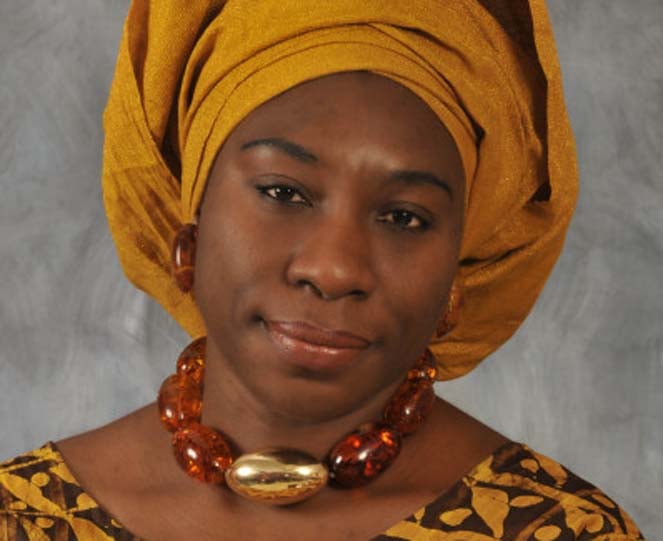
Prof. Iyabo Obasanjo, daughter of former President Olusegun Obasanjo, has declared her bid for the 2027 Ogun State Gover...
Atiku's Son's Stunning Defection: Backs Tinubu, Ignites Family Feud

Abba Abubakar, son of former Vice President Atiku Abubakar, has officially defected to the ruling All Progressives Congr...
Explosive Claim: Fayose Accuses Wike, Fubara of 2027 Rigging Plot for Tinubu in Rivers

Isaac Fayose, a social commentator, claims that neither FCT Minister Nyesom Wike nor Rivers State Governor Siminalayi Fu...
Ijaw Congress Declares Allegiance: Wike Gains Key Support from Influential Ethnic Group
A significant political shift has occurred in Rivers State as the Rivers Ijaw People’s Congress, led by Senator George S...
You may also like...
How to Come Out of a Relationship Stronger Than Ever When It Ends

Heartbreak hurts, but it can make you stronger. Learn how to heal, rediscover yourself, and move forward with confidence...
Everything You Need to Know About OpenClaw AI

OpenClaw AI is the open-source autonomous agent taking over GitHub. Here's everything you need to know, how it works, wh...
Do Nigerians Deserve Their Politicians?
After Daniel Bwala’s tense Al Jazeera interview with Mehdi Hasan went viral, a deeper question emerges: do Nigeria’s pol...
Heat History Made! Bam Adebayo joins Dwyane Wade in elite 10,000-point club!
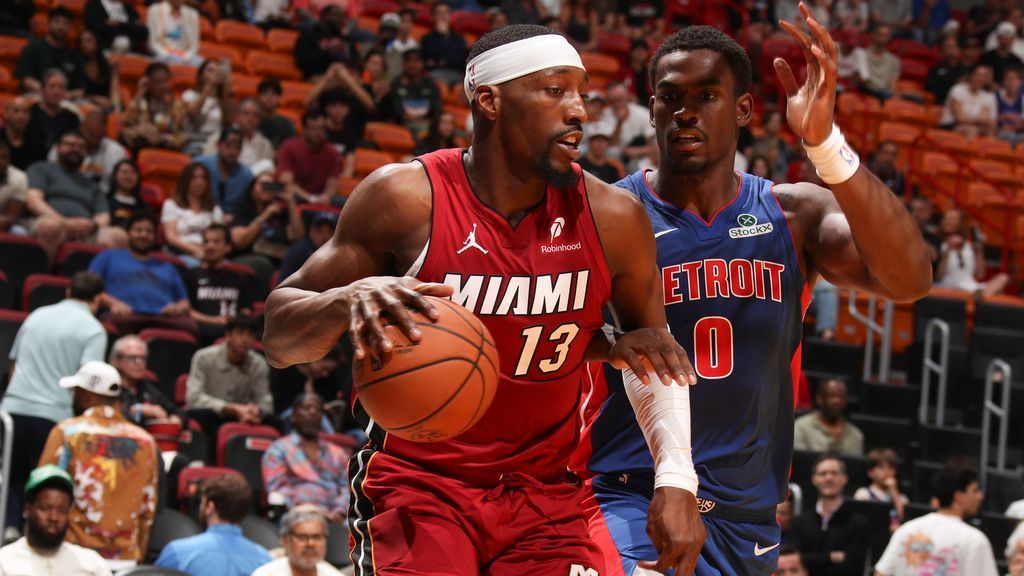
Miami Heat's Bam Adebayo has reached a significant career milestone, becoming the second player in franchise history to ...
76ers rocked as star Tyrese Maxey suffers finger sprain, sidelined indefinitely!

Philadelphia 76ers All-Star guard Tyrese Maxey has suffered a sprained right fifth finger and will miss upcoming games, ...
It's Happening! Beloved Comedy 'Bridesmaids' Returns After 15 Years With a Shocking Twist!

A "Bridesmaids" reunion featuring Kristen Wiig, Maya Rudolph, Melissa McCarthy, and Rose Byrne is reportedly in the work...
Kathleen Kennedy Unveils Lucasfilm's Next Era: AI Boundaries & Grogu's Secret Power Revealed!

Filmmaker Kathleen Kennedy was honored with the Golden Reel Award, recognizing her impactful career and deep understandi...
G Flip & Vanessa Amorosi Electrify Melbourne Arena with Iconic Duet

Australian pop singer Vanessa Amorosi made a surprise appearance at G Flip's Melbourne show, joining them onstage for a ...