What Japan's AI Revolution Means for Africa's Manufacturing Future
Nvidia CEO Jensen Huang's recent visit to Tokyo cemented strategic partnerships aimed at making Japan a leader in the "physical-AI era." Key initiatives include Japan's sovereign AI project, Noetra, a robotics coalition leveraging Nvidia's Cosmos models, and extended collaboration with Toyota on manufacturing and vehicle AI. These efforts are central to Japan's industrial strategy to counter a shrinking workforce and secure a significant share of the global AI robotics market.
Japan has unveiled an ambitious strategy to lead the next generation of artificial intelligence-powered manufacturing through major partnerships with U.S. chipmaker Nvidia. During a recent visit to Tokyo, Nvidia CEO Jensen Huang announced collaborations focused on robotics, AI infrastructure and smart factories.
The initiative is centred on Noetra, a government-backed AI project involving companies such as SoftBank, Sony, NEC and Honda. Together, they plan to develop AI systems capable of powering factories, robots and autonomous machines. Nvidia said the partnerships will accelerate Japan's industrial AI ambitions.
Why Africa Should Pay Attention
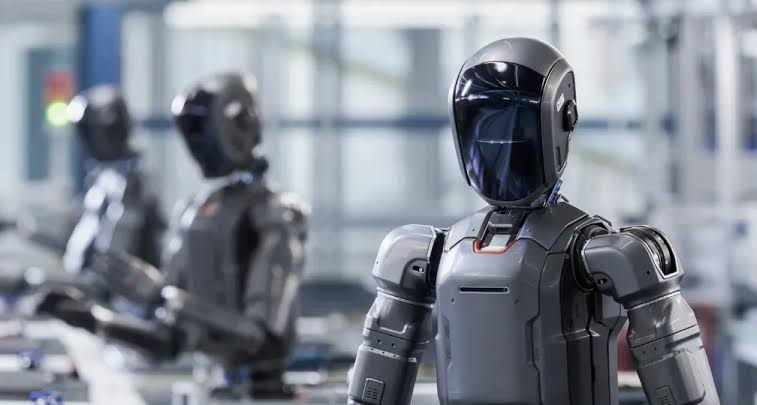
While the announcement focuses on Japan, it carries important lessons for Africa.
Countries including South Africa, Nigeria, Kenya, Egypt and Morocco are expanding their digital economies, but many have yet to make significant investments in AI for manufacturing. Japan's strategy shows that the future of AI extends far beyond chatbots—it will increasingly shape factories, logistics, agriculture and industrial production.
A Chance to Strengthen African Industry
Africa's industrialisation agenda, driven in part by the African Continental Free Trade Area (AfCFTA), could benefit from AI-powered manufacturing.
Technologies such as predictive maintenance, smart warehouses, intelligent supply chains and robotics can improve productivity, reduce operating costs and help African manufacturers compete in global markets. Japan's Ministry of Economy, Trade and Industry has identified AI and semiconductor technology as central to future economic growth.
The Race Has Already Started
Japan is investing heavily in AI because it sees the technology as critical national infrastructure. Governments around the world are increasingly treating AI alongside energy, transport and telecommunications as a pillar of future economic competitiveness.
For Africa, the challenge is not simply adopting AI but building local talent, computing infrastructure and innovation ecosystems that can support homegrown solutions. The countries that invest early in AI, robotics and advanced manufacturing are likely to define the next industrial era—and Africa still has an opportunity to be among them.