AI Takes Over Payments: Paystack's New Experiment Unleashes Automated Agents
Paystack has launched Paystack Index, an early-access product enabling AI agents to conduct financial transactions like purchases and payments. This initiative, developed with TSG Labs, aims to extend Paystack's infrastructure into AI-powered commerce, allowing users to complete routine transactions through platforms like ChatGPT. It marks an early bet on agentic commerce, with Paystack focusing on learning user behavior and building infrastructure for an AI-first internet.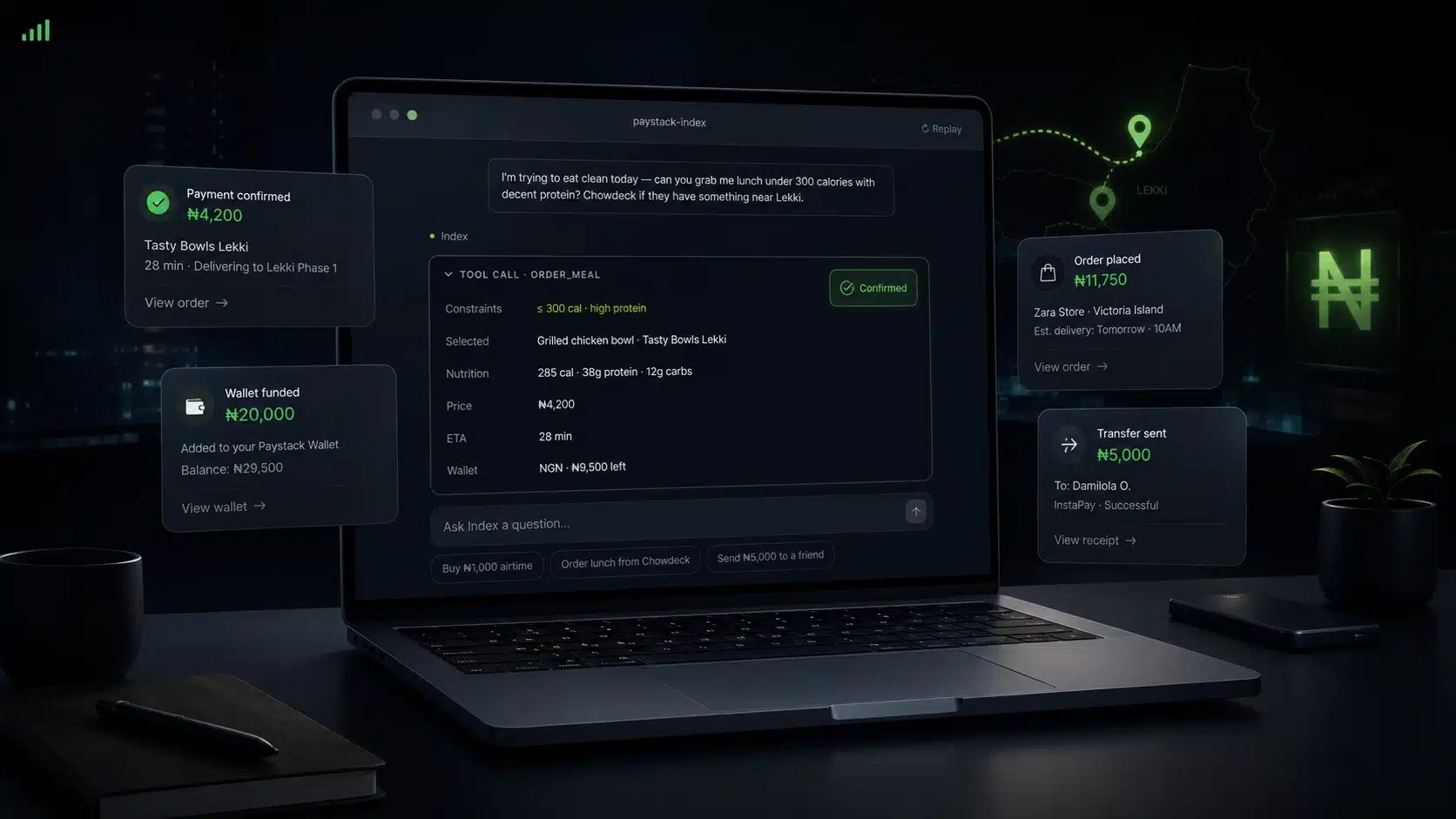
Paystack has launched Paystack Index, an early-access product designed to enable AI agents to perform financial transactions, marking a significant step towards "agentic commerce." Developed with support from TSG Labs, Paystack Index allows AI systems to move beyond simple question-answering into taking concrete actions such as making purchases, booking services, and managing transactions on behalf of users. This initiative is the first public product to emerge from TSG Labs, a venture studio under The Stack Group, which also encompasses Paystack, Zap, and Paystack Microfinance Bank, focusing on innovative, experimental products that may be too early or uncertain for the group’s more established businesses.
Shola Akinlade, Paystack CEO, envisions a future where AI agents become the primary interface for discovery and commerce, potentially surpassing traditional browsers. Paystack Index is seen as a foundational experiment to extend Paystack’s payment infrastructure into these AI-powered experiences. Instead of manually navigating websites and apps, users can instruct supported AI agents like ChatGPT, Claude, and OpenClaw to complete transactions. Paystack Index interprets these requests, routes them to the appropriate merchant or service provider, processes the payment via Paystack and Zap’s existing infrastructure, and facilitates checkout directly within the AI experience.
Currently available in Nigeria, Paystack Index supports routine and repeatable transactions. Initial use cases include purchasing airtime and mobile data, funding wallets, sending money through Zap, and ordering food via Chowdeck. While food ordering represents perhaps the most complex category currently supported, it still follows a relatively predictable purchase flow. Paystack is maintaining strict control over the merchant ecosystem, curating participating businesses, though Akinlade suggests this approach may evolve with increased usage and insights from customer and business interactions through AI agents.
The launch of Paystack Index is an early investment in agentic commerce. Akinlade acknowledges that immediate mass adoption is not expected, but the focus is on engaging early adopters in Nigeria and Africa who are quick to embrace new AI technologies. For now, Paystack is committed to understanding user behavior when AI agents serve as purchasing interfaces and identifying the necessary infrastructure for merchants to participate safely. This learning process is expected to take at least a year before significant traction is gained.
The concept of agentic commerce is gaining momentum across Africa's fintech landscape. For instance, earlier this month, Anchor introduced an MCP server that grants AI agents access to its API resources, indicating a broader interest in building financial infrastructure for AI-native applications. However, the emergence of an AI intermediary between merchants and customers raises questions about the direct relationships businesses traditionally build. Concerns arise that if consumers increasingly rely on AI systems to discover products, compare options, and complete purchases, merchants could lose some of the direct interactions vital for customer relationship building.
Akinlade addresses this concern by drawing parallels to the historical shift from physical retail to e-commerce, where direct face-to-face interactions diminished. He argues that businesses adapted then, and they will adapt again by finding new ways to communicate value online. Akinlade even suggests that AI agents could ultimately strengthen merchant-customer communication by allowing merchants to embed richer context to their digital storefronts, enabling more dynamic and informative interactions than static websites. User control and safety are paramount for consumer adoption. Paystack emphasizes that users retain full control over transactions completed through Index, setting permissions and spending limits. The system only executes requests initiated through the user’s chosen AI agent within these predefined guardrails, ensuring users remain in command.
For Paystack, this initiative is not primarily about capturing immediate transaction volume but about proactively understanding where commerce is headed. If AI agents indeed become a primary interface for discovering products and completing transactions, the company aims to be building the essential payment infrastructure for that future today, rather than waiting for the market to mature.