Afro Trailblazers Series(Part 23) $100 to a Million Dollar Pig Farm: The Rise of Anna Phosa
Despite making up over 80% of South Africa’s population, black South Africans own just around 4% of privately held land—a stark reflection of the country’s ongoing struggle with land inequality. Even in this chaos, one woman transformed $100 into a million dollar pig business.
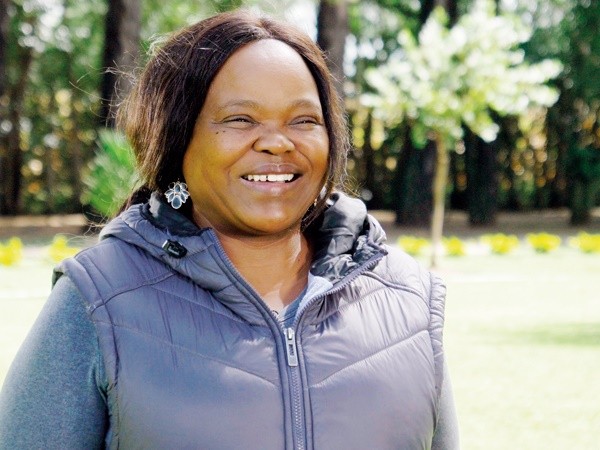
Despite making up over 80% of South Africa’s population, black South Africans own just around 4% of privately held land—a stark reflection of the country’s ongoing struggle with land inequality.
In the dry heartlands of 1970’s South African Free State, where opportunity often feels like a mirage and survival is an inherited art, a young girl named Anna Phosa came into the world with no silver spoon—only a will made of iron. Raised by a single mother of seven, Anna’s earliest lessons were not from textbooks but from hardship, resilience, and the quiet sacrifices of a woman who refused to let her family sink.
Even as a teenager, Anna did not rest idle. While her peers played or daydreamed, she hustled—selling goods and doing odd jobs to help her mother make ends meet. Her feet were planted in struggle, but her eyes were always scanning the horizon.
Responsibilities Come Knocking
After high school, life took her to a cashier’s station. Soon after getting married at the young age of 21, she and her husband opened a modest hardware store. It paid the bills, but it did not feed the fire that still burned quietly inside her—the hunger to build something of her own. Something that could last. Something no one could take from her.
She started small, as most great things do. A few rows of vegetables to supplement the family income. At this point, the soil beneath her nails must have felt like rocks, but it was at a farmers’ networking event in Zuurbekom where Anna’s life would change forever.
There, she met Mr. Mohlabi, an elderly pig farmer whose wisdom struck her like lightning. His stories weren’t grand, but they were rooted in a kind of power she recognized—the power to sustain..
Anna returned home not just inspired, but transformed.
The Idea Begins To Grow
In 2004, with nothing but faith and $100 in savings, she bought four pigs and named her new venture Dreamland Piggery & Abattoir. There was no land, no infrastructure—only a vision, grit, and a makeshift pigsty in her Soweto backyard.
One year later, in 2005, her first break came. She began supplying Vereeniging Meat Packers, marking her entry into the formal meat supply chain. It was not glamorous. It was not easy. But it was real. Still, she faced walls built from doubt. Capital constraints loomed large. Banks turned her away. Loans were denied. Investors were skeptical—how could a black woman with no background in farming make it in an industry so long gatekept by others?
But Anna Phosa is not the kind of woman who asks for permission.
By 2008, her persistence bore fruit. She secured a small but significant contract: to supply 10 pigs per week to Pick ’n Pay, one of South Africa’s largest and most established retail chains. For Anna, it wasn’t just a deal—it was validation.
Then, the moment that would define her legacy arrived.

Image Credit: Unsplash

In 2010, she signed a 5-year contract with Pick ’n Pay, valued at R25 million (approximately $1.9 million at the time). The terms? Supply 100 pigs per week—ten times her previous volume. It was a staggering leap, both in scale and responsibility.
She didn’t flinch.
With the strength of that contract, Anna secured the support of ABSA Bank and USAID, who helped her purchase a 350-hectare farm. From her humble backyard beginnings, she stepped into commercial territory. Her operation grew exponentially, eventually producing between 100 and 300 pigs per week, with a herd that peaked at over 5,000 pigs.
This wasn’t just farming—it was empire-building.
She hired more than 20 permanent staff and brought on 10 seasonal workers, many from the local community. Her success rippled outward, turning Dreamland Piggery into a hub of employment, opportunity, and education.
Challenges creep, as usual
Still, the road was anything but smooth. Anna wrestled with operational hurdles few could imagine—disease outbreaks, fluctuating feed costs, and the sheer logistics of meeting large-scale contracts. There were moments of failure, of sleepless nights and difficult decisions. But her strength lay not in perfection, but in her ability to learn, adapt, and evolve.
Without any formal training in agriculture, Anna threw herself into self-education. She attended agricultural courses, leaned on mentors, and absorbed every lesson the hard way. She made mistakes—but she never made them twice.
As her business flourished, so too did her influence. Anna began winning awards that told the world what she already knew in her bones. In 2006, she received the Young Farmer Award, and in later years, theStandard Bank Top Woman in Agriculture award. But her most remarkable accolade remains unwritten:
The Impact
Dreamland Piggery today is a multi-million rand business. Though current valuations remain private, its contractual history, infrastructure, and production scale make clear the magnitude of what she has built.
Yet, Anna’s greatest impact cannot be measured in rands or herd size.
She offers mentorship to young farmers. She welcomes agricultural students onto her land for training. She employs, teaches, empowers. Her farm is not just a business—it is a classroom, a lighthouse, a living legacy.
She has shifted perceptions and challenged deeply entrenched biases, showing that commercial farming is not a domain reserved for a few, but a powerful vehicle for transformation in the hands of the many.
Anna Phosa's life is a poem of persistence— carried by wind across fields she once could only dream of owning. From $100 and four pigs to a supply contract worth R25 million.
She did not inherit land. She built it.
She did not wait for an opportunity. She created it.
And in doing so, she became more than a farmer—she became a symbol of what is possible.
You too can be the next Anna Phosa.
For more in our Afro trailblazer’s series, checkout our Entrepreneurship category.
Cover image credit: Livingsattv