Afro Trailblazers Series(Part 10) Don Jazzy: The Silent Architect of Global Afrobeats
Did you know that the Music Label founded by Don Jazzy was sold for over $200m? Who exactly is Don Jazzy and how did it all begin?
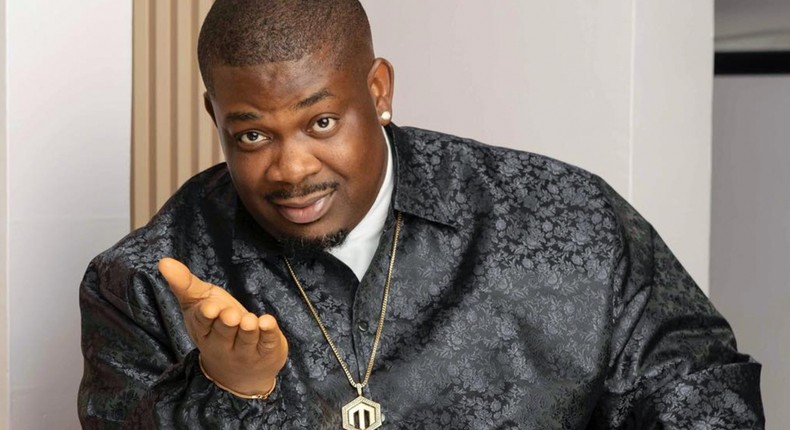
In the gritty backstreets of Ajegunle, Lagos, a boy picked up a bass guitar at age 12. Quiet. Withdrawn. Obsessed. That boy—Michael Collins Ajereh—would later become Don Jazzy: a name now tethered to billions of streams, historic awards, and a business empire worth up to $200 million. But his journey wasn’t just meteoric—it was filled with calculated moves, public failures, and silent resilience.
2002–2004: The Quiet Ascent Begins
By the early 2000s, Don Jazzy was honing his craft as a producer in the UK, learning the intricacies of music production and collaborating with various artists.D’Banj(Oladapo Daniel Oyebanjo), meanwhile, was an ambitious Nigerian harmonica player and vocalist, also living in the UK and seeking his breakthrough. Both were outsiders in the bustling London music scene, frequenting studios but not yet household names.
Their First Connection
Their paths converged in London’s music circuit, specifically around the studio of JJC, a Nigerian producer known for his work with the RnB/Hip Hop group Big Brovaz. Don Jazzy was brought into JJC’s orbit after impressing him with his beat-making skills, learning to produce on a computer, and co-producing for Big Brovaz and other artists. D’Banj was a regular visitor to the same studio, hoping to connect with JJC and Big Brovaz, but never quite breaking in with them.
The pivotal moment came after Don Jazzy had a falling out with JJCand felt undervalued. At this juncture, both Don Jazzy and D’Banj—each feeling like outsiders—found common ground and decided to join forces. Their partnership was born out of shared ambition and a sense of being overlooked by the established players in the UK music scene.
Forming Mo’ Hits Records
In 2004, Don Jazzy and D’Banj collaborated to produce D’Banj’s debut album, No Long Thing, in London. Motivated by the rising success of Nigerian artists like 2face and Styl Plus, they decided to relocate to Nigeria to pursue greater opportunities. It was during this period, while strategizing the release of their debut album, that they decided to formalize their partnership by founding Mo’ Hits Records—a 50:50 venture.
They soon recruited other talents, including their brothers K-Switch and D’Prince, and D’Banj’s friend Dr SID. Wande Coal later joined after being discovered by Don Jazzy at the University of Lagos, completing the Mo’ Hits All Stars lineup.
2011–2012: The Collapse No One Saw Coming
Just as Don Jazzy broke into the American scene—joining Kanye West’s GOOD Music as an in-house producer, contributing to “Lift Off” with Jay-Z and Beyonce —a storm brewed at home. Mo’ Hits, despite its success, fractured. The 2012 split with D’Banj wasn’t just personal; it was strategic chaos. A label that had shaped Nigerian pop had crumbled. But within months, Mavin Records was born.
2012–2016: Silence has a Sound
This was a quieter phase. Don Jazzy, battling self-acknowledged shyness and an inability to publicly address his team—a “disability,” in his own words—retreated into what he knew best: creation. He signed and developed artists who weren’t stars—yet. Tiwa Savage. Reekado Banks. Korede Bello. The machine was back, and this time, built to scale.
2019–2023: From Sound to Structure
Don Jazzy wasn’t just running a label; he was now running Africa’s most tech-savvy music company. In 2019, Kupanda Capital injected $5 million into Mavin, fueling its rapid evolution into a multimedia empire. By 2023, the label had surpassed 6 billion streams—a number almost unfathomable for an African company just a decade prior.
He wasn't just building stars—he was engineering them. Rema was discovered via Instagram. Ayra Starr, barely 19, was molded into a global icon. Both would later break records: Rema’s “Calm Down (feat. Selena Gomez)” hit 1 billion Spotify streams, crossing 9 billion globally. Ayra Starr would become the first African female to win Best International Act and Best African Music Act at the MOBOs in 16 years.
2024: The Deal That Changed Everything
In early 2024, Don Jazzy made what might be his boldest move yet: Universal Music Group (UMG) acquired a majority stake in Mavin Records, valuing the company at $150–$200 million. This wasn’t just an African success—it was the largest exit in African entertainment history.
His financials now matched his artistic accolades. Don Jazzy’s net worth exceeded $30 million, his business spanning streaming, licensing, touring, and even fast food: Jazzy’s Burger, a ghost-kitchen model pushing digital-first efficiency.
Awards, and the Sound of Influence
Headies Producer of the Year (2011, 2014)
City People Entertainment Awards (2015, 2016)
Beatz Awards Record Label of the Year (2023)
Silverbird Extraordinary Achievement Award (2025)
His artists weren’t just topping Nigerian charts—they were selling out London’s O2 Arena, earning Grammy nominations, and redefining what “African music” could mean on a global scale.
The Legacy: Built in Silence, Echoed Worldwide
Don Jazzy doesn’t often talk. He rarely gives flamboyant speeches. He’s admitted his discomfort with direct confrontation or team-wide talks. But he doesn’t need to speak loudly—his work does. And what it says is undeniable.
He shaped two of Africa’s most iconic labels. He helped globalize a genre. He turned weakness into strategy, setbacks into pivots.
Today, Mavin Records stands not just as a label, but a blueprint—for African music, for scalable creative business, for cultural exports.