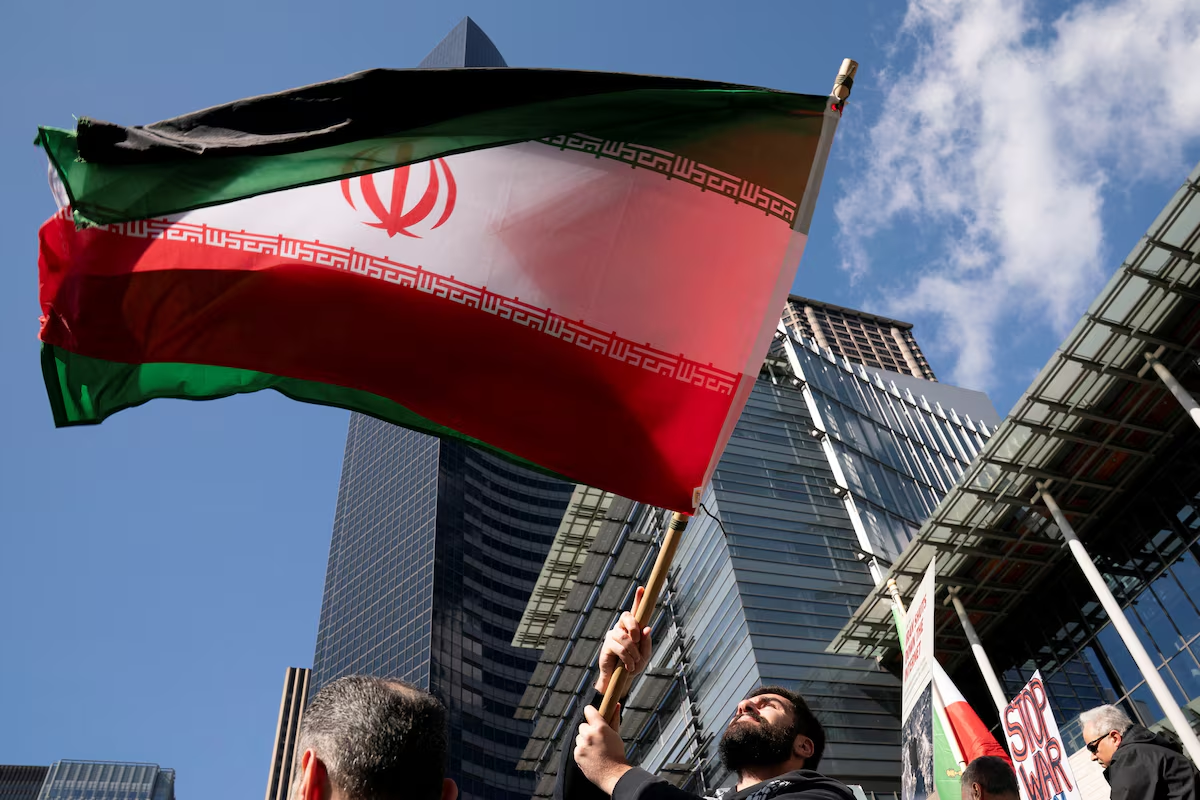
World Holds Breath: Trump Declares Two-Week Ceasefire, Strait of Hormuz Reopens Amid Iran War Tensions

In a dramatic eleventh-hour development, President Donald Trump announced a two-week ceasefire with Iran on Tuesday night, pulling back from his earlier threats to unleash devastating military strikes and avert a potentially catastrophic escalation of the ongoing conflict. The announcement came less than two hours before a self-imposed 8 PM ET deadline, by which Trump had warned he would "wipe out its entire civilization" if Tehran did not agree to reopen the vital Strait of Hormuz. The provisional agreement, largely brokered by Pakistan and influenced by a last-minute Chinese intervention, has brought a wave of global relief, albeit with significant caution.
The crisis had reached a fever pitch earlier in the day, with Trump issuing incendiary warnings on Truth Social, including that "a whole civilization will die tonight, never to be brought back again." These threats were accompanied by tangible military actions, as American and Israeli forces had already conducted airstrikes on Iranian infrastructure, including two bridges, a train station, and crucial oil export facilities on Kharg Island. US bombers were reportedly en route to Iran, and missile alerts were active in Tel Aviv, Doha, and the UAE, signaling the imminent danger.
The core of the dispute revolved around Iran's effective chokehold on the Strait of Hormuz, a strategic waterway through which a fifth of the world's oil supply normally passes. Its closure had led to skyrocketing oil prices, with US crude oil hitting $116 per barrel, and significant churning in global markets. The US, led by negotiators including Vice President JD Vance, Jared Kushner, and Special Envoy Steve Witkoff, had consistently demanded Iran give up nuclear enrichment capabilities, cut missile programs, cease proxy support, and immediately reopen the Strait.
A breakthrough emerged following intense diplomatic efforts, primarily spearheaded by Pakistani Prime Minister Shehbaz Sharif. Sharif, alongside Field Marshal Asim Munir, had publicly urged Trump to extend his deadline and requested Iran to reciprocate by opening the Strait as a goodwill gesture. China, Iran's largest trade partner, also played a crucial role by encouraging Tehran to show flexibility regarding the war's economic fallout. Ultimately, Iran submitted a 10-point peace plan, which Trump initially dismissed as "not good enough" but later deemed a "workable basis on which to negotiate."
Under the terms of the provisional ceasefire, Trump agreed to suspend bombing and attacks on Iran for two weeks, contingent on Iran agreeing to the "complete, immediate, and safe opening of the Strait of Hormuz." Trump stated this would be a "double-sided ceasefire" because the US had "already met and exceeded all military objectives" and was "very far along with a definitive agreement concerning long-term peace with Iran." Iran's Foreign Minister Abbas Araghchi confirmed the truce, stating that "safe passage through the Strait of Hormuz will be possible via coordination with Iran's Armed Forces" for the duration of the two weeks. Israel also agreed to halt attacks on Iran for two weeks, though its Prime Minister Benjamin Netanyahu clarified this did not include operations against Hezbollah in Lebanon.
Iran's 10-point peace plan, published by state-run Tasnim news agency, includes several maximalist demands previously rejected by the US. Key conditions include: the lifting of all primary and secondary sanctions on Iran, continued Iranian control over the Strait of Hormuz (with reported fees of up to $2 million per ship for reconstruction), US military withdrawal from the Middle East, an end to attacks on Iran and its allies, the release of frozen Iranian assets, and a UN Security Council resolution making any deal binding. A significant point of contention arose from the Farsi version of the plan, which included "acceptance of enrichment" for its nuclear program, a phrase notably absent from English versions shared by Iranian diplomats.
The announcement immediately sent ripples through global markets. US crude oil prices plunged by over 15 percent to $95 per barrel (and later under $93), marking the largest one-day drop since the Gulf War in 1991. Brent crude fell to $94.71 a barrel. Prices for natural gas and heating oil also dropped. Concurrently, stock markets surged, with Dow futures rising 1,000 points, Nasdaq 100 futures nearly three percent, and S&P 500 futures over 2.5 percent. Treasury yields eased, reducing pressure on mortgage rates, though economists cautioned that stability would require the ceasefire to hold longer-term.
The dramatic turn of events elicited varied reactions domestically and internationally. In the US, Democrats, including Senate Democratic leader Chuck Schumer, House Minority Leader Hakeem Jeffries, and Congresswoman Alexandria Ocasio-Cortez, widely condemned Trump's previous threats as "unhinged," "unconscionable," and potentially constituting war crimes, reiterating calls for his removal from office. Conversely, some Congressional Republicans, like Senators Rick Scott and Lindsey Graham, praised Trump's move as a display of "peace through strength."
Inside Iran, the hours leading up to the deadline were marked by widespread panic, mass evacuations, and terrifying scenes of citizens being urged by state television to gather at power plants and bridges as "human shields" against potential American strikes. This controversial tactic, reminiscent of past conflicts, highlighted the deep fear among the populace. Anti-regime elements, while terrified, expressed a glimmer of hope that the crisis might weaken the regime's grip, though Trump's public messaging focused on denuclearization and the Strait, not regime change.
Internationally, the provisional ceasefire was met with cautious optimism. Iraq, Germany, Australia, New Zealand, Japan, and South Korea welcomed the de-escalation, emphasizing the need for sustained dialogue and a lasting peace. Japan and South Korea, heavily reliant on Middle Eastern oil transiting the Strait of Hormuz, expressed particular relief and hopes for restored stability. However, Iran's Supreme National Security Council warned that the talks "do not signify the termination of the war," asserting their hands "remain upon the trigger" should any "slightest error" be committed by the enemy.
Looking ahead, Pakistan has invited US and Iranian delegations to meet in Islamabad on Friday for further negotiations on Iran's 10-point proposal. While Tehran has confirmed its attendance, Washington has yet to publicly finalize its participation in in-person talks. The path to a conclusive and long-term peace agreement remains complex, fraught with Iran's firm demands and the lingering distrust between all parties involved in "Operation Epic Fury."
You may also like...
Is “Because I Said So” Killing Communication at Home?
“Because I said so” may seem harmless, but it could be quietly damaging communication between parents and children. Here...
Foods That Should Never Go in Your Fridge (And Why)
Not all foods belong in the refrigerator. Here are common foods you should never store in your fridge and why keeping th...
The Lagos Carnival You Didn't Know Existed: Afro-Brazilian History in the City
Every Easter, Lagos comes alive with the Fanti Carnival, an Afro-Brazilian celebration rooted in history, identity, and ...
Your Cover Letter Might Be The One Costing You the Job
Your cover letter could be the reason you are not getting callbacks. This is what recruiters are actually looking for, h...
The Untold Stories Behind Everyday Objects: How History Hides in Plain Sight
Everyday objects tell extraordinary stories—from jeans that sparked rebellion, to pencils that shaped ideas, to coffee c...
Top 10 Oil-Producing States in Nigeria by Daily Crude Output
Here are the top 10 oil-producing states in Nigeria ranked by daily crude output, according to Intelpoint data, and see ...
Djibouti Bases and the Iran-US War: Why Africa Could Become a Battlefield Next
Djibouti’s strategic military bases and location at the Bab-el-Mandeb Strait are pulling Africa into the orbit of the Ir...
Heat's Playoff Hopes Dented: Miami Falls to Raptors, Faces Play-In Gauntlet for Fourth Time

The Miami Heat are heading to the NBA play-in tournament for the fourth consecutive year, despite their expressed desire...