Words Find Their Way Home: Timbuktu’s Manuscripts Return
Thousands of historic manuscripts from Timbuktu, Mali, dating back to the 13th century, are returning home after being rescued and preserved during the 2012 insurgency. These manuscripts represent Africa's intellectual heritage, showcasing scholarship in fields like astronomy, medicine, and philosophy. Their return reaffirms cultural ownership and pride for Mali and broader Africa.
The Return of a Written Legacy
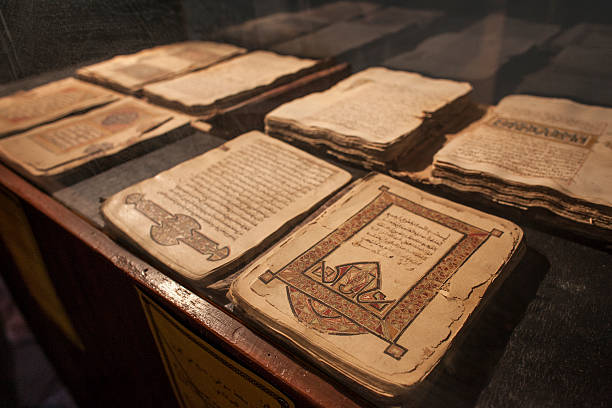
There are cities whose histories are written in stone, carved in the architecture that dots their streets and plazas. And then there is Timbuktu — a place whose history was written in ink, etched into leather-bound manuscripts that whisper the ideas, debates, and dreams of centuries past. These manuscripts, some dating back to the 13th century, are more than just fragile pieces of parchment; they are vessels of Africa’s intellectual heritage, testifying to a continent that was reading, writing, and theorizing long before colonial encounters sought to redefine its image.
For years, the manuscripts of Timbuktu have been scattered, hidden, smuggled, and at times rescued under the threat of destruction. During the 2012 insurgency in Mali, when militants swept into the historic city, the manuscripts became targets — symbols of a heritage that extremists sought to erase. Many were spirited away in secret, hidden under sacks of grain, transported in donkey carts, and tucked away in the safekeeping of families who understood that these were not just books, but the lifeblood of their people’s identity.
SOURCE: gettyimages

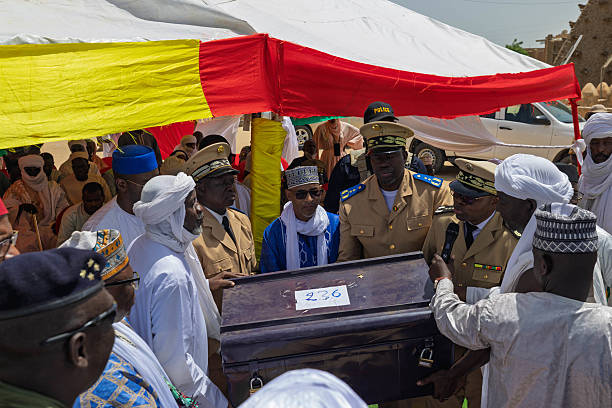
Today, the news reverberates across Mali and beyond: thousands of these manuscripts are making their way back home. After years of restoration, protection, and quiet negotiation, they are being returned to Timbuktu — a return that is as much about reclaiming history as it is about safeguarding the future.
A City That Once Taught the World
Long before the name Timbuktu became shorthand in the Western imagination for “the ends of the earth,” it was the beating heart of an intellectual empire. In the 15th and 16th centuries, the city’s scholars attracted students from across the Islamic world. The Sankore University, along with hundreds of other learning centers, taught astronomy, medicine, law, theology, mathematics, and philosophy.
The manuscripts covered every conceivable topic: trade agreements, maps of constellations, treatises on governance, agricultural methods, love poetry, and detailed scientific observations. They painted a picture of an Africa deeply connected to the global exchange of ideas — an Africa often missing from the simplified versions of history taught elsewhere.
When colonial narratives painted the continent as a place without written history, the manuscripts stood silently in rebuttal. And today, their return is a reminder that African heritage is not only rich and deep but also resilient.
A Rescue in the Shadows
The journey of these manuscripts over the past decade has been one of quiet heroism. In 2012, when extremists associated with al-Qaeda took over Timbuktu, they began destroying cultural symbols, shrines, and historical sites. The manuscripts — kept in libraries and private collections — faced imminent destruction.
It was then that librarians, historians, and ordinary residents sprang into action. Led by figures like Abdel Kader Haidara, they organized the secret evacuation of over 350,000 manuscripts from the city. Packed into metal trunks and hidden in ordinary goods, the manuscripts traveled hundreds of miles to safety in Bamako and other locations.
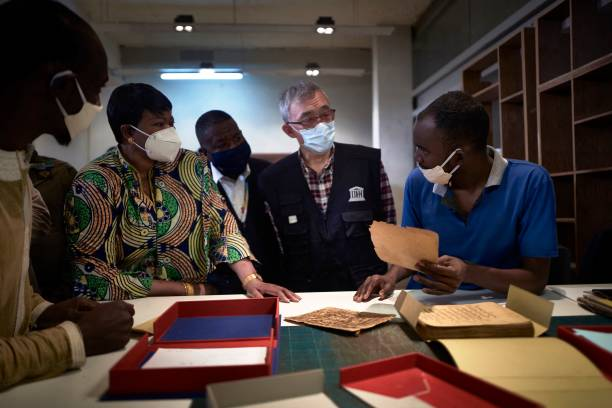
For years, they remained out of sight, preserved in controlled environments, many undergoing painstaking restoration after suffering from humidity, insects, and the wear of time. International partners provided resources and training, but the true custodianship remained firmly in Malian hands — a testament to the guardians’ understanding that these treasures belonged to Timbuktu’s people first.
Why Their Return Matters
SOURCE: gettyimages

The return of the manuscripts is not simply about moving books from one place to another. It is about reaffirming ownership — cultural, intellectual, and historical. Mali’s recent years have been marked by political instability, economic strain, and security challenges. In such times, the arrival of these manuscripts serves as a rare unifying moment, a reminder of shared identity and pride.
Moreover, they present an opportunity for Mali to reassert itself as a center of African scholarship. In a world where narratives about Africa are too often framed externally, the manuscripts offer Africa’s own voice, preserved in ink and parchment. Their return opens possibilities for research, education, and tourism — drawing scholars from across the globe, as well as younger Malians who will, perhaps for the first time, see tangible evidence of their ancestors’ intellectual achievements.
The government, alongside local cultural bodies, has expressed plans to build stronger facilities for their preservation in Timbuktu. This includes climate-controlled libraries, digital archiving programs, and security measures to ensure they are never again under threat. The hope is that their homecoming will inspire a new generation to both protect and engage with their heritage.
Lessons for the Continent
The story of Timbuktu’s manuscripts resonates far beyond Mali’s borders. Across Africa, cultural treasures have been lost to looting, smuggling, and neglect — from Benin’s bronzes to Ethiopia’s sacred relics, from Zimbabwe’s stone sculptures to Egypt’s ancient papyri. The successful rescue, preservation, and return of Timbuktu’s manuscripts offers a model of what is possible when communities take ownership of their heritage.
It also challenges African nations to rethink the balance between relying on international help and strengthening local capacity. While global partnerships played a role in their preservation, it was the courage and foresight of Malians themselves that ensured these manuscripts survived. That message — that Africans can and must be the primary stewards of African heritage — is one worth amplifying.
Around the Corner: What Comes Next

SOURCE: gettyimages

Their return does not mean their journey is over. The manuscripts are fragile, and their survival depends on continuous care. As climate change brings more unpredictable weather patterns to the Sahel, preservation will require adaptation — better facilities, digitization, and specialized training for local archivists.

But there is another challenge: making sure the manuscripts are not just stored but studied, celebrated, and integrated into the living culture of Mali. They are not relics to be locked away but living texts that still have much to teach. By incorporating their contents into school curricula, public lectures, and international exhibitions, Mali can ensure that the manuscripts remain as relevant today as they were centuries ago.
In the broader African context, Timbuktu’s triumph can spark renewed efforts to reclaim and preserve heritage elsewhere. It is a call to recognize that the fight for cultural survival is as important as the fight for political or economic stability. For in culture lies the soul of a people, and without it, no nation can truly stand.