Caliphate Air Gets Its First E190 as Sokoto-Backed Airline Moves Closer to Launch
Nigeria's Caliphate Air, backed by the Sokoto State Government, has taken delivery of its first Embraer E190, signaling its upcoming Q4 2026 launch. The new airline aims to enhance connectivity across northern Nigeria, operating from Abuja with a customer-centric approach. This initiative also highlights a growing trend of state-supported carriers in African aviation.
Caliphate Air now has an aircraft to show for all the talk about its planned launch.
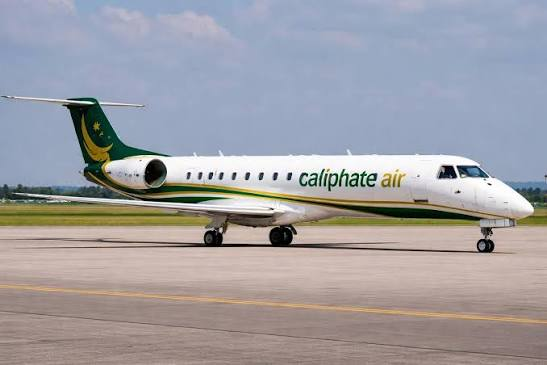
The Sokoto State-backed airline has taken delivery of its first Embraer E190 in Abuja, adding the aircraft to three ERJ145 regional jets already in Nigeria.
The arrival is one of the clearest signs yet that the airline is moving from planning into the operational stage. Caliphate Air is targeting commercial operations in the fourth quarter of 2026, although it still needs its Air Operator's Certificate from the Nigerian Civil Aviation Authority before it can begin scheduled flights.
So there is an aircraft. There is a planned network. But there is still a regulatory hurdle between the two.
The First Routes Will Connect Sokoto, Abuja and Kano
Caliphate Air is being developed as a domestic passenger and cargo carrier, with Abuja as its main operating base.
Its initial plan is to connect Sokoto, Abuja and Kano, giving the airline a fairly focused starting network before expanding to more Nigerian destinations.
The airline is expected to begin with five regional jets: three Embraer ERJ145LRs and two Embraer 190-100 series aircraft.
That choice of aircraft makes sense for a carrier starting with regional routes. The planes are smaller than the aircraft commonly used on Nigeria's busiest trunk routes, allowing an airline to serve markets where demand may not initially justify larger aircraft.
And that is where Caliphate Air's proposition gets interesting.
Sokoto and other parts of the Northwest have long depended heavily on road transport for movement between cities. A scheduled airline connecting the region could cut travel times for passengers travelling for business, government work, family visits and other purposes.
But It Still Needs the Regulator's Final Approval
The biggest thing standing between Caliphate Air and its first commercial passenger is the AOC.
The airline obtained its Air Transport Licence in 2025 and has been working through the certification process with the NCAA.
That distinction matters.
An Air Transport Licence allows an airline to operate commercially in principle, but the AOC is the certification that confirms the carrier has met the required operational, safety and organisational standards to actually conduct air transport operations.
Caliphate Air's own travel information currently says its launch date will be announced once regulatory clearance is complete.
So even with the E190 sitting in Abuja, passengers should not assume tickets are about to go on sale tomorrow.
The airline still has work to finish.
Sokoto Is Betting on Air Connectivity
Caliphate Air is wholly backed by the Sokoto State Government but is structured as an independent limited liability company under the Sokoto State Investment Council.
The state's argument for the airline is bigger than simply giving Sokoto another way to fly.

Better air connections could make it easier for businesses, investors, government officials and visitors to move between the Northwest and other parts of the country.
The airline has also talked about eventually moving beyond its initial domestic network, with its longer-term roadmap including regional African destinations such as Niamey, N'Djamena, Accra and Douala.
That is still a future plan, though.
For now, the immediate job is getting the first five-aircraft operation off the ground safely and reliably.
The Real Test Starts After Launch
Having aircraft is one thing. Running an airline in Nigeria is another.
Caliphate Air will have to convince passengers that its flights are reliable, competitively priced and worth choosing over road travel or established airlines.
It will also need enough demand to keep its initial routes viable.
That is why the first few months may tell us more about the project than the launch ceremony ever could.
If Sokoto-Abuja-Kano develops into a sustainable network, the airline could gradually add more routes and become an important link between northern cities and the rest of Nigeria.
But if demand, costs or operational problems get in the way, owning aircraft will not be enough.
For now, though, Caliphate Air has crossed an important line.
Its first E190 has arrived. The next big milestone is getting permission to put passengers on it.