Willem Dafoe Unpacks Duality in 'Late Fame' and 'The Birthday Party'
Willem Dafoe offers a deep dive into his unique approach to acting and his upcoming films, "Late Fame" and "The Birthday Party." He discusses the importance of directorial vision and embracing challenging roles, alongside his surprising connection to the James Bond franchise and his collaborative work with director Robert Eggers on "Werwulf."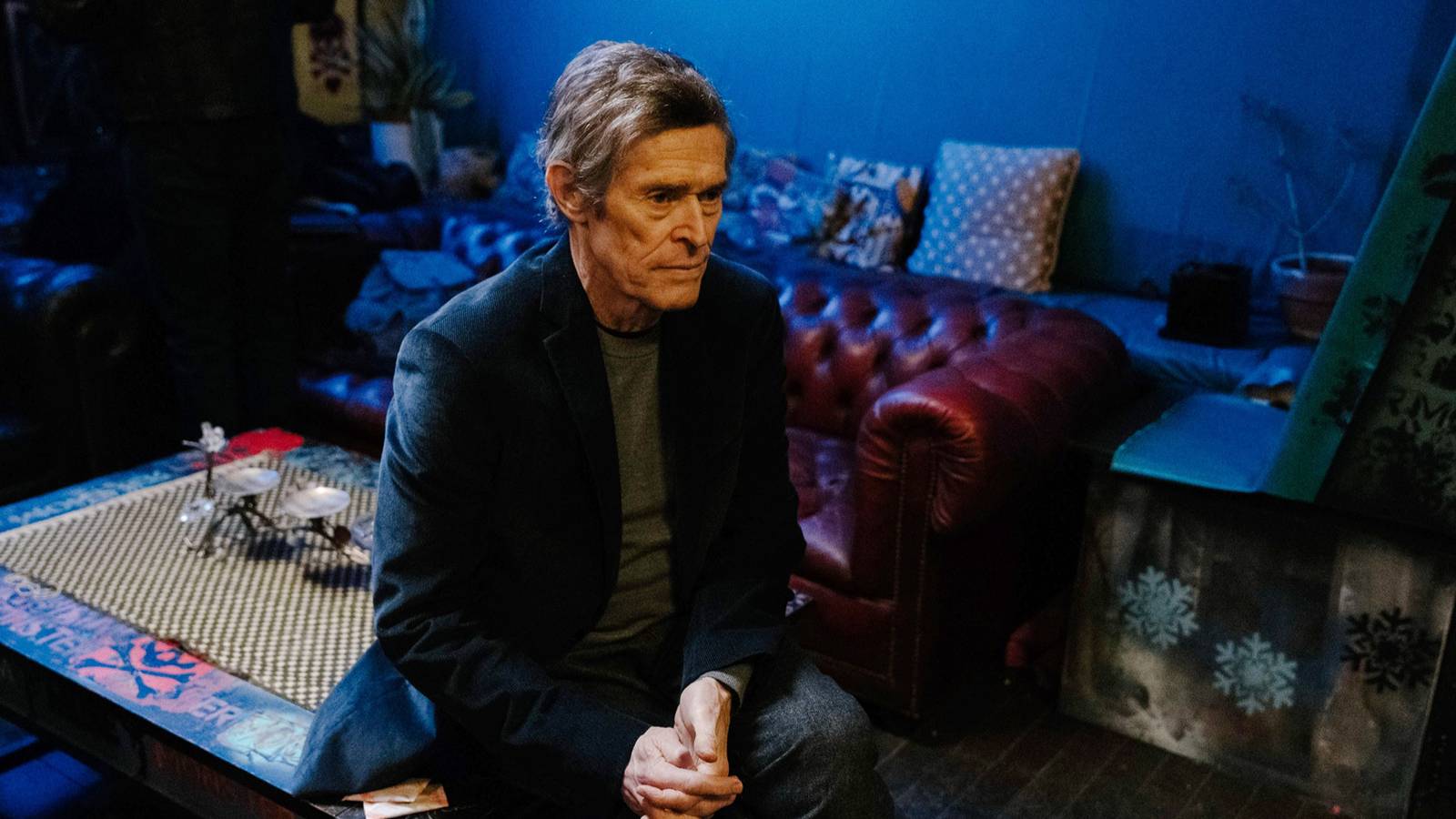
Willem Dafoe, a four-time Academy Award nominee, stands out for his incredibly interesting and impressive acting resume. Known for his versatility, he has portrayed diverse characters, from a larger-than-life supervillain in "Spider-Man" to a humble motel manager in "The Florida Project," consistently delivering a dedicated performance. His legendary commitment to every project makes his involvement a significant endorsement, a sentiment particularly true for his two upcoming films, "Late Fame" and "The Birthday Party." These new projects are heralded as a near-flawless showcase of Dafoe's range, featuring him as a quiet, introspective poet in one and an intimidating, wealthy businessman in the other.
Dafoe describes his process for choosing a role as a "non-answer" because it's always distinct. He places significant importance on the director and seeks out situations where he can learn something or have a profound experience. He cautions against roles that are too clearly defined, preferring those that offer "space to reach for"—roles that are challenging and "full of questions." This uncertainty, he explains, provides the necessary energy to extend himself creatively and find something new, which forms the core of his commitment. For Dafoe, performing is about sharing an experience and expanding one's perspective, rather than merely communicating a message.
His involvement in "Late Fame" originated from a novella given to him by a friend, initially considered for Abel Ferrara. However, the project evolved into a script by Samy Burch, known for "May December." Burch's adaptation famously transposed the story from Vienna to present-day New York City. Dafoe initially harbored doubts about this change, as Vienna was integral to the original narrative, but upon reading the script, he found it highly pertinent and relatable, noting that it captured themes truly "in the air" and raised compelling questions, ensuring a rich and audience-connectable film.
In "Late Fame," Dafoe portrays Saxberger, a quiet poet, and shares the screen with Greta Lee. Dafoe highlights Lee's character as a perfect foil to Saxberger, embodying the struggles of an artist driven by hunger and commitment, mirroring Saxberger's own past. He describes the relationship as having "compassion and desperation" from Lee's side, coupled with a "flirtation" that offers Saxberger a return to a younger version of himself. Dafoe praises Lee as a "good partner" in bringing this nuanced relationship to life.
"The Birthday Party" also has an intriguing origin. The concept was presented to Dafoe by a producer from his previous film, "Inside," which was directed by Vasilis Katsoupis. The story revolved around a 1970s Greek character, reminiscent of Onassis. While Dafoe initially questioned if he was the right fit, he was ultimately convinced after meeting a director whose previous work he greatly admired. His decision, he explains, aligns with his philosophy of gravitating "towards situations, towards people, to places where you think you can have an experience or contribute something."
In "The Birthday Party," Dafoe embodies Marcos, an intimidating and wealthy businessman. Marcos is depicted as a self-made man who has built an empire but, in doing so, has become detached from his family, including a child who tragically died. Dafoe characterizes Marcos as a "tragic figure" who, despite his intelligence, is blinded by his relentless efforts to preserve his own life and those around him. The film delves into the intricate dynamics within his family, particularly with his daughter and wife, presenting a "cautionary tale" about the pursuit of power, misplaced attention, and the complexities of relationships, all amplified by the character's "bigger than life" presence in 1970s Greece.
Dafoe also revealed a surprising connection to the James Bond franchise, having voiced a villain in the 2003 video game "James Bond 007: Everything or Nothing." He recalled the experience as a "quick recording session" where he improvised an accent on the spot, describing it as a "loosey-goosey" approach. Despite the casual nature, many fans reportedly enjoyed his portrayal. Dafoe, who watched Bond films from a young age, expressed openness to revisiting the franchise in a live-action villainous role if the right opportunity were to arise, acknowledging the unique appeal of the Bond universe.
His ongoing collaboration with director Robert Eggers, with whom he has worked four times, is a particularly cherished aspect of Dafoe's career. Dafoe speaks highly of Eggers, calling him a committed, smart "world maker" who deeply understands actors and how to push their creative boundaries. He finds working with Eggers to be an "ideal situation" because Eggers' meticulous research and ability to construct immersive worlds make it effortless for actors to "inhabit" their roles, fostering a transformative "growth process." Though demanding, Eggers enables actors to become different people for their characters.
Their next project is the horror film "Werwulf," which Dafoe anticipates will be a "very, very full-on movie." Based on early visuals and clips from ADR sessions, he describes the film as "stunning" and "otherworldly." Dafoe admires Eggers' complete dedication to his craft and his collaborative approach, emphasizing that Eggers fully "experiences" the creative process alongside his team rather than merely delegating tasks. Dafoe enthusiastically serves as a "cheerleader" for Eggers' work.
With "Late Fame" currently in theaters and "The Birthday Party" set to debut in the U.S. on August 14, Willem Dafoe continues to enrich the cinematic landscape with his profound talent and unwavering commitment to diverse, impactful roles.