Why Your University Degree Might Be Holding You Back
In Africa, a university degree is a symbol of pride—but is it still the path to success? Explore how outdated curricula, job market shifts, and the rise of skills-first hiring are forcing a rethink of education, employment, and what it means to truly succeed.
.jpeg)
A university degree has long been considered the golden key to success: a symbol of intelligence, discipline, and upward mobility. In many African households, it’s more than an academic achievement—it’s the family’s pride, a generational dream fulfilled. But what if this prized possession is the very thing keeping you stuck? In today’s rapidly evolving world, where adaptability and skills reign supreme, the traditional degree might be quietly holding you back.
We’re not saying education doesn’t matter. It does—and profoundly so. But we must confront a growing reality: for many graduates today, the degree isn’t a springboard. It’s a cage of expectations, a relic of a world that no longer exists.
The Legacy of Degrees: Status, Security, and Structure
To understand how we got here, we need to recall the original purpose of a university degree. For decades, holding a degree was a gateway to economic security. It separated the educated elite from the working masses. Degrees brought prestige, job offers, and a social pass into conversations of influence. In Africa, this symbolism is amplified: a graduate child is often a family's trophy.
Our parents, raised in post-colonial societies, revered formal education as a guarantee of success. To become a doctor, lawyer, or engineer was not just noble—it was necessary. And for a while, that narrative held true. A degree was the difference between struggling and thriving.
But times have changed.
Oversaturation and Misalignment

Image credit: Pinterest
Today, university degrees are more accessible than ever before. This should be a good thing. But mass access has also led to degree inflation—when everyone has a degree, it loses its exclusive power. In countries like Nigeria, Ghana, or Kenya, hundreds of thousands graduate annually, but only a fraction find employment in their field.
The problem isn’t just oversupply. It's a misalignment. Many African universities still offer courses that were designed decades ago, with little relevance to today’s economy. Fields like philosophy, zoology, or political science may have intellectual value, but they often leave graduates unemployable without further training or connections.
Meanwhile, industries in tech, digital marketing, logistics, and creative media are begging for talent—but find graduates unequipped. The result? A tragic mismatch. Jobs go unfilled. Graduates stay unemployed. And degrees, once a ticket, become deadweight.
How a Degree Holds You Back
It sounds counterintuitive, but your degree may be creating mental and strategic blocks without you realising it. Here’s how:
1. The Entitlement Trap
Many graduates enter the job market believing their degree guarantees a good job. But this entitlement often clashes with market realities. Employers now prioritise skills, attitude, and adaptability over credentials. Holding on to the belief that “I deserve this because I’m educated” can be self-sabotaging.
2. Fear of Starting Over
You spent four years studying accounting. So now, even when the field is saturated or uninteresting, you feel forced to stick with it. A vocational course in UX design might lead to better income—but taking it feels like ‘downgrading.’ That rigidity kills growth.
3. Stigma Around “Non-Degree” Paths
In many African societies, there’s shame attached to jobs that don’t require degrees—trades, apprenticeships, short-term skill certifications. This prevents people from pursuing practical, profitable work. A degree can box you into elitism you can’t afford.

4. Lost Time and Money
Let’s be honest. University is expensive. Between tuition, feeding, transportation, and hostel fees, most students or their families invest a lot—and expect payback. But the truth is, that investment isn’t always worth it. Graduates find themselves burdened by loans, pressure, and underemployment.
The Shift: Skills Over Credentials
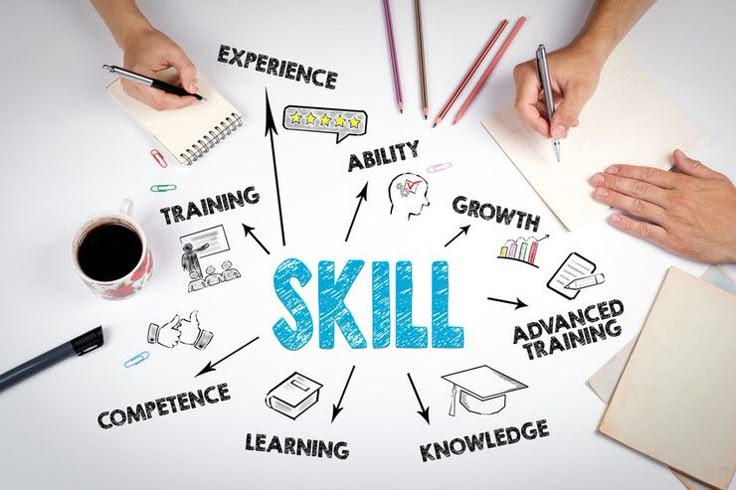
Image Credit: pinterest
The modern workplace is undergoing a dramatic shift. Companies now want to see what you can do, not just what you can prove on paper. Portfolios, personal projects, certifications, and problem-solving ability are taking precedence over a university transcript.
A report by LinkedIn and World Economic Forum revealed that recruiters are increasingly searching for “skill-first” hires, especially in dynamic fields like tech, marketing, and project management. This isn't limited to the West. Startups and forward-thinking firms in Lagos, Nairobi, and Accra are following suit.
Platforms like Google Certificates, Coursera, AltSchool Africa, and Zuri Training are equipping learners with in-demand skills—from software engineering to digital marketing. And guess what? Employers are hiring them.
A degree might show that you’re book-smart. But a GitHub profile shows that you can code. In today’s market, one is more valuable than the other.
Take Blessing, a 25-year-old biochemistry graduate in Nigeria. After two years of job hunting, she reluctantly took a three-month course in product design. Within six months, she landed a remote job with a European firm, earning more than any of her classmates. Her degree didn’t open the door. Her skills did.
Or consider Emeka, who dropped out of university in his third year and became a digital marketer through YouTube tutorials and online courses. He now runs campaigns for multiple small businesses and earns enough to support his family. No one ever asks about his degree. They ask for results.
These stories aren’t rare. They’re becoming the norm.
The Role of Universities Going Forward
Does this mean degrees are useless? Not entirely. Some careers still require formal education: medicine, law, engineering. University is also a place where people learn discipline, develop critical thinking, and build networks. But for the system must evolve, universities must:
Partner with industries to keep curricula relevant
Incorporate soft and technical skills training
Encourage entrepreneurial thinking
De-emphasise rote memorisation in favour of applied learning
And as individuals, we must unlearn the belief that a degree is the answer. It’s just one tool in a much larger toolbox.
Conclusion: Redefining Education and Success
The world is changing fast. The jobs of today didn’t exist yesterday. The jobs of tomorrow will demand even more agility, creativity, and practical knowledge.
If you’re a degree holder, that’s great—but don’t cling to it like a life raft. Expand. Upskill. Learn continuously. Your degree is not a destination. It’s a starting point.
Let’s shift the conversation. From degrees to skills. From titles to talent. From what you studied to what you can do.
Because in this new world, what holds you back isn’t your lack of a degree—it might just be your unwillingness to grow beyond it.