Why Does Every Entry-Level Job Want Experience From Someone Nobody Has Employed Yet?
Entry-level jobs increasingly demand prior experience, leaving graduates caught between unpaid work and unemployment. Who will give them their first real opportunity?

Kofi is a recent graduate in Accra, Ghana, and he has a problem that many young graduates will recognise. He has been applying for jobs, sending out applications, checking vacancies, and trying to get his foot through the door.
It is not that he has not seen opportunities. The problem is that the opportunities he finds want an entry-level employee with experience. Now, how exactly is Kofi supposed to gain experience when nobody wants to give him the opportunity to acquire it?
He could volunteer, of course. That is usually the advice people offer young graduates who cannot find work: volunteer somewhere, offer your services for free, learn on the job, build your portfolio, and let the opportunities come.
It sounds reasonable until you remember that Kofi has bills to pay. Bills do not volunteer, and neither does his landlord. His parents can support him, but he does not want to remain dependent on them simply because the labour market expects him to work for free before it will consider paying him.
The Entry-Level Job Might Not Really Be An Entry-Level Position

Open a vacancy for an entry-level position, and you might find requirements for one, two, or even three years of relevant experience in the particular field of expertise needed. Sometimes, the employer also wants a degree, professional certifications, technical skills, and the ability to work independently with minimal supervision.
At this point, one has to ask: if a candidate needs to have all the experience required to perform on the job, what exactly makes the position entry-level?
Employers have their reasons. Training costs money. Recruitment takes time. A business wants someone who can contribute quickly without requiring constant supervision. In competitive markets, hiring someone who has already performed similar work can seem like a safer decision than taking a chance on a graduate whose abilities are largely demonstrated through coursework, projects, or academic results.
But there is a problem with making previous employment the primary evidence of competence. It assumes that someone who has never been hired has little to offer, even when that person has the knowledge, discipline and capacity to learn the work.
Experience is valuable, but the opportunity to acquire it is not distributed equally. Some graduates have access to family businesses, professional networks, internships, or relatives who can introduce them to employers. Others must find their own way into the same labour market, often without the contacts or financial support that make those first steps easier.
When Working for Free Becomes the Price of Getting Hired

This is where the advice to volunteer becomes complicated. Internships, volunteering and personal projects can help graduates develop practical skills.
They can provide references, demonstrate reliability and make a CV more convincing. There is nothing inherently wrong with these routes into employment.
The difficulty begins when unpaid work becomes an unofficial requirement for being considered employable.
A graduate who can afford to spend six months working without an income has an advantage over someone who needs to pay for transport, food, accommodation and internet access. The first person can accumulate experience while the second may have to reject the same opportunity simply because accepting it would make survival more difficult.
And the costs do not stop at the workplace. Applying for jobs can itself become expensive. Transporting oneself to interviews, buying data to search for vacancies, printing documents and attending assessments all require money. Even an opportunity that promises future employment can be inaccessible to someone who cannot afford the journey towards it.
The result is a labour market where the ability to work without immediate payment can become an advantage in securing the paid work everyone is trying to obtain.
This is not an argument against volunteering. It is a question about what happens when volunteering stops being one possible route into a career and becomes the price of admission.
Who Is Responsible for Breaking the Cycle?
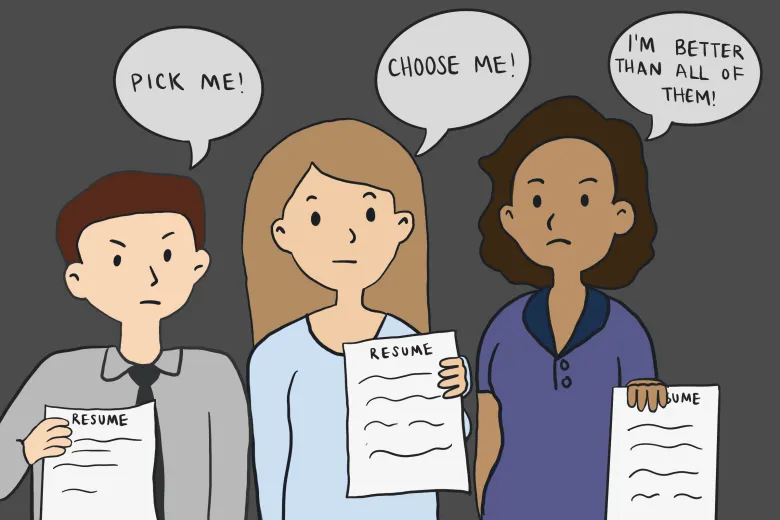
Graduates still have practical steps they can take:
Build portfolios that demonstrate practical skills and completed work.
Document personal projects to show initiative, problem-solving, and applied knowledge.
Pursue affordable training to develop relevant, marketable skills.
Contribute to community initiatives to gain practical experience and demonstrate responsibility.
Seek internships that offer meaningful supervision and a credible route towards employment while still in the university.
Learn to describe transferable skills, rather than assuming that only formal employment counts as experience.
But individual effort cannot solve a problem created by the structure of the hiring process.
Employers can reconsider whether every entry-level vacancy genuinely requires previous employment. They can introduce paid internships, graduate trainee programmes, supervised entry-level roles and practical assessments that allow candidates to demonstrate what they can do.
Where experience is necessary, job descriptions should distinguish essential skills from preferences that unnecessarily narrow the pool of applicants.
Governments and educational institutions also have a role in connecting training to actual workplace opportunities, rather than leaving graduates to discover the gap between academic preparation and employers' expectations after graduation.
Kofi does not expect a company to employ him out of charity. He wants an opportunity to prove that he can do the work, learn what he does not yet know, and become valuable through experience.
That is a reasonable expectation. If every employer wants experienced workers but few are willing to help inexperienced workers become experienced, where is the next generation of experienced workers supposed to come from?
A first job should be an opportunity to begin a career, not a reward reserved for people who have somehow already started one.