When the Sun Keeps Its Promise: Africa’s 20 GW Solar Achievement
Africa has reached a historic milestone in its solar journey, crossing 20 gigawatts of installed solar energy capacity. This achievement marks a quiet revolution across Africa's landscapes, where sunlight is becoming a vital source of power. From Morocco's Noor Solar Complex to South Africa's renewable push, and smaller projects in Senegal, Rwanda, and Namibia, this is a collective African story of ambition and adaptation in renewable energy.
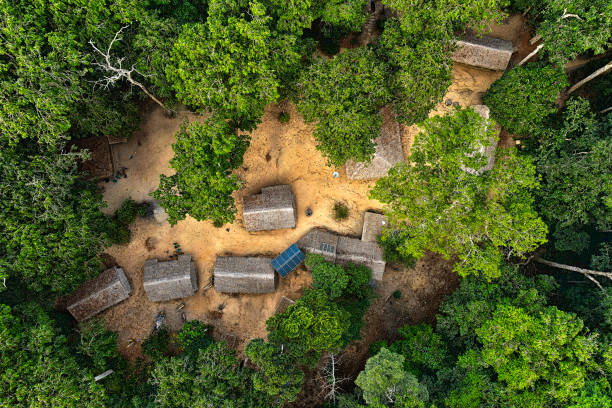
A New Dawn: Africa’s Solar Journey Reaches 20GW
There is a quiet revolution unfolding across Africa’s vast landscapes. From the desert plains of the Sahara to the savannahs of East Africa, and down to the windswept coasts of the Cape, sunlight is no longer just a blessing for farmers—it has become a currency of power, literally. The continent has officially crossed a historic milestone: 20 gigawatts of installed solar energy capacity.
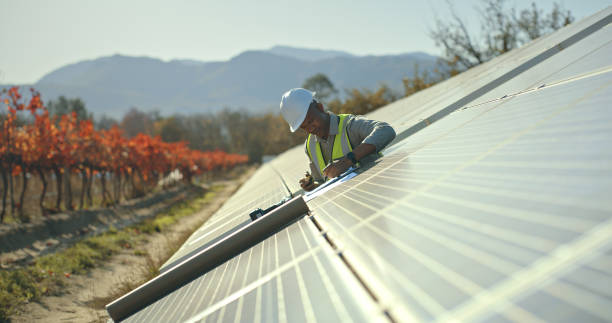
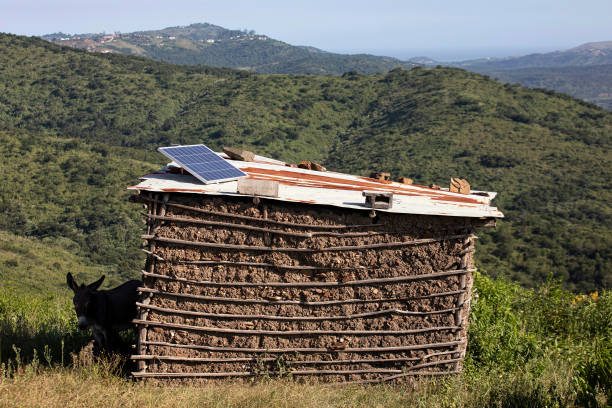
It is an achievement that would have seemed ambitious just a decade ago. At the time, the conversation about solar power in Africa was often framed as a lofty dream hindered by cost, lack of infrastructure, and political will. Today, the dream has found form in shimmering solar farms stretching over once-unused land, in rooftop panels powering schools and hospitals, and in off-grid solar kits lighting up villages far from any national grid. The 20GW milestone is not just a statistic—it is a statement that Africa’s energy future is being rewritten in sunlight.
SOURCE: gettyimages

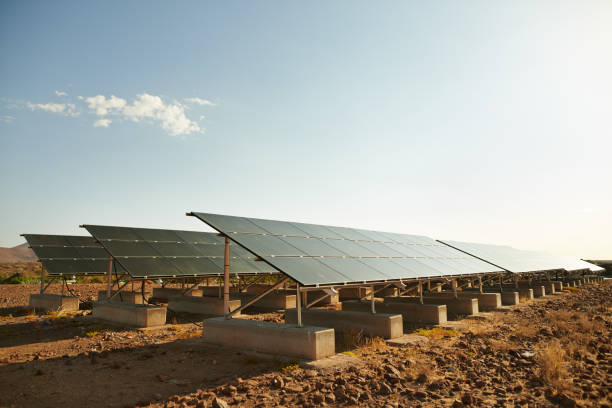
What makes this even more remarkable is that this milestone is not the achievement of one or two powerhouse nations alone. It is a collective African story, pieced together by Morocco’s ambitious Noor Solar Complex, South Africa’s steady renewable push, Kenya’s rural electrification drive, Egypt’s Benban Solar Park, and smaller yet impactful projects in Senegal, Rwanda, and Namibia. Each kilowatt tells a story of ambition, adaptation, and a belief that Africa can lead the renewable energy conversation instead of trailing it.
From Shadows to Light: The Road to 20GW
The road to this point was neither straight nor easy. In the early 2000s, the idea of solar energy scaling to gigawatt levels in Africa was met with skepticism. The obstacles were real—financing was scarce, technology was expensive, and many governments were still entangled in contracts and dependencies tied to fossil fuels. The continent’s abundant sunlight was an untapped advantage, yet without political will and technical investment, it was an advantage left dormant.
Then came a convergence of change. The price of photovoltaic panels began to drop drastically after 2010, making solar energy more competitive than coal or diesel in some regions. International climate commitments opened the doors to financing from the World Bank, African Development Bank, and green investment funds. At the same time, local entrepreneurs began to see opportunity in off-grid solutions that could bypass the costly and slow expansion of national grids.
By the mid-2010s, the narrative shifted. Solar was no longer just for environmentalists or rural pilot projects—it became an economically sensible choice for cities, industries, and governments alike. South Africa’s Renewable Energy Independent Power Producer Procurement Programme (REIPPPP) proved that large-scale solar farms could integrate into national grids. Morocco showed how political commitment could turn sunlight into an exportable asset to Europe. Even smaller economies like Togo and Malawi began deploying community-scale projects, proving that size was no barrier to participation.
The 20GW milestone, therefore, is the sum of thousands of local victories—villages where children can study after dark, farms that can now irrigate without relying on erratic diesel deliveries, and businesses that can keep their doors open without fearing the next blackout. It is a testimony to how incremental change, when multiplied across borders, becomes monumental.
Powering the Future: What the Milestone Means for Africa
Crossing 20GW is more than a feel-good environmental headline—it signals a shift in Africa’s economic and political possibilities. Energy security has long been one of the continent’s greatest challenges. In many countries, industries lose millions of dollars annually to power outages, while households endure the daily reality of darkness interrupting life. Solar energy is not a perfect fix, but it offers a decentralized, scalable, and relatively quick-to-install alternative to traditional power plants.
For governments, this milestone strengthens the case for further investment in renewables. It shows investors that solar is not an experimental gamble—it is a proven infrastructure sector with tangible returns. For communities, it provides an entry point into modern economic life. With reliable electricity, rural health clinics can store vaccines, students can use digital tools for learning, and small businesses can operate machinery without relying on expensive and polluting generators.
The milestone also positions Africa uniquely in the global climate conversation. While the continent contributes the least to global carbon emissions, it suffers some of the worst impacts of climate change. By leaning into solar power, African nations can develop while avoiding the heavy carbon footprint that accompanied industrialization in the West. This gives Africa a stronger moral voice in climate negotiations, as a region showing that development and sustainability can walk hand in hand.
SOURCE: gettyimages

However, challenges remain. Solar’s intermittency requires investment in storage technologies like batteries, which are still costly. Grid infrastructure in many countries needs upgrading to handle variable renewable inputs. Financing, while more available than before, still comes with bureaucratic and political hurdles. Yet, if the past decade is any indication, Africa’s solar sector thrives on solving the very challenges that once seemed insurmountable.
The Horizon Beyond 20GW
Milestones are meant to be celebrated, but they are also checkpoints for what comes next. The global energy transition is accelerating, and Africa’s role is set to grow. Several countries are already setting their sights beyond solar farms, exploring hybrid systems combining solar, wind, and hydropower for more consistent generation. Others are investing in local manufacturing of solar panels to reduce dependency on imports and create jobs.
There is also a growing recognition that solar energy can drive industrial growth, not just household electrification. Mining companies in Botswana, Zambia, and South Africa are turning to solar to cut operational costs. Agricultural cooperatives in Kenya and Ghana are using solar-powered cold storage to reduce post-harvest losses. These applications show that solar is not just about lighting homes—it is about powering economies.
SOURCE: gettyimages

The next big leap will depend on whether Africa can solve the storage challenge affordably. Breakthroughs in battery technology, whether from global innovation hubs or African research institutions, will determine how far solar can go in replacing traditional baseload power. There is also the matter of cross-border energy trade—projects like the African Continental Power Pool aim to connect countries so that excess solar power in one region can flow to another in need.
For now, the sight of sprawling solar farms and the knowledge that more than 20 gigawatts of clean power is flowing across the continent is enough to inspire optimism. It is a reminder that Africa is not waiting for the rest of the world to solve its problems. The sun has always been here. Now, Africa is learning to truly harness it.
