What’s the Fuss Around Shoe Sizes Anyway?
Who knew shoe sizes could spark so much drama? In Africa, and especially in Nigeria, something as simple as foot size has become tangled with pride, gender expectations and cultural history.
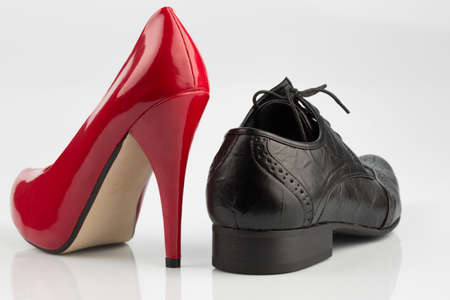
Somehow, humanity has managed to turn even shoe sizes into a topic worth arguing about. The obsession with shoe sizes has become both comic and cultural. In Africa, and particularly in Nigeria, if you ask any woman what her shoe size is, you might hear a number that is a bit smaller than the truth. On the other hand, ask a man and he might stretch his figure upward by one or two sizes, depending on who’s asking. Some people even see certain shoe sizes as a deal breaker in romantic relationships.
But why? Why does something as mundane as the length and width of one’s foot attract so much attention, ego, and quiet insecurity? Why do we equate a size number with attractiveness, class, or even masculinity and femininity?
Where It All Began
The modern shoe sizing system has old roots. Historically, many Africans went barefoot, but some others, particularly elites, wore traditional footwear like sandals made from wood and leather. With the arrival of Europeans, the introduction of Western-style shoes and the adaptation of existing designs led to more complex footwear traditions. This also brought about the introduction of standard measurements to replace the traditional method of cutting leather to fit the foot directly. Back then, size was simply a function of practicality, not pride. In many African societies, shoes weren’t even central to identity. Shoes were status symbols, but not in the way we understand them now. The attention was on the craftsmanship, not the size.
It wasn’t until Western influence crept into local life that shoe sizes began to mean more than comfort. European ideals of beauty; dainty feet for women and large ones for men then filtered into the collective ideal. Suddenly, shoes became a statement.
When Small Meant Beautiful and Big Meant Strong
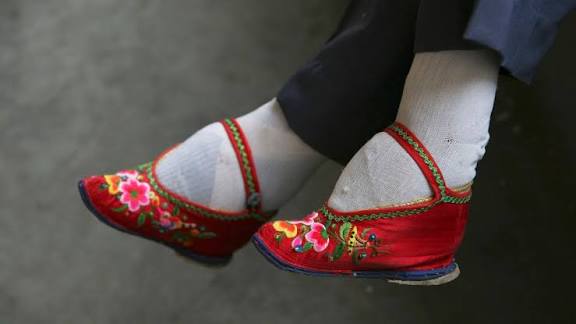
Let’s be honest, society has always had a thing for extremes. For women, small feet have long been associated with delicacy, elegance, and grace. From Chinese foot-binding practices to Victorian fashion ideals, a small foot was the ultimate symbol of femininity, depicting softness and fragility.

Now, in modern African societies, some of those echoes persist. Walk into a shoe shop with size 42 feet as a woman, and you might get sympathetic glances or a disappointing response such as “we don’t have your size.” Many tall, athletic or broad-footed African women often feel neglected in the fashion industry, as it appears that all the cute shoes aren't made with them in mind. The idea that beauty should come in a certain size still lingers, quietly shaming anyone who doesn’t fit.
For men, the reverse is the case. Large feet have been exaggerated as proof of masculinity. Some men take genuine pride in going as far as claiming shoe sizes they don’t wear. It’s comical, but it reveals something deeper, how we’ve linked physical features to personal worth.
Culture, Class and Confidence
Social Insight
Navigate the Rhythms of African Communities
Bold Conversations. Real Impact. True Narratives.
In many African contexts, the conversation around shoe sizes is more layered than mere vanity. It intersects with class, colonial remnants, and cultural expression. For one, access to shoes, especially well-fitted ones, wasn’t always common. In postcolonial Africa, imported footwear became a luxury item. To have shoes at all was a mark of status and to have foreign shoes was an even bigger one. Markets overflowed with secondhand imports where size availability was luck, not choice. You wore what you found. That is probably why some people grew used to squeezing into smaller sizes or wearing larger ones, leading to generations of people misrepresenting their real size without even realizing it. Then came Western media. Suddenly, images of slim European models with dainty shoes dominated fashion spaces. The ideal African woman was expected to balance traditional beauty with Western refinement. She should cook and fit into a size 37 heel. The African man, meanwhile, was to be tall, broad, and boot-sized, his feet a symbol of strength and power. And so, shoe size became a quiet social code. These stereotypes found their way into jokes, love talk and even insults.
Men vs. Women and Their Shoes
Men and women see shoe sizes through completely different lenses. For many women, shoe shopping is a delicate dance between aesthetics and availability. There’s pressure to look good, be fashionable, and still stay within the acceptable range. Imagine the frustration of finding the perfect pair of heels, only for the attendant to say, “Sorry, we only go up to size 40.” That’s the point where many women start to feel like their feet are a social inconvenience. Some women, tired of being judged for wearing bigger sizes, start adjusting. They’ll force themselves into smaller sizes, enduring the blisters and bunions, just to stay within what’s considered normal.
Men, on the other hand, often turn shoe sizes into badges of pride. The bigger, the better. Some even treat shoe shopping like a subtle competition. Often times though, bigger sizes are harder to find in local markets, and when you do, they cost more. The paradox lies thus: women understate, men overstate, one group wants to appear daintier, the other more grand.

It’s funny, really. We measure confidence by shoe size, self-esteem by the fit, and sometimes even romance by who has the smaller foot.
Psychology of Feet
Beneath the humor lies a fascinating psychological undercurrent. Our attitudes toward shoe size tie into how we perceive the human body, and what we project onto it. These subconscious associations drive much of the fuss around shoe sizes. We use footwear as a metaphor for identity, belonging, and self-worth. This shapes how individuals see themselves and are perceived by others. More than a functional item, shoes are imbued with deep symbolic meaning, communicating a person's social standing, aspirations, and journey through life.
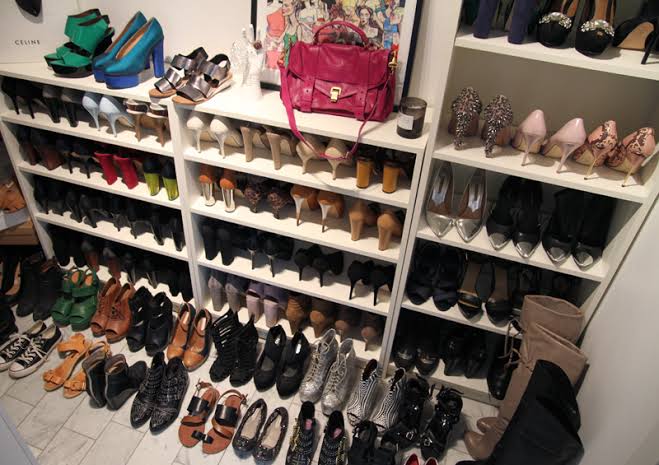
Social media has also turned shoes into an extension of personality, with showcases of shoe collections all over the internet.
So, why do we care about shoe sizes at all? Part of it is vanity, yes, but another part is identity. Shoes are one of the first things people notice. They tell stories about class, taste, and personality. But the size, that’s where ego lives, where something physical has been translated into the emotional. The numbers themselves don’t mean much, but the meaning we attach to them does.
The Market and the Myth
Fashion brands haven’t helped much. Many manufacturers design for the global average which, unsurprisingly, doesn’t include the fuller African frame or wider foot shape. African customers often find themselves squeezed into foreign moulds.
Over time, these experiences reinforce feelings of inadequacy. People start to believe that their body, or foot, is the problem, not the system that ignores diversity.
Social Insight
Navigate the Rhythms of African Communities
Bold Conversations. Real Impact. True Narratives.
Then there’s the marketing myth that smaller is better. Adverts show models with narrow feet and petite frames, selling the illusion that beauty and smallness are inseparable. It’s no wonder that young women sometimes feel compelled to understate their size in a bid to fit into a fantasy more than a shoe. But the tide is slowly turning. African-owned brands are redefining what the shoe market, catering to wider ranges and natural proportions. Some even embrace cultural designs such as Ankara slippers, handwoven sandals, leather and crafts, all these celebrating authenticity over conformity.
Walking Toward Comfort and Sense
The real conversation isn’t about shoe sizes, it is about what they represent, our endless chase for validation through arbitrary measures.
In African contexts especially, it’s time we unlearn these inherited insecurities. Our feet span generations. They’ve danced at weddings and traditional parties, trekked through fields, navigated markets, and relentlessly chased dreams. They deserve more than shame or comparison, they deserve celebration.
So, what’s the fuss around shoe sizes anyway? Nothing? Everything? Both? The truth is, like most things in society, it’s never really about the shoe. It’s about the fit. The fit between who we are and who we’re told to be.