What Happens to Degrees in a World Full of Skills?
Is your university degree still a guaranteed path, or are digital skills and adaptability now the ultimate currency for career success? The answer might surprise you.
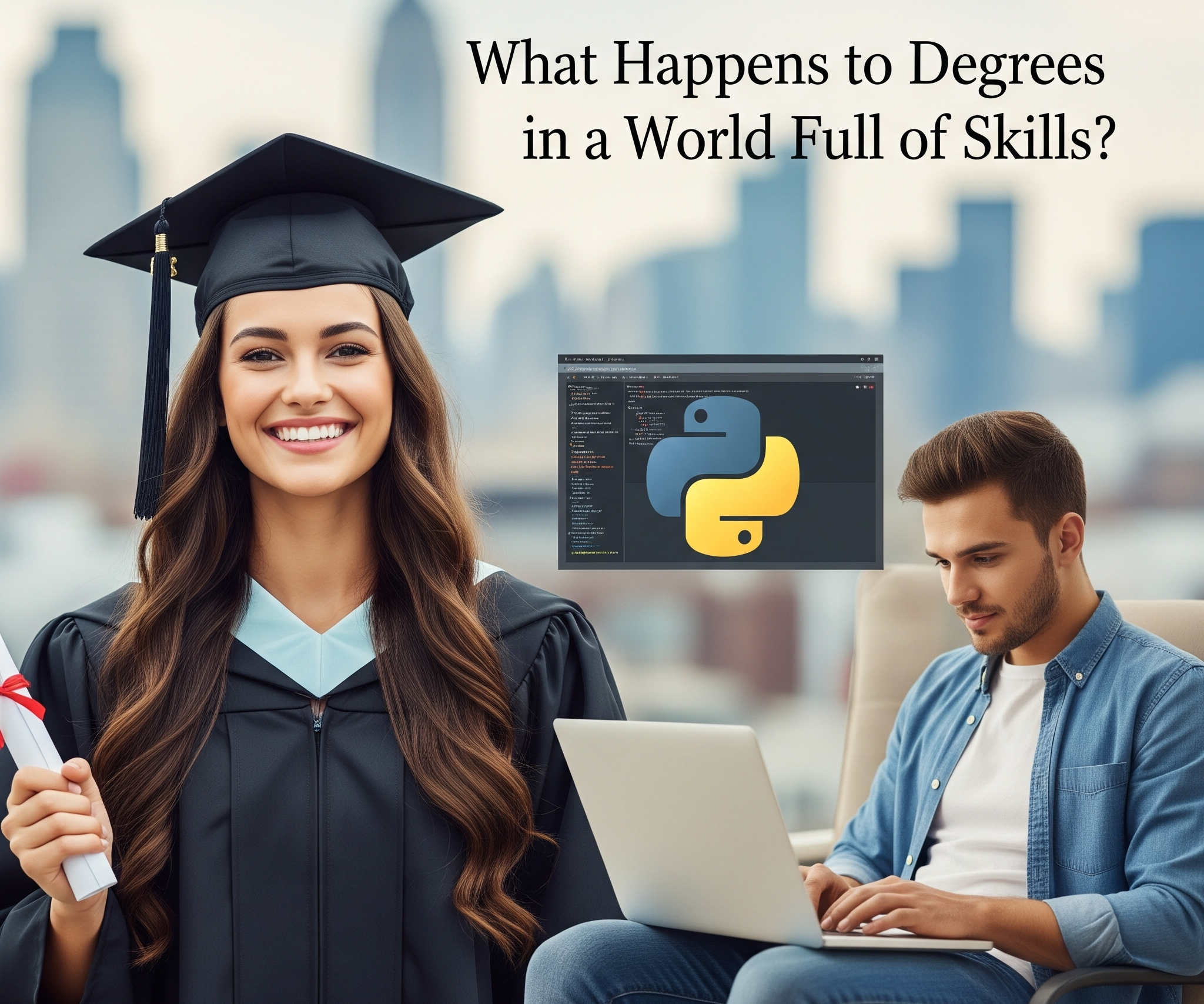
In today’s rapidly evolving job market, a university degree no longer guarantees success. With digital skills, practical experience, and agility now the gold standard, more graduates are facing the unsettling question: Does my degree still matter?
From Cap and Gown to Uncertainty
In a quiet café in Lagos, Aisha stares at her phone, scrolling through job listings. Her freshly minted degree in International Relations feels almost ornamental now, tucked into a drawer. She’s applied for over 60 roles in the last three months.
Most postings don’t ask about her honours thesis. They ask for things her curriculum didn’t emphasize—proficiency in Excel, Canva, SQL, Python—and “at least 2 years of experience.”
Meanwhile, her friend Tolu, a self-taught product designer who dropped out of university in his second year, just landed a remote gig with a Berlin-based startup. He built his portfolio on Behance, learned UI/UX from YouTube, and aced the interview on Zoom.
The world has flipped the script.
So, what really happens to degrees in a world obsessed with skills?
Degrees vs. Skills: The Flip of the Century
Once considered the golden ticket to upward mobility, the university degree has been dethroned. The modern economy, accelerated by technology, globalization, and COVID-19, no longer functions by the old rules.
According to LinkedIn’s Future of Skills report, the average shelf life of a skill is now just five years.
This seismic shift has left institutions—and students—scrambling. Employers aren’t simply asking “Where and what did you study?” but rather, “What can you do?” And increasingly, “How fast can you learn?”
Even the once-sacred job descriptions are changing. Companies like Google, IBM, and Apple have removed degree requirements for many roles. Instead, they offer affordable online certifications, often paired with guaranteed interviews. Bootcamps, nano-degrees, and badges now rival diplomas.
The professional world is undergoing a global skillquake, shaking up the traditional pathways to success.

The Degree Is Not Dead—But It’s Been Dethroned
Let’s be clear: degrees still matter. In fields like medicine, law, engineering, and other highly regulated professions, formal education is essential. No one wants a self-taught neurosurgeon or a DIY civil engineer.
But even in these sectors, the degree is no longer enough. A lawyer might need to understand blockchain provide relevant advice, manage compliance, ensure data protection, prepare for industry transformation, and handle digital assets.
A doctor could benefit from data analytics or AI diagnostics. A civil engineer might need to master project management software or sustainability metrics.
The degree has become the foundation, not the finish line.

To thrive today, your academic credentials must be stacked with:
Digital literacy
Soft skills like collaboration, critical thinking, and emotional intelligence
Micro-credentials and certifications
Real-world experience—internships, projects, volunteer work
It’s not either/or. It’s both/and.
Who Gets Left Behind in a Skills-First World?
The promise of a skills-first economy sounds democratic—learn a skill, show your portfolio, get hired. But beneath this meritocratic sheen lies a sobering truth: access is not equal.
In many parts of Africa, Asia, and Latin America, stable internet, digital devices, mentorship, and power supply remain barriers. A teen in Nairobi might master JavaScript on YouTube.
But what about her counterpart in rural Chad, where internet penetration hovers around 10%?
The risk? A new form of inequality—not based on degrees, but on digital privilege.
And then there’s the cultural weight of a degree. In many societies, it’s not just a certificate—it’s a symbol of identity, status, and sacrifice. A family’s pride. A marker of legitimacy. Try explaining a Coursera badge to a Nigerian parent who sold land to pay your tuition.
Degrees still carry emotional, symbolic, and social capital.

Is Skills-Based Hiring Truly Meritocratic?
At first glance, skills-based hiring feels more inclusive. It emphasizes output over pedigree. But scratch the surface, and deeper questions arise:
Who defines a “valuable” skill?
Is a community sculptor in Benin less skilled than a junior Python developer in Berlin?What about soft skills?
The obsession with technical skills often sidelines communication, ethics, empathy, leadership—qualities honed in liberal arts programs but harder to quantify.Does “skills-based” really mean “test-based”?
Many hiring platforms rely on assessments, challenges, or AI-led screening. But can they measure creativity, potential, or resilience?
As we chase agility and output, we risk narrowing our definition of human value.
The Smart Future: Degrees + Skills + Adaptability
The future of learning isn’t about choosing between degrees or skills. It’s about building a smarter ecosystem where the two complement each other.
Imagine:
Universities partnering with tech companies to offer hybrid programs
Curricula updated in real-time to reflect industry shifts
History majors learning data visualization
Coders studying philosophy and ethics
Employers investing in mentorship and lifelong learning, not just hiring ready-made talent
What we need is a modular, flexible, human-centered learning culture—one that values adaptability over rigidity, growth over grades, and purpose over prestige.
Aisha and Tolu, Revisited
Three months after our café scene, Aisha enrolls in a Google-certified digital marketing bootcamp. She learns SEO, Google Ads, and Google Analytics. She acquires a freelance gig, adds it to her portfolio, and lands her first real interview.
Tolu? He’s mentoring junior designers in an online community, working on a side hustle, and saving up for a short course in business strategy. He wants to someday launch a design firm.
Both are still learning.
And that’s the point.


Redefining What We Value
Let’s be honest—degrees measure what you know.
Skills measure what you can do.
But in today’s turbulent, tech-driven, climate-anxious world, the most important metric might be:
Your ability to adapt.
Lifelong learning is no longer a luxury—it’s a necessity. The future belongs not to the credentialed or the coded, but to the curious. The ones who ask better questions, build bridges between disciplines, and refuse to stop growing.
So maybe the real question isn’t “What happens to degrees?”
Maybe it’s:
What kind of learning society are we becoming?
Final Thought: Rewriting the Hierarchy
The old world said:
Degree = job = success.
The new world whispers:
Curiosity + skills + adaptability = impact.
It’s not the death of the degree. It’s the rebirth of learning—richer, messier, more creative, more accessible.
And in that world, people like Aisha and Tolu aren’t outliers.
They are the prototype of a smarter future.