Trump's Trade War Resurgence: New Tariffs Threaten Global Economy and US Jobs
President Donald Trump has announced a major shift in foreign policy, providing new weapons to Ukraine and threatening severe sanctions on Russian export buyers. Simultaneously, his tariff policies are creating significant economic challenges, leading to job losses and increased costs in Washington state and impacting industries in India, prompting widespread discussion about the unpredictable nature of his decision-making.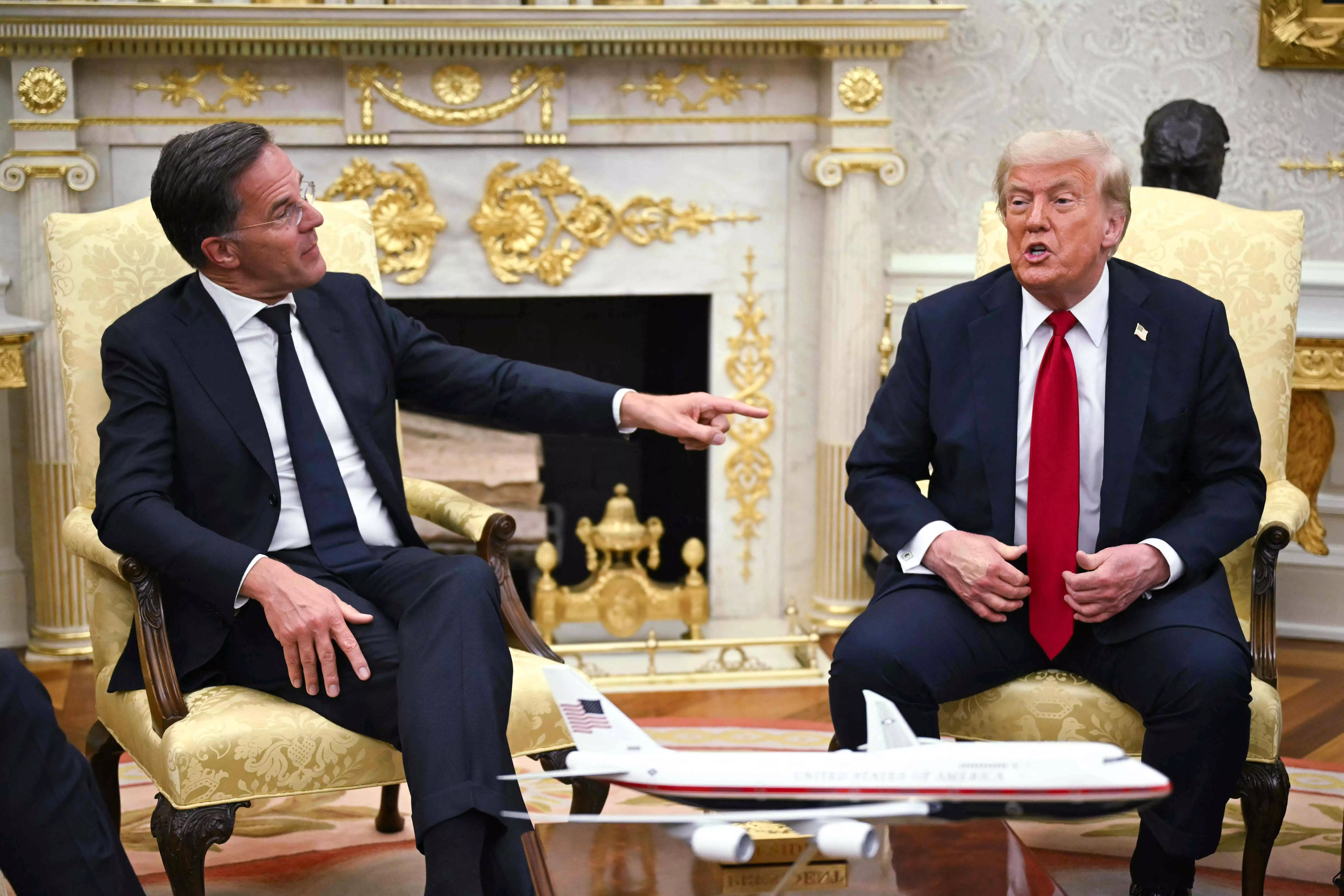
US President Donald Trump has announced a significant shift in foreign policy, pledging new weapon shipments for Ukraine and threatening severe sanctions against countries purchasing Russian exports unless a peace deal is brokered within 50 days. Speaking alongside NATO Secretary General Mark Rutte, Trump expressed disappointment in Russian President Vladimir Putin, stating that billions of dollars in advanced weaponry, including Patriot air defense missiles, would be provided to Ukraine. He further indicated that these top-of-the-line weapons would be sent to NATO, with Washington's allies expected to cover the costs, and some Patriot systems would be swapped from current NATO holders and replaced by new US supplies within days. The proposed secondary tariffs, set at 100% on Russian exports and targeting third-party buyers, are anticipated to have a far more severe impact on Russia's economy than previous sanctions, which had permitted continued oil sales to nations like China and India.
This aggressive international stance is mirrored by the President's broader tariff policies, which are projected to inflict substantial economic damage domestically and globally. In Washington state, an independent Office of Financial Management (OFM) report forecasts the loss of up to 25,000 jobs, a significant increase in grocery costs for average families, and heightened reliance on already strained food banks. Governor Bob Ferguson criticized these tariffs as illegal, noting that Washington's cumulative effective tariff rate of approximately 18.6% is the highest since 1933, the era of the Great Depression. As one of the most trade-dependent states, generating nearly $58 billion from global exports in 2024 and supporting 160,000 jobs in 2022, Washington is particularly vulnerable. The tariffs act as regressive taxes, disproportionately burdening low-income households as imported food, often the cheapest option, becomes more expensive. Key trading partners include China, Japan, Vietnam, and Thailand. Trump has imposed steep tariffs on these nations—57.6% on China (reciprocated by China with 32.6% on U.S. goods), 20% on Vietnam, 19% on Thailand, and 15% on Japan, leading to disruptions such as Japan suspending mail to the U.S. Washington's $12 billion in exports to China, representing 21% of its total goods exports, face significant jeopardy. Furthermore, the state's reliance on Canada for 90% of its agricultural fertilizer raises concerns about increased farming costs, potentially leading to reduced produce yields and job losses for seasonal and full-time agricultural workers, many of whom are low-income immigrants. The OFM projects that by 2029, with an effective tariff rate of 27%, Washington's economy could see an annual growth rate decrease of 1.2%–1.8% and a total four-year loss of $2.2 billion to its general fund, which finances critical state services like healthcare and education.
The impact of Trump's tariffs extends to India, where the announcement was met with mixed reactions, ranging from dismissal due to perceived small trade volumes to serious concerns about economic damage. An Indian consultant recounted how a major client in the clothing manufacturing industry, which produced 'large and loud' styles specifically for the U.S. market, was forced to close down new and old facilities due to the tariffs, jeopardizing their recent expansion loan. This real-world consequence fueled a discussion among friends about President Trump's unpredictable nature. They likened his behavior to that of a 'teenager,' driven by emotional reactions and a perception of being the 'center of the universe.' Instances cited included actress Salma Hayek's public account of rejecting Trump's advances and the Indian Prime Minister declining two invitations to the White House, which, in Trump's 'world,' were interpreted as significant 'rejections.' Drawing a historical parallel to 'Custer’s Last Stand,' where a commander underestimated his opponents, one friend suggested that Trump's current tariff standoff with India could similarly lead to a major setback for him, given that 'today’s Indians outnumber the Americans.' The implication was that Trump might eventually be compelled to lower his tariffs, or face significant repercussions for his confrontational trade policies.