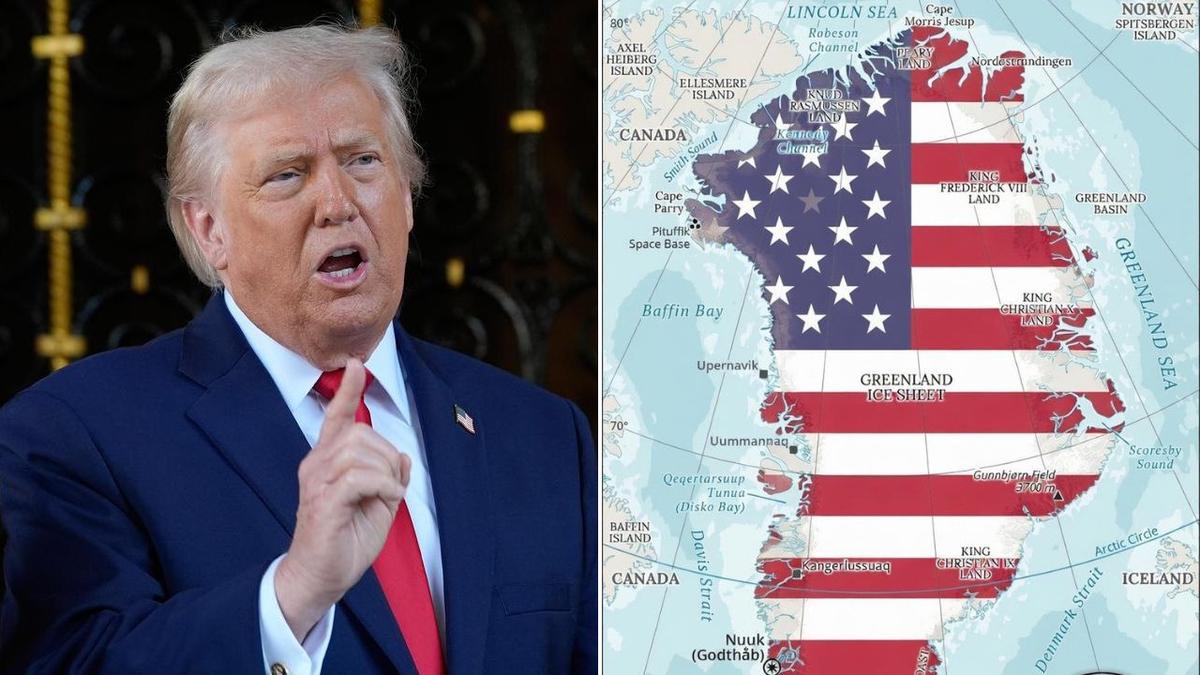
Trump's Greenland Gambit Sparks Global Outcry and Tariff Wars

US President Donald Trump today announced his intent to impose escalating tariffs on the United Kingdom and several other European allies, citing their opposition to his administration's desire to purchase Greenland from Denmark. The tariffs are set to begin at ten percent on February 1, applying to all goods imported from the UK, Denmark, Norway, Sweden, France, Germany, the Netherlands, and Finland. This rate is scheduled to increase to 25 percent on June 1, unless a deal for the "Complete and Total purchase of Greenland" by the United States is reached.
In lengthy posts on Truth Social, President Trump justified his stance by claiming the US had long subsidized these European nations through the absence of tariffs, and that it was now time for Denmark to "give back" for the sake of "World Peace." He asserted that "China and Russia want Greenland" and that the territory, which he dismissed as having only "two dogsleds as protection," is vital for US national security and global stability due to its strategic location and mineral deposits. Trump also expressed suspicion regarding recent European allied visits to Greenland, calling it a "very dangerous situation for the Safety, Security, and Survival of our Planet."
The announcement met with widespread condemnation from international politicians. In the UK, Tory leader Kemi Badenoch called Trump's decision "completely wrong," stating that it would burden businesses and that Greenland's sovereignty should be decided solely by its people. Liberal Democrat leader Sir Ed Davey accused Trump of "punishing" the UK and NATO allies, while Reform leader Nigel Farage warned the tariffs would "hurt us." Ellie Chowns of the Parliamentary Green Party described Trump's actions as a "direct attack on the principle of national self-determination," likening his approach to a "schoolyard playground" of bullying and brute force.
European leaders echoed these sentiments. European Council President Antonio Costa announced he was "co-ordinating a joint response," affirming the European Union's commitment to defending international law. Danish politicians, including Inger Stoejberg and Pelle Dragsted, firmly rejected Trump's "bully methods," calling for European solidarity and resistance. Danish foreign minister Lars Lokke Rasmussen reiterated that a US acquisition of Greenland was "out of the question."
Greenlanders themselves expressed their unwavering opposition through mass protests. Thousands gathered in Nuuk, the capital of Greenland, and thousands more in Copenhagen and other Danish cities, waving national flags and carrying signs proclaiming "Greenland is not for sale," "We shape our future," and "Greenland is already GREAT." These demonstrations underscored the strong local sentiment; polls showed 85 percent of Greenlanders oppose joining the United States. Greenland's Head of Government, Jens-Frederik Nielsen, also participated in a demonstration, advocating for self-governance in the face of the US takeover threats.
Amid these tensions, European NATO members have increased their Arctic security operations. Danish F-35 fighter jets and a French MRTT tanker conducted air-to-air refuelling training over southeast Greenland, part of stepped-up efforts focusing on long-distance flying and operating safely in harsh polar conditions. A UK military officer was also sent to join a reconnaissance group ahead of a planned Arctic Endurance exercise. Major General Søren Andersen, leader of Denmark's Joint Arctic Command, clarified that these deployments were for legitimate Arctic defense training with allies, not a message directed at the Trump administration, stressing that he would "never expect a NATO country to attack another NATO country."
A bipartisan US congressional delegation visited Copenhagen and Nuuk to reassure Danish and Greenlandic officials, publicly distancing themselves from President Trump's aggressive stance. Senators Dick Durbin and Chris Coons emphasized US solidarity with its allies and expressed disagreement with the President's rhetoric, asserting there are "no current security threats to Greenland." This visit aimed to de-escalate the situation and affirm respect for Denmark and NATO, despite the White House not ruling out the use of force.
The legality of Trump's sweeping tariffs, a frequent tool in his foreign policy, is currently under review by the US Supreme Court, with a decision expected soon that could have significant implications for the global economy and US presidential powers. Analysts have warned that such aggressive trade strategies could significantly damage the US economy. The ongoing dispute highlights the strain on the NATO alliance and the broader international relations between the US and its European partners, underscoring the deep disagreement over the future of Greenland, an autonomous territory of Denmark with self-governance over domestic affairs.
You may also like...
Man Utd Star Lisandro Martinez Fires Back: Pundits Are Cowards Who 'Talk on Television' But Never to Your Face!

Lisandro Martínez has publicly challenged former Manchester United pundits Paul Scholes and Nicky Butt to repeat their c...
Tottenham Boss Thomas Frank on Brink: Club Considers Axing Coach After Seven Months
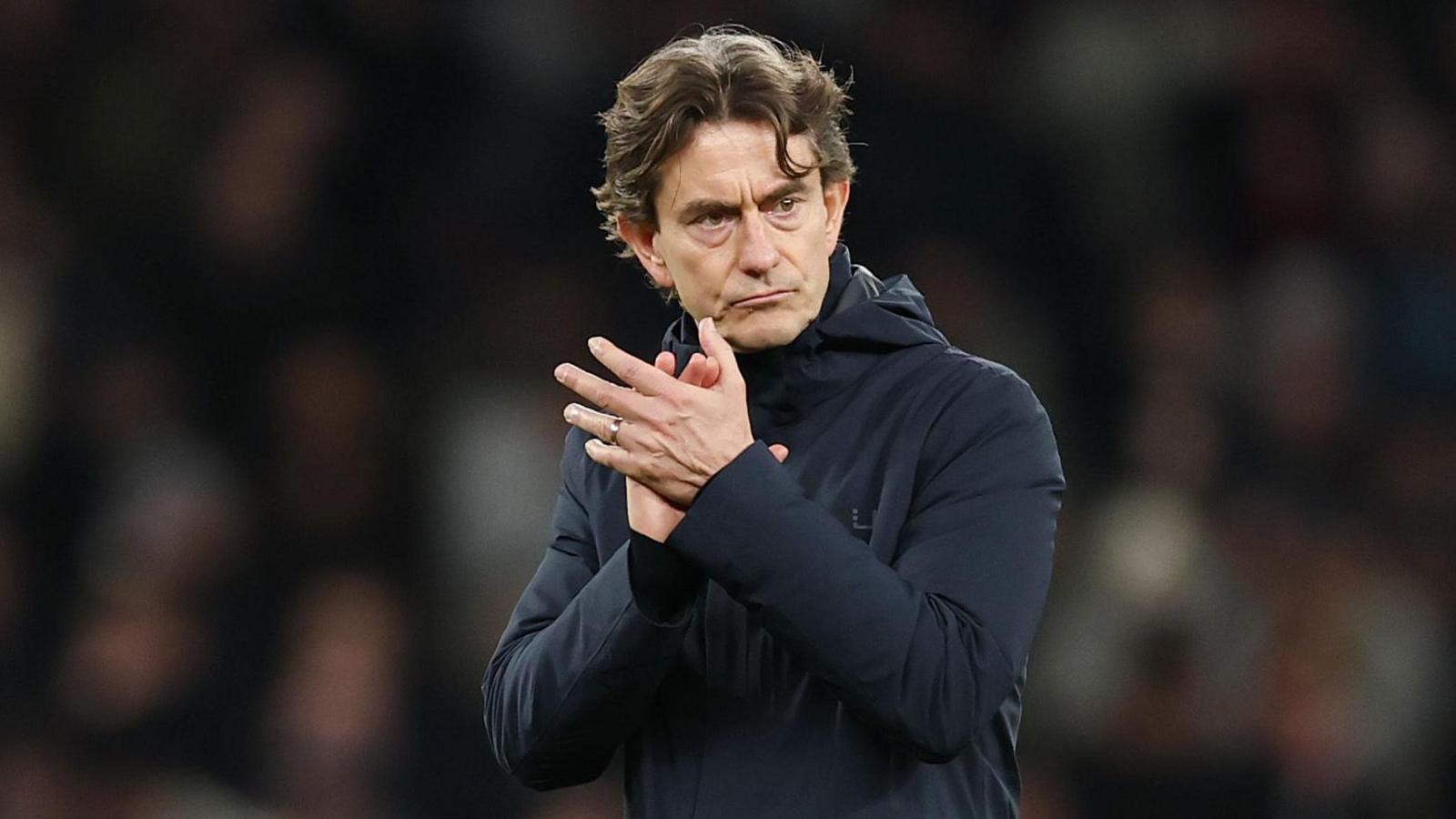
Tottenham Hotspur's head coach Thomas Frank is under significant internal scrutiny, with his seven-month reign potential...
Political Power Play: Anthony Albanese Unleashes His Triple j Hottest 100 Predictions

Australian Prime Minister Anthony Albanese, known as "DJ Albo," has unveiled his 2025 Hottest 100 picks, continuing his ...
San Francisco Swarms as Thousands Honor Grateful Dead Icon Bob Weir

Thousands gathered in San Francisco to celebrate the life of Bob Weir, the legendary guitarist and founding member of th...
Hilarious Wedding Prank Goes Viral: Groom's 'First Look' Surprise Ends with Bride's Sweet Reveal!

A groom expecting his first look with his bride receives a hilarious surprise from a groomsman in a veil, leading to lau...
Mary Olushoga's Triumphant Return: Set to Grace BAM's MLK Jr. Tribute Stage This January!
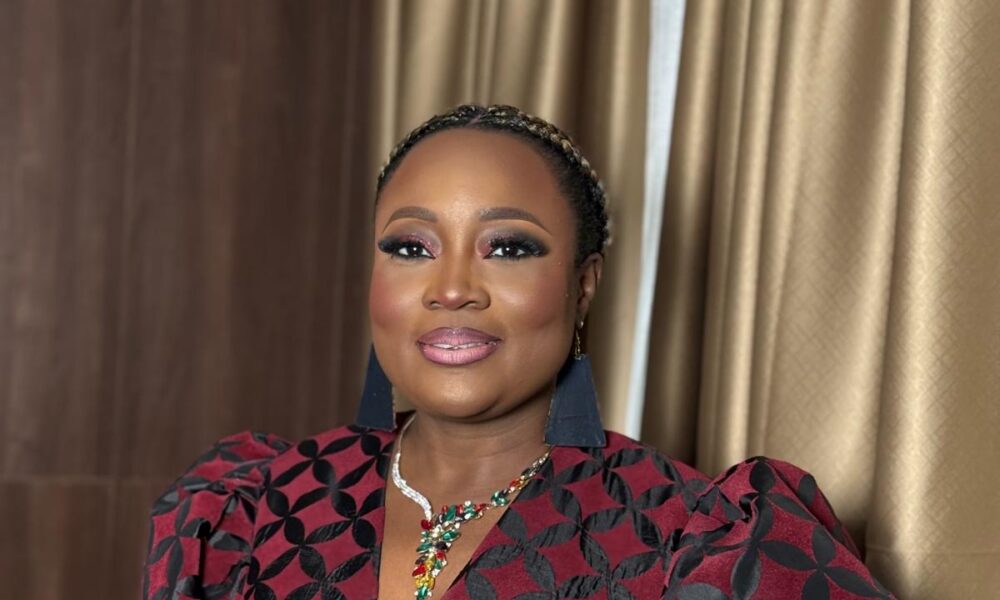
Mary Olushoga, Founder of The AWP Network and a renowned economic development expert, will perform with The Fire Ensembl...
Ugandan President's 7th Term Re-Election Rocked by Intimidation Claims

Uganda's President Yoweri Museveni has won a seventh term amid widespread allegations of intimidation and election fraud...
Breaking: Militants Surrender in Cross River, Nigeria as Cache of Arms Recovered

In a major victory for peace, dozens of militants in Cross River State's Akpabuyo Local Government Area voluntarily surr...