Trump Ignites Nile Fury: Claims Ethiopia's Dam Drained the River!
A prominent individual's claims about Ethiopia's Grand Ethiopian Renaissance Dam (GERD), including U.S. financing and its impact on the Nile River, have sparked controversy. Ethiopia strongly denies U.S. funding and clarifies the hydropower dam's operational nature, while Egypt remains concerned about its water supply, especially given the lack of a binding agreement.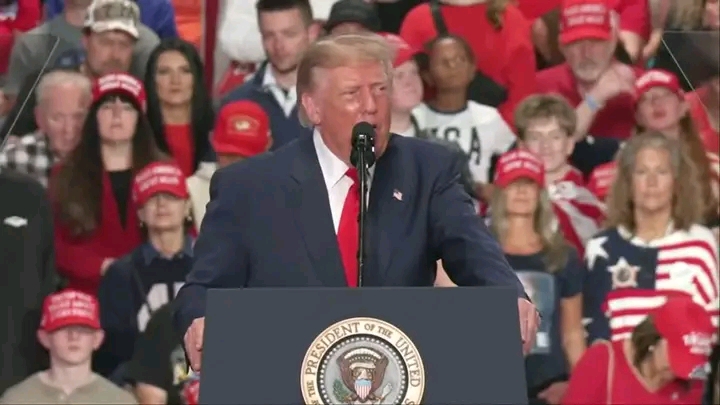
Controversial claims have been made regarding Ethiopia's Grand Ethiopian Renaissance Dam (GERD), a massive infrastructure project described as one of the biggest in the world. During a campaign event for Republicans in New York, a prominent individual asserted that Ethiopia built the dam with American financing, and that it had taken all the water from the Nile River, posing a significant threat to Egypt. These remarks are not isolated, as similar versions have been repeated throughout the year, often in discussions about deals reportedly almost finalized during a prior term.
Ethiopia has vehemently refuted the claim of U.S. funding for the GERD. Officials have consistently stated that the dam was financed almost entirely by Ethiopians themselves, through a combination of government funds, bonds, and public contributions, without any U.S. financial involvement. Furthermore, Ethiopian authorities have clarified that the GERD is a hydropower dam, which means water continues to flow downstream after passing through its turbines. Consequently, the assertion that "no water left" in the Nile is widely regarded as an exaggeration.
Despite these clarifications, Egypt continues to view the dam as a grave threat to its vital water supply. This concern is particularly heightened in scenarios of drought and the absence of a clear and binding agreement on how the dam will be operated. Efforts to reach such a deal between the three key riparian nations—Ethiopia, Egypt, and Sudan—have, to date, been unsuccessful. The Grand Ethiopian Renaissance Dam has been actively generating power since 2025, underscoring its operational status amid ongoing regional tensions over water resource management.