The Science of Smell: How Scent Triggers Memory and Emotion
Smell remembers what the mind forgets. The scent of rain, the smoke of suya, the perfume that lingers after a hug, they all hold a kind of memory no language can fully translate.

The first rain of the year carries a certain nostalgia. It falls on hot soil and releases a scent so distinct that people pause mid-conversation to breathe it in. Somewhere, someone remembers childhood afternoons spent running through red mud, another woman pauses at her window and smiles at a memory she didn’t know was waiting.
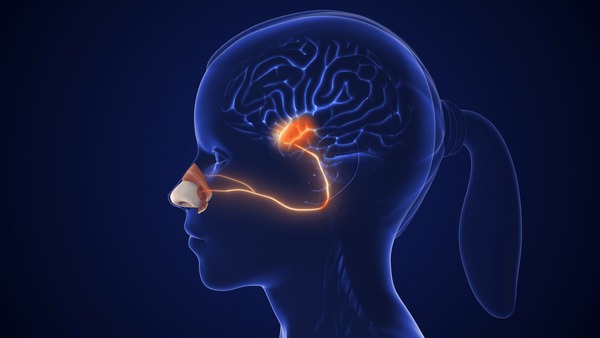
Smell, more than sight or sound, can reach deep into the mind and pull out long-forgotten fragments of life. It does not ask permission or knock politely, it simply opens the door. Science calls this connection between scent, memory, and emotion the olfactory-limbic link. Every inhale carries more than air, it carries memory. Inside the nose, sensory neurons pass signals straight to the brain’s emotional core. The olfactory bulb sits beside the amygdala and hippocampus, where feelings and memories live. That’s why a single whiff can unfold a whole moment. But why does smell, of all the senses, have such power to take us back?
How the Brain Smells
When you inhale, odor molecules enter your nose and bind to receptors on tiny neurons high inside the nasal cavity. These neurons send signals to the olfactory bulb, which interprets the pattern and sends information onward to the limbic system. Unlike other senses, smell bypasses the thalamus, which is the brain’s usual relay station, and connects directly to regions responsible for emotion and memory. That shortcut is why smell feels so immediate, so emotional and so powerful.
For Africans, where scent and environment intertwine daily, this neurological shortcut means every smell is layered with cultural context. The smoky scent of suya grilling by the roadside, the tang of charcoal, the sweetness of fried plantain in the evening air, each one is both sensory and symbolic. Smell is not just a signal to the brain, it is a deep archive of experience.
Scent and the Architecture of Memory
Memories formed through smell are stored differently from those formed through sight or sound. Because they are created alongside emotional processing, they carry a vividness that other memories lack. Research has shown that scent-triggered memories tend to feel more emotionally charged and more detailed than those evoked by visual or auditory cues. When we smell something familiar, the brain not only retrieves the original event but also reproduces the emotional state that accompanied it.
This is why the smell of Sunday rice can bring warmth long before the food actually appears, or why a whiff of perfume can collapse time, taking someone back to a lost love. It’s not simply nostalgia, it’s neurobiology. The scent activates the same neural pathways that were engaged during the original moment, creating a kind of emotional re-experience rather than mere recollection.
In African homes, this link between scent and emotion is often reinforced by routines. It's in the shea butter applied to skin after a bath, or the wood smoke that settles on clothing after cooking, each becoming threads in the fabric of memory. The smell is not separate from the emotion, it is the emotion remembered.
Cultural Memory and Collective Scent
Smell also connects individuals to culture. Anthropologists have long observed that scent carries social identity, serving as a bridge between the self and the collective. Across Africa, certain smells act as cultural shorthand, such as the sharpness of palm wine, the earthy smoke of firewood or the metallic tang of harmattan dust. They are reminders of place, belonging, community and continuity. These scents form part of what sociologists call collective olfactory memory, which are the shared, group-based recall of scents and the memories they trigger, which can reinforce social bonds and cultural identity.
When an African abroad catches the faint smell of roasted maize or a local spice blend, they are transported instantly, not by imagination but by chemistry. The olfactory bulb communicates directly with the hippocampus, and this pathway does not recognize distance or time zones. The power of scent collapses both.
Even within the continent, scent defines localities: the salty air of the seaside, the exhaust from passing buses, the fresh scent of wet grass in the morning. Each one roots people to their environments in subtle ways. A fragrance can remind someone who they are, where they come from and what they miss.
The Science of Emotion in Smell
Psychologists describe the Proust Phenomenon, named after French writer Marcel Proust, who famously wrote about a madeleine cake dipped in tea triggering childhood memories, as the powerful and involuntary recall of memories triggered by sensory experiences, most commonly smells or tastes. But neuroscience has expanded this understanding, showing that the amygdala’s role in smell processing is key to emotional recall. When odor molecules trigger olfactory receptors, they activate the same circuits used in emotional learning. This makes scent memories not just vivid but persistent.

In African societies where oral tradition and sensory experience shape storytelling, smell often works as an emotional anchor. Scents help to tell stories as effectively as words, evoking emotion through familiarity.
Emotions linked to smell are also more resistant to extinction. While visual memories fade, olfactory ones linger, stored deeply in the brain’s limbic circuitry. This endurance explains why certain smells can evoke grief years after loss or joy decades after childhood.
Healing and the Therapeutic Use of Scent
The same neural pathways that make smell emotionally powerful also make it useful for healing. Aromatherapy, though often dismissed as non-scientific, has measurable effects on mood and stress through its influence on the limbic system. Lavender, for example, has been shown to lower cortisol levels and induce calmness when inhaled. Similarly, citrus scents stimulate alertness, and eucalyptus aids in respiratory relief.
In African contexts, traditional healers have long recognized these effects. The use of herbs, resins, and oils in treatments often targets not only physical but emotional states. Modern wellness spaces across the continent are rediscovering this link, integrating indigenous scent practices with neuroscience-backed methods. Smell, it seems, is both ancient and modern medicine.
Smell and the Future of Technology
Scientists and engineers are exploring how scent can be integrated into digital experiences. The field of olfactory technology aims to recreate smells through chemical emitters that can be synchronized with virtual or augmented reality environments. While this may sound futuristic, science is advancing rapidly. Researchers have already developed olfactory interfaces capable of simulating basic scent patterns. For Africa, a continent rich in sensory and cultural diversity, the potential for using scent in art, tourism and memory preservation is immense.

When Memory Smells Like Home
In the end, smell is the most intimate of senses. It shapes identity quietly, through invisible molecules that travel through the air and settle in memory. For many Africans living abroad, homesickness often begins not with a picture or a sound but with a simple scent. Smell collapses distance, reuniting the present with the past in a single breath.
Perhaps the reason why scent matters so deeply in human experience is because it connects us not just to our memories, but to the emotions that give those memories life. Smell, in its simplest form, is a science of return to childhood, culture, identity and moments that remind us who we are. In a world that moves faster every year, it remains one of the few things that can still stop time.