The Politics of Persistence: Atiku Abubakar and the Long Pursuit of the Presidency
Seven bids, six parties, three decades: examining Atiku Abubakar's presidential persistence, what it exposes about Nigeria's opposition politics, and how Gen Z voters are responding ahead of 2027.
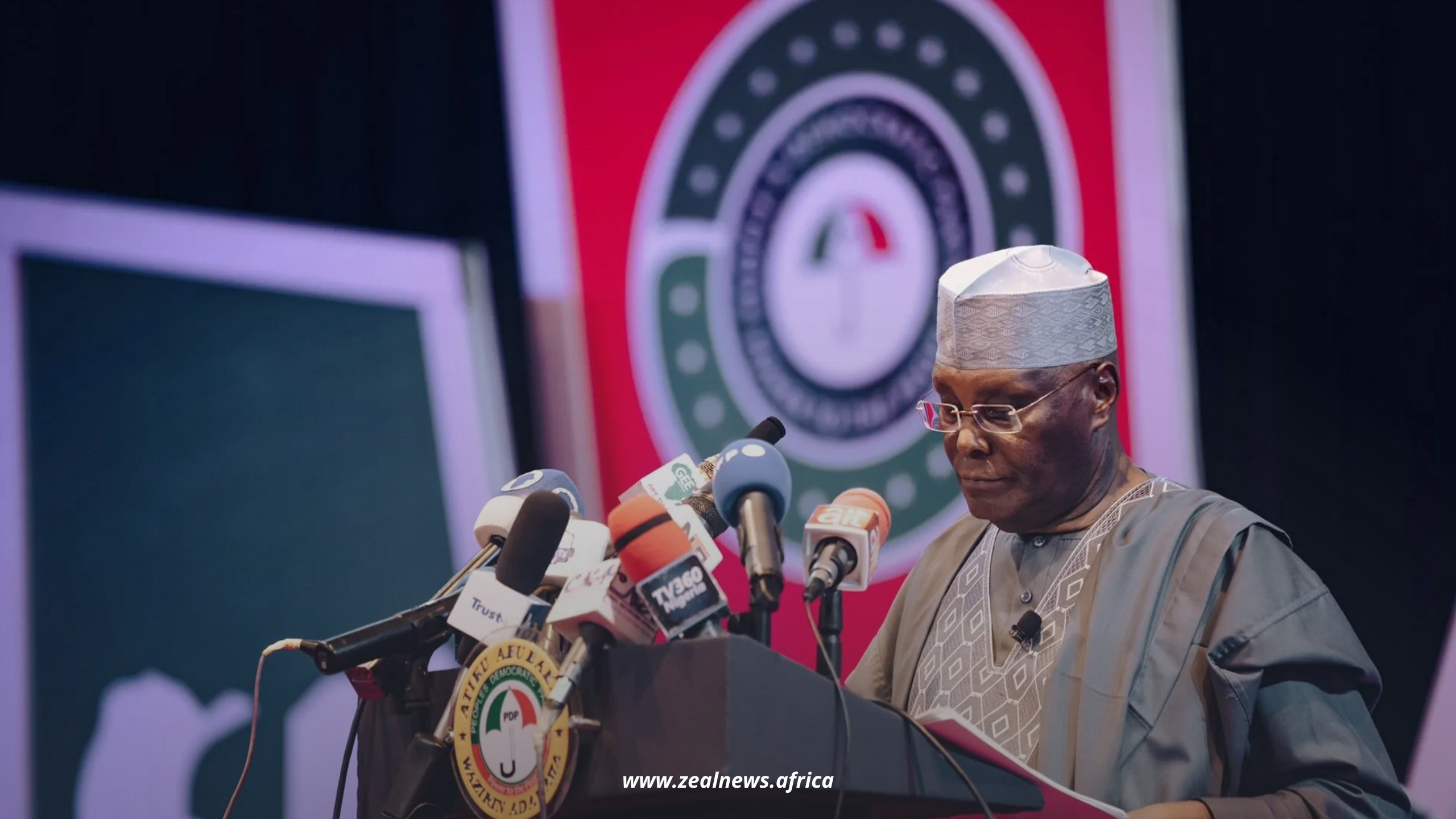
When taking a close look at the Nigerian political landscape, it is easy to spot that particular kind of political endurance that defies easy categorization and labelling. It is not quite resilience or ambition or even delusion. It is something more that deserves a critical breakdown.
Atiku Abubakar has spent the better part of three decades inhabiting that ambiguous space, running for Nigeria's presidency seven times, losing each time and returning with the posture of a man who believes the country will eventually come around. Whether that reads as conviction or compulsion depends entirely on what angle you are watching from.
As Nigeria moves toward its 2027 general elections, the question of Atiku's political persistence has returned to the center of public conversation. However, there is a quiet and more revealing question that sits beneath this ambition: what does Nigeria's Gen Z, the country's largest and fastest-growing voting demographic, actually think about the men who keep appearing on their ballots?
Atiku Abubakar's Presidential Bids: A Political Timeline
Atiku Abubakar's political biography is, by any measure, extraordinary. He served as Vice President under Olusegun Obasanjo from 1999 to 2007, a tenure defined as much by its governance record as by a bitter, very public falling-out between the two men.
His pursuit of the presidency, however, began earlier, and has never truly stopped. He contested the SDP presidential primaries in 1993, losing to the late M.K.O Abiola. He ran as presidential candidate under the Action Congress, AC, in 2007, coming third in the election that brought Yar’Adua into office.
He entered the PDP primaries ahead of 2011 and lost to incumbent Goodluck Jonathan. He then crossed the aisle entirely, joining the APC, the party of his current political rival, and lost the 2015 presidential primaries to Muhammadu Buhari.
He returned to PDP and ran as its standard-bearer in both 2019 and 2023. Now, ahead of 2027, he has defected again and this time to the African Democratic Congress, ADC, under whose platform he has already secured the presidential ticket.
That is six parties for one office, spanning across 33 years. The pattern is its own argument.
His platform has been largely consistent across these cycles. He stands firmly for fiscal federalism, privatization of state enterprises and structural restructuring of Nigeria's federal architecture.
These are positions that represent a coherent, if contested, economic vision. The difficulty has never been the platform. It has been the candidate's sustained inability to convert that vision into an electoral mandate, most recently in 2023, when he lost to President Bola Tinubu in a result he contested at the Supreme Court and lost again.

How Nigerian Gen Z Voters View the 2027 Election
When delving into the viewpoint of young Nigerian voters, it is important to put context in mind. The 2023 Afrobarometer survey found that trust in Nigerian political institutions among citizens aged 18 to 35 had reached historic lows, with confidence in the Independent National Electoral Commission, INEC, falling sharply in the post-election period.
A NOIPolls survey conducted after the 2023 general elections found that a significant proportion of Nigerian youth who turned out to vote did so primarily to prevent a candidate they opposed from winning, not necessarily out of genuine belief in their chosen candidate. The vote, in other words, was defensive.
This is the political environment in which any hypothetical Tinubu-versus-Atiku contest must be understood.
When more than ten Nigerian Gen Z respondents, aged 20 to 27, across Lagos, Abuja, and Benin City, were asked to choose between the two candidates in a hypothetical 2027 race, their responses sorted into three distinct clusters: a minority chose Atiku, a smaller minority chose Tinubu, and the majority refused both entirely.
"None" said one 23-year-old from Benin-City. "What sort of options are these?"
That majority rejection is not apathy. In political science terms, it is a legitimacy deficit which is a measured withdrawal of consent from a political class perceived as structurally disconnected from the material conditions of young Nigerians.
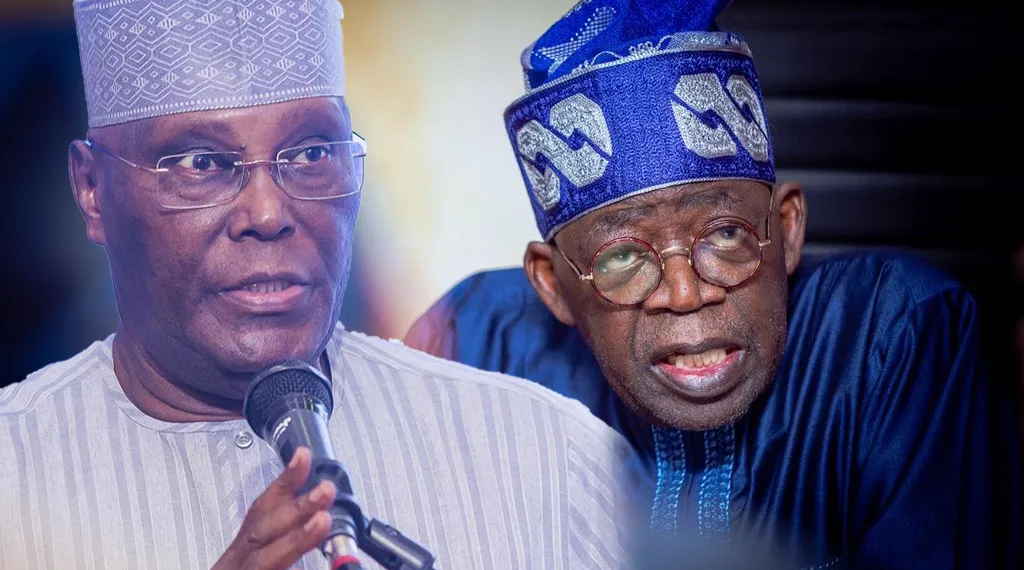
Tinubu vs Atiku: What Young Nigerians Actually Choose

Among respondents who chose Atiku, the reasoning was rarely enthusiastic. "Atiku for a change. Tinubu has done enough" one respondent noted.
This is precisely the defensive voting logic that post-election surveys in Nigeria have consistently documented. Youth voters consistently make calculated, harm-reduction choices rather than affirmative ones.
Among those who chose Tinubu, incumbency and familiarity were the dominant factors. Although, one respondent spoke about the need for political stability and time for implemented policies to do their work fully, the preference was still largely structural not ideological.
What this informal sampling reflects and what it corroborates rather than proves is a broader pattern documented by Afrobarometer across Sub-Saharan African democracies: young voters in fragile democratic environments increasingly vote against rather than for.
The ballot becomes an instrument of resistance rather than representation.
What Atiku's Repeated Candidacy Reveals About Nigerian Opposition Politics
Atiku's repeated Nigerian presidential bids raise a structural question that extends beyond one man. What does it signal for Nigerian opposition politics when its most visible figure is also its most repeatedly defeated one?
Political scientist, Jibrin Ibrahim, whose research on Nigerian democratic consolidation is widely cited, has argued that the recycling of elite political figures within Nigerian parties reflects not democratic health but a fundamental absence of internal party democracy.
Atiku's departure from the PDP, the party under which he ran in 2019 and 2023, and his subsequent defection to the ADC ahead of 2027 is the latest iteration of a pattern that has defined his entire political career.
Across seven bids, he has moved through the SDP, AC, PDP, APC, and now ADC, contesting under parties that have, at different points, represented opposing ends of Nigeria's political establishment.
Each move has been framed as a fresh start. The electoral outcomes have remained consistent.
Atiku inhabits this system, and it is also the system that built him. He is simultaneously a symptom and a product of Nigeria's gerontocratic political culture, a structure that rewards those with accumulated capital, institutional networks, and decades of positioning, while quietly exhausting everyone else.
From EndSARS to 2027: Nigeria's Gen Z and the Limits of Electoral Choice
Nigeria's Gen Z announced their political presence in 2020 through the EndSARS movement which was one of the most structurally organized youth-led civic actions in the country's post-independence history.
In 2023, many channeled that same energy into the Labour Party's Peter Obi campaign, producing the strongest third-party performance in Nigerian electoral history. The coalition fractured under institutional and legal pressure, but the underlying political consciousness it represented did not disappear. It recalibrated.
What the hypothetical Tinubu-versus-Atiku question reveals is what happens to that consciousness when the options narrow. It does not soften into support for established figures. It hardens into refusal.
That refusal is its own form of political data. It tells us that a generation of Nigerian voters has developed the analytical capacity to identify a false choice and the political discipline to name it as such, even in a hypothetical framing.

Nigeria's 2027 Election and the Cost of Political Stagnation
Whether Atiku Abubakar contests the 2027 Nigerian presidential election under the ADC banner — and having already secured the party's primary, it is clear he would — the more urgent political question is not about him specifically. It is about what a democracy produces when persistence becomes structurally more viable than reinvention, and when the cost of that bargain is borne most acutely by young Nigerians who keep being handed options they had no hand in creating.
They are being asked again. And for now, the answer from many of them remains the same: neither.