The Names We Carry: Why Africa’s Many-Name Tradition Shouldn’t Be Left Behind
"In many African communities, a child's birth is marked with a cascade of names that serve as fingerprints of identity, fragments of history, and blueprints for destiny. However, the tradition of giving multiple tribal names is being lost as modern parents opt for single, sleek English names. The author argues that this cultural shrinking erases a rich worldview and spiritual intelligence, and advocates for restoring names with weight and intention.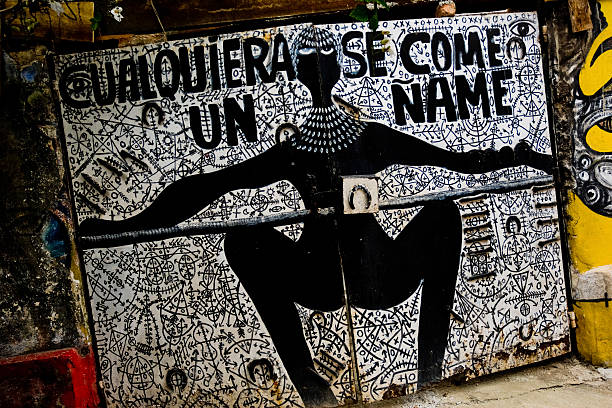

SOURCE: pinterest
By David Simeon
When a Child Is Born, So Are the Names
In many African communities, the moment a child arrives, the drums do not just beat for life, they beat for meaning. And in places like Yoruba land, a child’s birth is not complete until the naming ceremony unfolds in all its depth and poetry. But what sets these rituals apart is not just the music, or the elders gathered, or the prayers whispered with kola nuts in hand, it is the cascade of names the child is gifted. Not one. Not two. Sometimes more than ten.
These names are not for fashion. They are fingerprints of identity, fragments of history, and blueprints for destiny.
Yet today, the practice of giving multiple tribal names is increasingly dismissed — often seen as outdated, excessive, or too “ethnic” for modern life. Some new parents prefer a single, sleek English name. Some think too many names confuse identity. But in that forgetting, something quietly dies.
Because these names are not just names. They are an archive. A compass. A resistance. A blessing.
Culture
Read Between the Lines of African Society
Your Gateway to Africa's Untold Cultural Narratives.
What’s in a Name? Everything
Among the Yoruba, names are philosophy. A child named Ayomide (“my joy has arrived”) has entered a household that waited long for laughter. One named Ifedolapo (“love has turned to wealth”) bears witness to emotional healing turned tangible blessing. Another called Babatunde (“father has returned”) speaks to ancestral reincarnation.

But that’s only the beginning.
There are names given by grandparents, names tied to birth conditions (Taiwo for the first twin), names based on the day of the week (Yetunde , Aina , Dada ), and names that serve as prayers. It’s not uncommon for one child to bear names from both maternal and paternal lines, from family elders, from spiritual encounters during pregnancy, and from community members who feel led to bless.
These names are layered because life is layered. No single name can carry a whole human. Not when that human is born into legacy, into history, into expectation.
Colonial Interruption and the Politics of Simplicity

SOURCE: pinterest
Culture
Read Between the Lines of African Society
Your Gateway to Africa's Untold Cultural Narratives.
The idea that a person should have one neat first name and one short surname is not African — it is imported. Colonial systems needed names for records. They needed simplification. Bureaucracies don’t like poetry. And so, indigenous naming systems were clipped, compressed, and replaced.
Africans were made to feel ashamed of names that “couldn’t be pronounced” in English. Names were anglicized. Chukwudi became “Charles.” Oluwadamilola became “Dammy.” Sometimes, tribal names were dropped entirely, replaced by Christian or Arabic names to suit religion or employment.
What was lost was more than syllables. It was a worldview. It was nuanced. It was the belief that naming is not just identity — it is prophecy.
And now, generations later, many African parents themselves initiate the erasure. “We don’t want to stress our child with too many tribal names,” they say. “We want something global.” But global is not the opposite of local. Identity can travel without discarding its roots.
Why We Gave So Many Names
The tradition of multiple names in Africa — especially among groups like the Yoruba, Igbo, Akan, and Ewe — wasn’t superstition. It was spiritual intelligence. Names were both shield and spotlight.
In some cultures, “cover names” were given to protect a child from spiritual attack — the real name known only to close family. In others, a name served as a statement to the gods, to ancestors, to fate. A child named Ige (“born feet first”) didn’t just describe a birth, it declared the uniqueness of the journey.
Some names expressed warnings. Others carried sarcasm. Others still were declarations of war or peace between families. Among the Igbo, names like Nwachukwu (“child of God”) or Okonkwo (“born on Nkwo market day”) locked the individual into a web of spiritual and social networks.
Culture
Read Between the Lines of African Society
Your Gateway to Africa's Untold Cultural Narratives.
No name was idle. Every name was a sentence in the story of survival.
The Quiet Danger of Cultural Shrinking
Today, we live in cities. We fill forms. We click boxes online. The world asks us for “Full Name,” but rarely makes room for Afolabi Adeyemi Olamide Obafemi Oluwadamilola.
And so, we shorten. We slice. We compromise.
In that process, the child begins to forget who they were before school, before passport applications, before CVs. The names become initials. The identity becomes... convenient.
But convenience is a slippery slope. First it erases names, then languages, then rituals. Soon, we no longer pour libations. We no longer know which praise name belongs to our village. We begin to see our culture as something we “modernize out of,” rather than evolve with.
Why It Still Matters Today
Culture
Read Between the Lines of African Society
Your Gateway to Africa's Untold Cultural Narratives.
In a world obsessed with individuality, African naming reminds us of connection. That you are not just you. You are who your grandmother prayed for. You are the answer to an elder’s tears. You are the return of someone who once walked the earth before you.
When a Yoruba person says Oruko lonro ni — “a name influences behavior” — it is not poetic fluff. It is belief backed by generations. Children raised with names that mean “wealth has come” or “peace resides here” are given a psychological head start. They are raised knowing they are awaited, celebrated, significant.
Multiple names don’t confuse a child. They clarify the many dimensions of who they are. They teach them that life is complex — and that’s okay. They learn to respond to different meanings in different contexts. A formal name in class, a lineage name at home, a praise name at the festival.
This is not fragmentation. It is fluency in the self.
A Return, Not a Rejection
This is not a call to abandon modern naming entirely. It’s a call for balance. A call to restore names with weight, names with intention.
If a child must have an English name, let it sit beside, not on top of, the tribal names. Let them hear Oluwaseun, not just “Sean.” Let them know what it means. Let them carry it into rooms that may not understand it. Because maybe, just maybe, those rooms will learn.
Let our names be long. Let them stretch. Let them demand an explanation. Because when a name makes someone ask, it also makes them listen.
Culture
Read Between the Lines of African Society
Your Gateway to Africa's Untold Cultural Narratives.

In the End, the Names Will Outlive Us
One day, we will be stories. Photographs. Ancestral whispers.
And when our descendants trace their lineage, it is our names they will find. Will those names carry meaning? Or will they be blanks in the family tree?
Let us not be the generation that broke the naming chain. Let us be the ones that revived it, with pride, with poetry, with purpose.
Because in Africa, a name is never just a name. It is a journey. And every journey deserves to be remembered.