The Grand Egyptian Museum: Re-Engineered History of Africa.
2002 was the genesis of a dream. Egypt opens its Grand Museum in 4days.
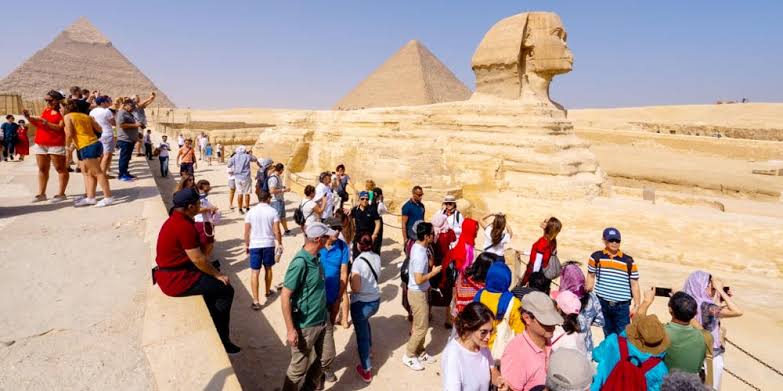
The Giza sunsets have always been a grand drama; gold dripping over sand, the pyramids rising hitherto sharp against a fading light. But here is a new, monstrous shape imposing itself alongside them– glass gleaming where ancient stone predominated.
Twenty years of anticipation, and Egypt is ready to open the Grand Egyptian Museum (GEM) on November 1, 2025. The world's largest museum of archaeology, containing more than 100,000 objects– every last, dazzling treasure of Tutankhamun– is at last complete.
This is not another nation-building project; around Cairo, countdown clocks blink in shop windows and café screens, announcing the return of something long delayed: the majesty of Africa's most legendary history, narrated on its own terms.
The Dream Behind the GEM: Resilience in Glass
When in 2002 the cornerstone for the GEM was laid, Egypt had dreamed of a museum that was up to par with the pyramids; eternal and yet distinctly cutting-edge.
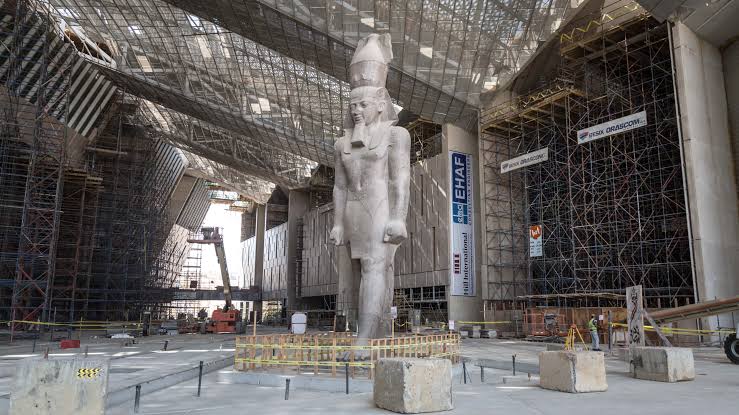
The road was anything but smooth, with two revolutions, paralyzing recessions, and a global pandemic halting cranes in mid-swing
Today the scaffolding is gone. In its stead stands a $1 billion monument to resilience.
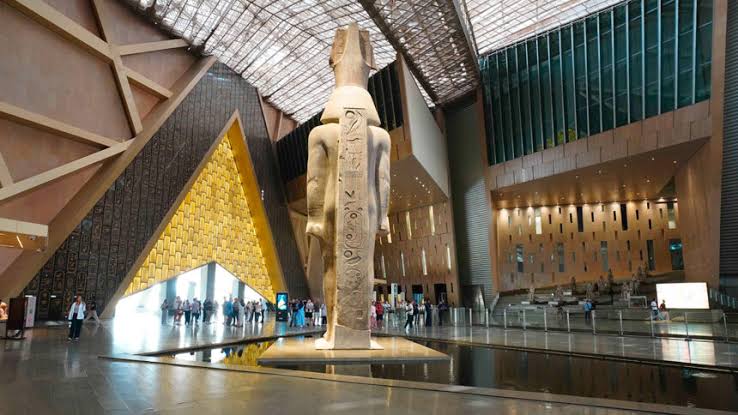
The Irish Heneghan Peng Architects' museum occupies the area of nearly half a million square meters, encompassing a stunning glass façade in minimalist design, which is perfectly angled in the direction of the Great Pyramid.
Within, the first and most daunting greeter is Ramesses II, 3,200 years and 11 meters old, standing as if he would never vacate his throne. The museum deliberately avoids nostalgia.
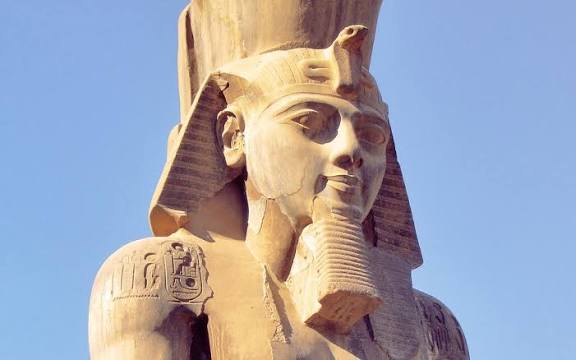
It is Egypt making a point: our history isn't stuck in dusty textbooks; it's changing, it's evolving, and it's housed in a building adapted to the 21st century.
A Nation in Motion: A Collective Memory
The logistical scale of the opening is gigantic. The Ministry of Interior has undertaken a top-to-bottom security and crowd-management campaign, and landscaping teams race against the clock along the Giza Plateau to finish the finishing touches.
Above all, it is being marketed as a national moment shared. Egyptians throughout the country are engaged in the moment: the opening ceremony will be televised live on massive outdoor screens in Cairo, Alexandria, Luxor, and Aswan.
City squares are being transformed into open-air cinemas, giving way to a communal moment of watching a communal memory. Underneath the discipline of the planning is a wave of national pride.
The inauguration is a chance to show that despite all the economic and political turmoil over decades, Egypt can still achieve a wonder of the world.

The Cultural Economy of Awe
Tourism is a vital lifeblood for Egypt, with around 12% of GDP contributed. The GEM isn't just expected to grow those numbers; officials are targeting five to seven million tourists annually.
But a fresh kind of economy is emerging around the GEM, so-called economy of awe by some Egyptian scholars. New design studios, high-end artisan markets, and boutique hotels are opening nearby the museum, prepared to catch the wave of interest and cash. Cairo's trendy young creatives including musicians, designers, filmmakers are listening in as well.
For them, GEM represents an unparalleled launchpad for Egypt's worldwide comeback, a powerful message that heritage can be rebranded and amplified without compromising its soul.
Within the Museum: History in Dialogue
Imagine walking through history that actually speaks back.
The Grand Egyptian Museum is not designed like a traditional library of silent artifacts; it's intended to be an interactive experience. Visitors will stroll through hallways where augmented reality re-creates ancient temples, holograms narrate the rise of dynasties, and where the 4,000 treasures of King
Tutankhamun's tomb shines under adaptive lighting.
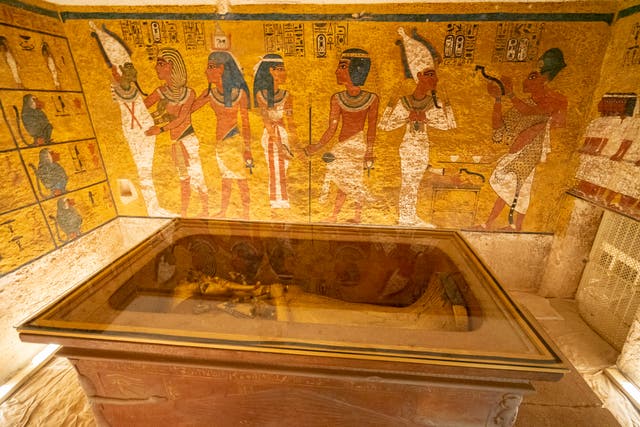
Education and conservation are the focus. The museum features state-of-the-art conservation laboratories, children's educational spaces, and digital documentation. Even the building itself is a story: glass for light and transparency in a fresh start, and the stone base bringing the project back down to earth.
This is a working museum, designed to promote interaction and scholarship, not a grand mausoleum.
Diplomacy Through Culture: Soft Power in Stone.
The grandeur of the GEM has been cultivated through a soft network of global collaboration. Japan International Cooperation Agency (JICA) underwrote much of the cost of the project, while UNESCO helped plan critical conservation protocols. The hoped-for invitees to the opening night; world leaders, museum curators, and members of royalty, will be a diplomatic red carpet masquerading as archaeology.
In an era where worldwide influence is as much a matter of culture as it is muscle power, Egypt has the assignment. The GEM is a diplomatic strategy dressed up as art history, a deliberate, massive intervention reminding us that soft power can be built from old stone and powerful narrative.
The Test of Time.
The final test of the museum will come decades from now after the opening spectacle. Can Egypt protect its irreplaceable treasures from the daily grind of millions of visitors? Can the hoped-for tourism boom happen without turning the sensitive Giza Plateau into a theme park?
Government officials are upbeat, citing plans that are already under way, like climate-controlled halls and green energy systems. Most significant, however, are plans for traveling exhibitions across Africa and the Middle East aimed at sharing Egypt's heritage with the continent without losing its essence.
The GEM is less a culmination of an odyssey than a beginning; one that challenges how Africa narrates its own stories, on its own terms, in its own modern spaces.
As night falls over Giza this November, the pyramids will no longer be alone. Standing beside them will be a new glass and light monument built not by ancient kings but by a generation that did not let its own history gather dust.
The Grand Egyptian Museum does not need to demonstrate Egypt's ongoing relevance. It simply rem
inds the world that greatness never left.