The AI Paradox: Are Smart Tools Making Our Brains Dumber?
As AI becomes indispensable, concerns rise about its long-term impact on human cognition. This article explores if over-reliance on AI could diminish our mental faculties and contribute to cognitive decline.
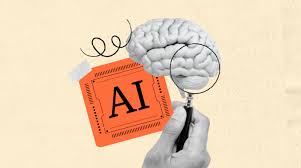
In an age where Artificial Intelligence effortlessly handles everything from complex calculations to creative writing, we are outsourcing more of our cognitive load than ever before.
This emerging question: Is our increasing reliance on AI tools inadvertently making our brains "lazier," potentially impacting long-term cognitive function and even raising concerns about cognitive decline?

SOURCE: Google
We'll explore how constant "cognitive offloading" might diminish our capacity for critical thinking, memory retention, and problem-solving, urging a balanced approach to AI integration that protects and enhances human intellect, rather than eroding it.
Cognitive Offloading's Impact on the Brain
The delegation of mental tasks to AI, a process known as "cognitive offloading," has profound implications for brain function and core cognitive skills. SOURCE: Google
When we rely on an AI to instantly find information or solve a complex problem, we bypass the need for effortful recall and independent reasoning.
This can lead to a phenomenon akin to "digital amnesia," where our brains stop encoding information for long-term storage because we know we can simply look it up again later.

SOURCE: Google
This is similar to the well-documented "Google effect," where people are less likely to remember information they know is easily accessible online, as detailed in a study published in Science.
Over time, this reliance can lead to a weakening of our cognitive muscles. The brain, much like a physical muscle, strengthens with use.
When we delegate tasks that require problem-solving, deep analysis, and memory, we risk a diminishment of our capacity for these essential mental exercises.
A 2023 study by University College London found that using digital tools for planning and memory could reduce our ability to form internal mental maps, suggesting a shift in brain function.
While AI provides a shortcut to a solution, it may also be eliminating the crucial mental workout required to get there ourselves, potentially altering the pathways our brains use for learning and problem-solving.
Neurological Effects and Cognitive Decline
Emerging research suggests that over-reliance on intelligent tools could have significant long-term neurological effects.

SOURCE: Google
Brain activity studies show that when a person is engaged in effortful learning or problem-solving, specific neural networks associated with working memory and critical thinking are highly active.
However, when a task is outsourced to AI, these networks show less activity. This decreased engagement could be a red flag, as neuroplasticity, the brain's ability to reorganize itself by forming new neural connections, is driven by repeated use and mental challenge.
There are specific ways in which the ubiquitous presence of AI tools could contribute to conditions associated with cognitive decline.
By providing instant answers and reducing the need for effortful recall, AI could be weakening the very neural connections that are essential for memory retention and executive function.
For older populations, this could be particularly concerning, as the mental stimulation provided by daily problem-solving is a known protective factor against age-related cognitive decline.
A report from the National Institute on Aging emphasizes the importance of cognitive engagement throughout life to reduce the risk of dementia.
The ease of access to information, while a major convenience, could be undermining the mental work that helps keep our brains healthy and active throughout our lives.
Ethical Responsibilities for a Cognitive Future
The potential negative cognitive impacts of AI place a clear ethical responsibility on AI developers, educators, and policymakers.

SOURCE: Google
AI developers must move beyond a "more is better" approach to automation and consider the human-centric design of their tools.
This means designing AI systems that encourage human collaboration and intellectual engagement, rather than simply providing a quick answer.
They should build in features that promote curiosity and critical thinking, encouraging users to question the AI's output and verify its sources.
Educators have a crucial role in teaching students how to use AI responsibly, treating it as a research assistant or a collaborative partner, not a substitute for their own thoughts.
They must focus on teaching skills that AI cannot replicate, such as creativity, emotional intelligence, and complex problem-solving.
Policymakers must also consider the long-term societal implications, advocating for research into AI's cognitive effects and establishing guidelines that protect intellectual development, especially in developing brains and aging populations, as recommended in a report by the European Commission's expert group on AI.
Cultivating a Cognitively Healthy Relationship with AI
Individuals can cultivate a "cognitively healthy" relationship with AI by adopting a mindful and deliberate approach to its use.

SOURCE: Google
The key is to leverage AI for efficiency without sacrificing essential mental exercise.
For example, instead of asking an AI to write a full report, use it as a tool to generate ideas, organize information, or check grammar. This treats the AI as a powerful assistant, not a crutch.
Consciously engaging in activities that require effortful thought, such as learning a new language, solving puzzles, or practicing a musical instrument, can help maintain cognitive fitness.
A study in the Journal of Neuroscience found that learning a new skill can physically alter brain structure, reinforcing the importance of continuous mental stimulation.
Individuals should also set personal boundaries for AI use, deliberately choosing to solve certain problems independently before turning to a tool.
By being proactive about mental exercise, we can ensure that our intellectual development continues, even in an age of effortless automation.
The goal is not to reject AI, but to integrate it in a way that makes us smarter, not just faster.
Future Research and the Path Forward
A full understanding of the intricate relationship between human cognition and AI integration requires extensive future research. Scientists need to conduct long-term longitudinal studies to track the neurological effects of AI use over decades.
This will help to differentiate correlation from causation and provide a clearer picture of AI's true impact on the brain.
Research should also focus on different demographic groups, including children, students, and the elderly, to understand how AI's influence might vary across different stages of life.
The ethical implications of this research are also vital. We need to explore how AI can be designed to enhance, rather than diminish, human cognitive abilities.
This includes research into human-in-the-loop systems and interfaces that encourage collaboration and curiosity. The conversation about AI and its impact on the brain is just beginning.
By approaching it with a spirit of inquiry and a commitment to protecting our cognitive well-being, we can navigate the paradox and ensure that our tools empower us, rather than enslave our minds.