Stranger Things 5: Spinoff's Crucial Character Revealed in Secret?
The finale of *Stranger Things* confidently concludes the main storyline by resolving character arcs and bringing closure to Hawkins. It intentionally leaves foundational questions about the Upside Down unanswered, strategically setting up a potential prequel spinoff with new characters and a different timeline. This restrained ending creates space for future narratives without undermining the original series' resolution.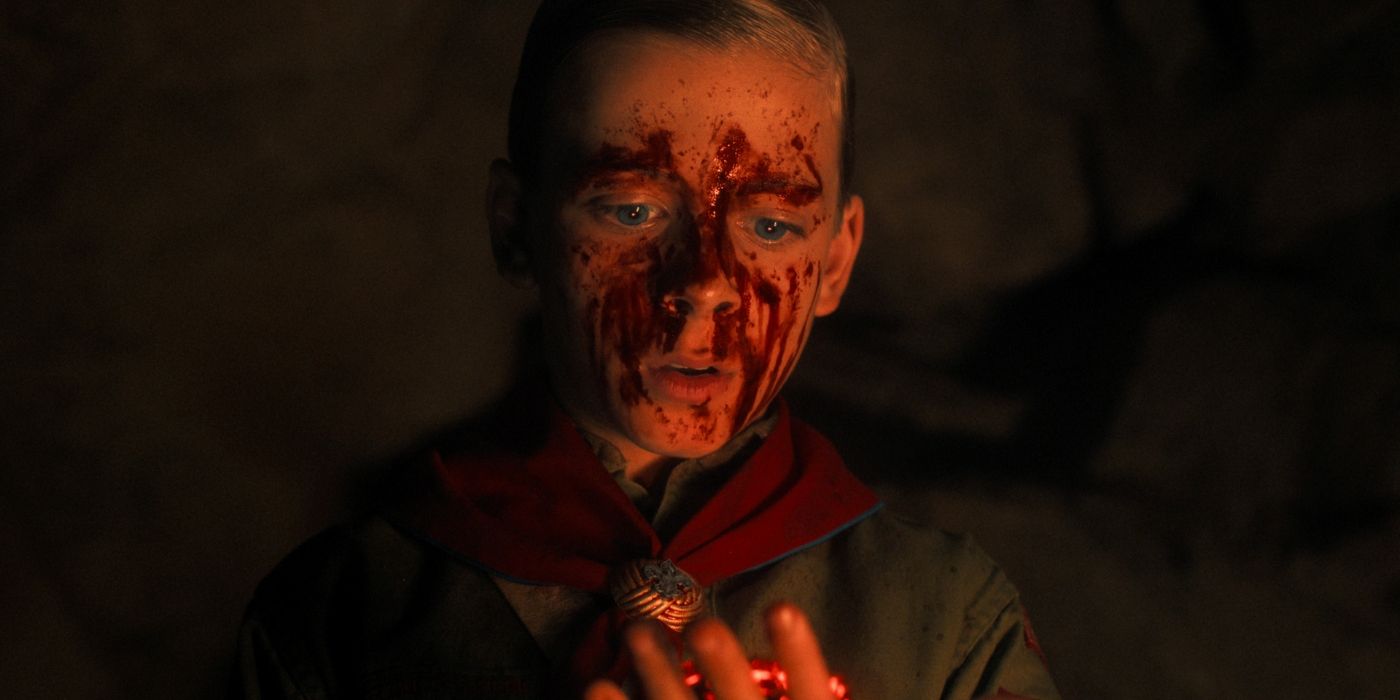
The highly anticipated finale of *Stranger Things* concludes the main narrative with an unusual sense of confidence for a franchise of its magnitude. Instead of relying on post-credits stingers, sudden escalations, or last-second reveals to reignite threats, the series allows the story of Hawkins to find definitive closure. The emotional journeys that began with a missing boy and a terrified town are resolved on their own terms, marking a surprisingly restrained end for a show that has spent years expanding its intricate mythology.
Crucially, the finale does not endeavor to explain every detail, particularly regarding the foundational questions surrounding the Upside Down. This deliberate choice to leave certain mysteries unresolved is not an oversight but a calculated decision. It signals that these unanswered questions no longer pertain to the Hawkins story or its original protagonists. Pursuing them further would necessitate a different cast of characters, an alternative timeline, and a fundamentally distinct narrative approach. This strategic ambiguity functions less as a loose end and more as a purposeful handoff to potential future stories.
Franchise finales frequently struggle to achieve a delicate balance: explaining too much risks demystifying the world, while explaining too little can leave an audience feeling unfulfilled. *Stranger Things 5* navigates this challenge by being precise about what it chooses to leave unresolved. The unaddressed detail in the final episode is not presented as a looming threat or a promise of immediate danger that could undermine the resolution the show has just earned. Instead, it highlights a long-standing gap in understanding. While viewers have witnessed the dire consequences of the Upside Down across five seasons, the precise moment humanity first grappled with its true nature has remained unseen.
The key distinction lies in the fact that this lingering mystery is detached from the original protagonists. The now-grown children of Hawkins are not positioned as the individuals who should, or even could, pursue these foundational questions. Their relationship with the Upside Down has reached its natural conclusion. Any attempt to re-entangle them in the mythology would feel regressive rather than genuinely expansive. By leaving this question unanswered without attaching immediate stakes, the finale subtly reassigns ownership of this narrative thread. The implication is that answers exist, but in a different time and with different characters, operating on 'spinoff logic' rather than 'sequel logic'.
The Duffer Brothers have already confirmed that the upcoming live-action spinoff will unfold in a different decade with new characters, definitively stating that the Hawkins story is complete. The structure of the finale directly supports this claim. Shifting the story backward in time fundamentally alters its narrative engine. The original series thrived on familiarity, allowing audiences to connect with the town, relationships, and rhythms of life before the horror intruded. An origin-era story, by contrast, eliminates this safety net. In a 'first contact' timeline, no established rules exist; no one understands the Upside Down's nature, intentions, or how to combat it. The primary source of tension transitions from mere survival to profound discovery.
Every decision in such a prequel becomes weightier, as there is no precedent or assurance that errors can be rectified later. This chronological shift also opens the door to diverse genre influences. Rather than a coming-of-age horror story, the spinoff could delve into themes of Cold War paranoia, institutional secrecy, and scientific hubris. The fear would not solely stem from an unknown entity, but from the terrifying possibility that the wrong individuals are responsible for comprehending and containing it. This tonal shift is precisely what could make a spinoff feel necessary and fresh, rather than redundant.
When contemplating spinoffs, the tendency is often to seek a familiar face to anchor the new narrative. Eleven (Millie Bobby Brown) is an obvious candidate, but the original series has made it clear that her story arc is complete. Reopening it would likely diminish the impact of her ending rather than enrich the overall world. A more compelling possibility is that the spinoff's most crucial