Strait of Hormuz: Trump's Controversial 'US Territory' Plan Ignites Geopolitical Firestorm
President Donald Trump declared his intent to make the Strait of Hormuz a U.S. territory after the ongoing war with Iran, a move set to escalate tensions over the vital oil and gas passageway. This contentious announcement follows a failed peace deal and comes despite legal limitations on presidential power regarding territorial annexation.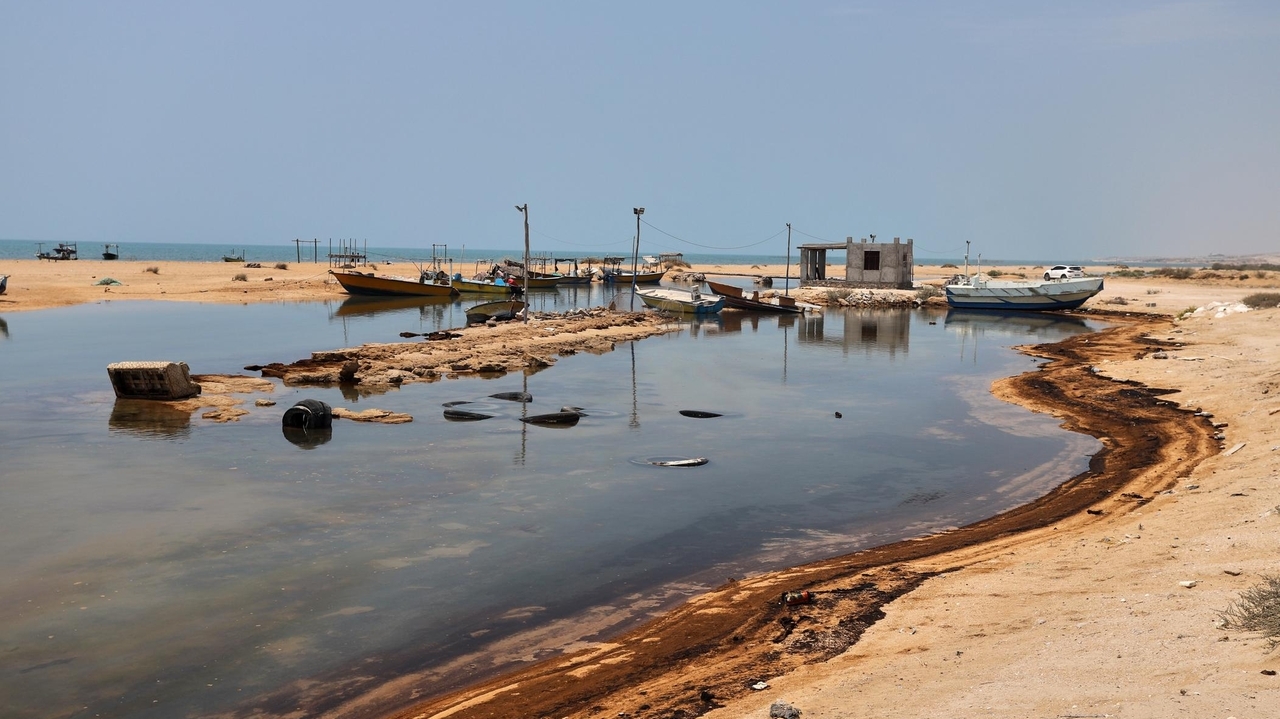
President Donald Trump announced on Friday that, following the conclusion of the ongoing war with Iran, he intends to declare the strategically vital Strait of Hormuz a territory of the United States. This declaration was made during a speech at the Nassau County Police Department’s training center in Uniondale, where Trump was campaigning for Republican candidates and policies. The announcement significantly escalated his rhetoric regarding control over the Strait, a critical international shipping lane that has been largely closed to traffic since the conflict with Iran began in February, now nearing its sixth month.
The Strait of Hormuz holds immense global significance, as approximately 20% of the world's oil and gas is transported through this narrow passageway, which connects the Persian Gulf to the Gulf of Oman. "After we finish defeating Iran, which is being very badly defeated, pretty soon I'll be declaring the Hormuz Strait a territory of the United States," Trump stated. He did not, however, provide specific details on how the U.S. would proceed with annexing the critical shipping lane, an area currently under shared jurisdiction between Iran and Oman.
In his speech, Trump also defended the U.S. naval blockade of Iranian ports and justified the war with Iran as necessary to prevent the nation from acquiring a nuclear weapon, even as the conflict and the associated challenges in oil tanker movement have led to increased gas prices nationwide. Trump unapologetically addressed the rise in fuel costs, asserting, "When you have to pay your $4 a gallon, I'll never apologize. I did the right thing."
Iran has consistently rejected Trump's assertions of U.S. control over the Strait. In a post on X (formerly Twitter) on Wednesday, Iran’s Persian Gulf Strait Authority reiterated that the waterway's ownership status would not alter the fundamental reality: "the Strait of Hormuz remains blocked and will not be reopened until Iran’s conditions are accepted." Previously, Trump had even suggested renaming the waterway to "the Strait of America."
Attempts at a peaceful resolution have faltered, with a preliminary peace deal signed with Iran on June 17 collapsing a month later specifically over disagreements concerning control of the Strait. The two countries remain at an impasse. It is also noted that the Strait of Hormuz is not the only territory Trump has expressed interest in annexing since returning to office last year; he has reportedly discussed acquiring or annexing Greenland, Canada, and Venezuela in recent months.
However, unilaterally declaring foreign lands as U.S. territory is not within the President's power. According to Congress.gov, "Historical practice and other constitutional powers have consistently provided a role for Congress in recognizing the addition of new territory to the United States," indicating that congressional approval is a necessary component for such territorial acquisitions.