Steam Next Fest Unleashes Shakespearean Roguelikes and Submarine Survival Horror
Steam Next Fest continues to be a fertile ground for discovering innovative indie games, with roguelikes dominating the scene. Among the highlights are "Titanium Court," a unique blend of strategy and Shakespearean whimsy, and "DiceVaders," a dicebuilder inspired by "Balatro," both pushing the boundaries of the genre.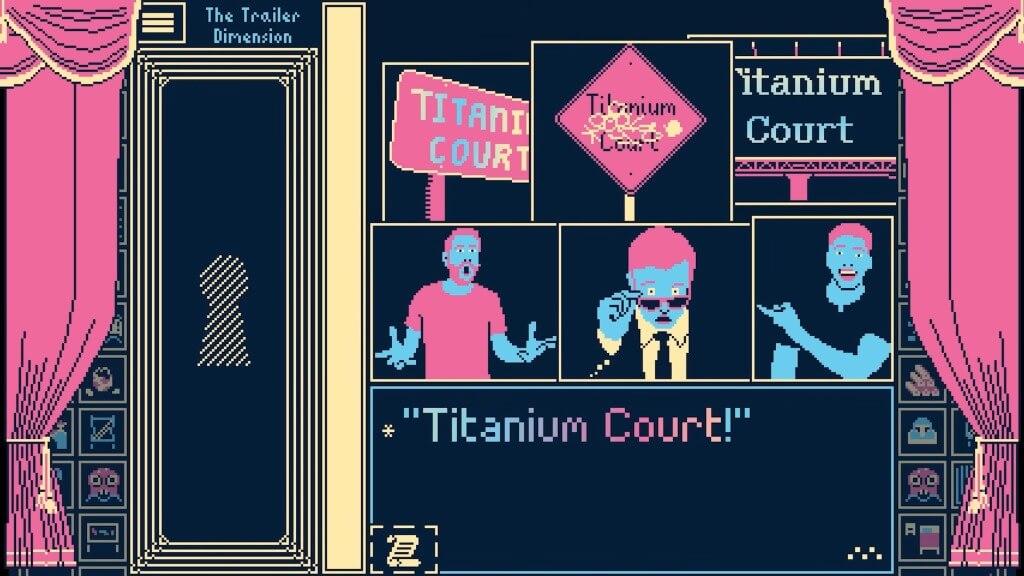
Steam Next Fest has established itself as a crucial event for anticipating future game releases, offering thousands of demos that enable lesser-known titles to reach a broader audience and potentially become viral hits. This event primarily showcases small to mid-budget games, making it an excellent barometer for current trends outside the shrinking AAA sector. A prominent theme emerging from the most compelling games at this February’s Steam Next Fest is the enduring popularity of roguelikes. Despite the widespread presence of run-based experiences, several demos indicate that this sub-genre still holds significant untapped potential for innovation.
A standout example of this innovative capacity is Titanium Court, a peculiar blend of resource management, match-three puzzle mechanics, tower defense, and the whimsical, fantastical essence inspired by Shakespeare’s A Midsummer Night’s Dream. Following a self-referential opening, players assume the role of a displaced woman who becomes Queen Titania, tasked with defending her stronghold from invading forces. Essentially, it functions as a strategy game where the battlefield's layout and topography are directly influenced by choices made during match-three puzzle sequences. For instance, matching three forest tiles not only grants wood resources but also removes those trees from the map. This unique ability to manipulate the terrain allows players to strategically construct moats by repositioning water tiles around their base or preemptively dismantle enemy fortifications by aligning and clearing them. Once the match-three turns are exhausted, the battle phase commences, with automated troops engaging in either defense of the castle or an assault on enemies, depending on their pre-assigned roles. While this central push-and-pull dynamic is captivating and original, the game truly excels through its playful presentation, featuring dialogue, pixel art, and character designs that distinctly echo the spirit of Shakespearean comedies. It masterfully demonstrates how a touch of the Bard can rejuvenate a well-established game formula.
Other notable roguelikes, while perhaps not as singularly unique as Titanium Court, still introduced novel elements by drawing inspiration from familiar influences, most notably Balatro. Among these is DiceVaders, conceived as a spiritual successor to the deckbuilder StarVaders, where players control the aliens, who were the antagonists in the original game. As its title implies, DiceVaders is a “dicebuilder” where the objective is to optimize dice rolls to achieve high scores. Each turn involves rolling D6 dice, with their numerical outcomes corresponding to specific columns on a grid, allowing players to score units placed in those respective positions. Success isn’t solely dependent on chance; the core gameplay revolves around manipulating dice rolls and combining them with various artifacts and unit abilities to accumulate substantial scores. The influence of Balatro is evident in DiceVaders' scoring system, which incorporates both a base number and a multiplier. Similar to LocalThunk’s acclaimed hit, the primary goal is to leverage multiplication to generate totals with numerous zeros. The diverse array of unit and artifact types offers creative problem-solving opportunities, and despite the occasional complexity of the math involved, achieving and surpassing a level’s score threshold is immensely satisfying. Furthermore, the game provides multiple mechanisms to mitigate inherent randomness, such as resources that allow for nudging dice to adjacent columns or executing complete rerolls. This makes DiceVaders a clever and distinct reinterpretation of established game concepts.