Spain Is Putting €309 Million Into Ceuta After a Migration Surge. Why North Africa Is Watching
Spain's government has approved a substantial €309 million aid package for Ceuta to address its ongoing migrant crisis, focusing on economic support, security, and humanitarian care. This initiative comes as political divisions emerge and the city's president calls for national unity amidst an "unprecedented outrage."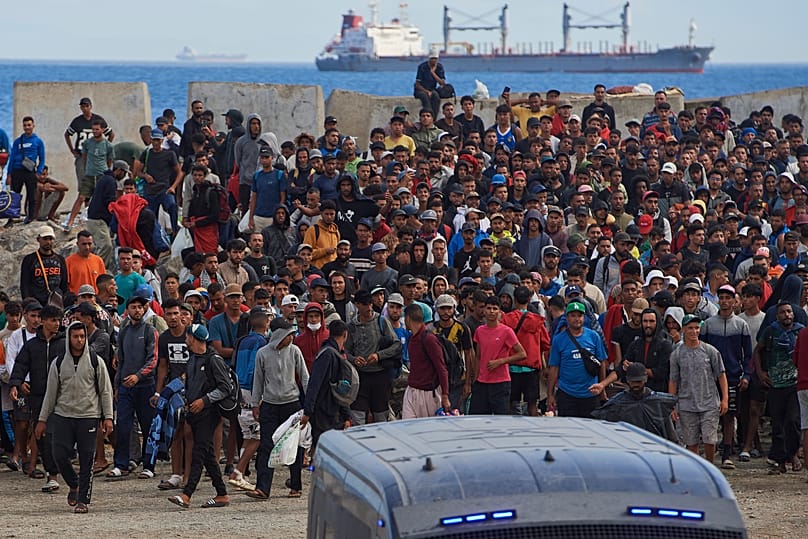
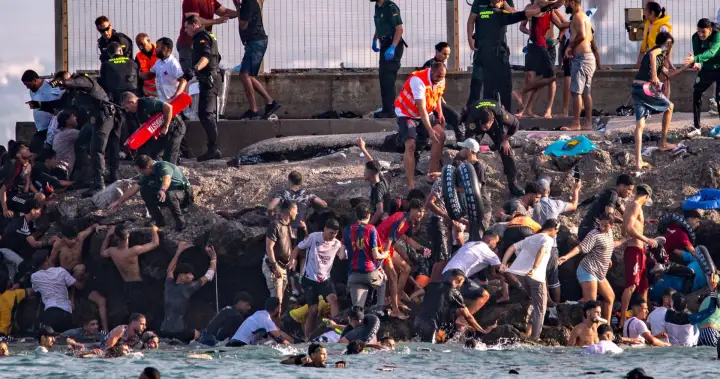
More than 72,000 people crossed from Morocco into Ceuta during the migration surge that began at the end of July. Weeks later, thousands of migrants remain in the territory, local services are under pressure, and Spain has now committed €309 million to help the city cope.
Ceuta is a small Spanish territory sitting on the North African coast, surrounded by Morocco. That location has made it a long-standing gateway into Europe, but the scale of the latest migration surge has pushed the territory into an unusually intense crisis.
On September 1, Spain's Council of Ministers approved an emergency plan that will mobilise €309 million over the remaining four months of 2026. The Spanish government says the amount is equivalent to about 16% of Ceuta's GDP over that period.
The money is not going to one problem. Spain has divided it across public services, security, migrant reception and support for local businesses and workers.
Where the €309 Million Is Going
The largest allocation is €118 million for humanitarian reception.
That covers support for migrants, including unaccompanied minors, who remain in Ceuta after the mass crossings. Spain has also added more than 3,400 places to accommodate migrants and agreed with the city on additional reception facilities.
Another €90 million is going to security, while €21 million will strengthen essential services including healthcare, education, justice and water.
Then there is €80 million for businesses and workers.
The package includes €36.6 million in direct financial support. Eligible self-employed workers are expected to receive €5,000 each, while companies can receive between €10,000 and €150,000 depending on their turnover.
The government expects the measures to support thousands of businesses and self-employed workers, alongside tax relief, support for commerce and other measures intended to keep economic activity going.
Why Ceuta Has Become So Difficult to Manage
The problem is partly about geography.
Ceuta is Spanish territory, but it sits on Africa's northern edge and shares a land border with Morocco. For migrants hoping to reach Europe, crossing into Ceuta means entering Spanish territory without first travelling through mainland Europe.
That has made the border politically sensitive for years.
This year's surge was far larger than the territory was prepared for. More than 72,000 people crossed from Morocco into Ceuta in five weeks, according to Reuters, while thousands remained in the territory afterwards. The situation has also triggered protests and growing tension between residents, migrants and authorities.
For Ceuta itself, the pressure is not limited to border control.
A sudden increase in population puts pressure on accommodation, healthcare, schools, water supplies, policing and local businesses. The Spanish government says the emergency funding is intended to restore normality while cushioning the economic damage caused by the crisis.
Morocco Is Central to What Happens Next
Spain cannot really deal with the Ceuta situation in isolation.
Morocco controls the territory on the other side of the border, and the two countries have had to work together to prevent another mass crossing.
Moroccan authorities have already increased security around the border. Earlier in August, Moroccan police arrested more than 100 people attempting to reach Ceuta after social-media posts encouraged another mass crossing.

That makes the latest Spanish spending more than a domestic budget decision.
It is also part of a wider migration relationship between Spain, Morocco and the European Union, where North African countries play a major role in managing migration routes into Europe.
And Ceuta's experience shows how quickly that arrangement can be tested.
The Money May Calm the City, But It Does Not End the Crisis
The €309 million can expand reception facilities, strengthen essential services and give struggling businesses some breathing room.
But it does not remove the reasons people are attempting the crossing in the first place.
It also does not guarantee that Ceuta will not face another surge.
Spain has already asked the European Union's border agency, Frontex, for additional help processing migrants in the territory. Italy has also extended temporary border controls with Spain because of concerns about migrants moving onwards from Ceuta.
So the effects are spreading beyond the small territory itself.
For Morocco and the wider North African region, Ceuta remains a particularly unusual border: Africa on one side, Spanish territory on the other, and the European Union just beyond it.
Spain's €309 million response may ease some of the immediate pressure. But the events of the past few weeks have exposed how quickly a migration surge at one African border can become a much larger European political, security and humanitarian problem.