South Africa's Parliament Chastised by Top Court Over Impeachment Bid
South Africa's Constitutional Court has ruled that Parliament acted unconstitutionally by stopping impeachment proceedings against President Cyril Ramaphosa over a controversial farm burglary. This decision opens the door for renewed parliamentary review of the allegations, reinforcing the constitutional requirement against political obstruction of such processes.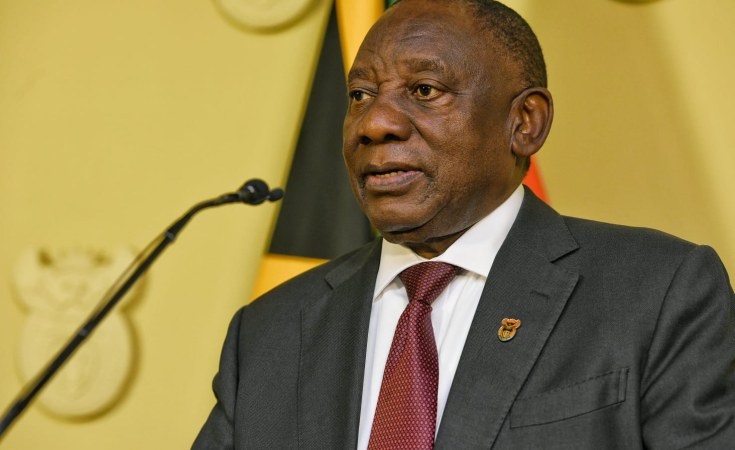
South Africa's Constitutional Court has delivered a landmark ruling, declaring that Parliament acted unconstitutionally in 2022 when it halted efforts to initiate impeachment proceedings against President Cyril Ramaphosa. This significant decision stems from a legal challenge brought forward by opposition parties, who contended that legislative members had improperly obstructed a constitutionally mandated process designed to investigate serious allegations against the nation's head of state.
Central to the entire case was the prior findings of a panel of legal experts. This panel had previously concluded that President Ramaphosa could potentially have a case to answer following a controversial burglary at his rural farm. During this incident, more than $500,000 in cash was reportedly stolen after being hidden inside a sofa. The revelations surrounding the farm burglary triggered widespread public scrutiny and raised pertinent questions regarding the origin of the substantial sum of money and whether it had been properly declared according to legal requirements. President Ramaphosa has consistently denied any wrongdoing, maintaining that his actions were entirely within the bounds of the law.
Despite the unfolding controversy and the findings of the expert panel, the impeachment proceedings were ultimately brought to a halt. This cessation occurred after a parliamentary vote, at a time when President Ramaphosa's party, the African National Congress (ANC), held a significant majority in Parliament. However, the political landscape has since shifted dramatically, with the ANC having lost its parliamentary majority in subsequent elections, a factor that could influence future legislative actions.
The Constitutional Court's recent judgment is pivotal as it now reopens the possibility for renewed parliamentary consideration of the impeachment process. The ruling unequivocally reinforces the constitutional imperative that such proceedings, once properly triggered, must not be subjected to political obstruction. This judgment is widely regarded as a critical declaration on the limitations of parliamentary authority and a vital affirmation of the principle of the separation of powers within South Africa's democratic framework, ensuring accountability and adherence to constitutional norms.